Lower Humidity in House in Winter: Technical Solutions
Winter indoor humidity management requires balancing tight building envelopes with mechanical ventilation to prevent condensation. Proper moisture control protects structural integrity and improves indoor air quality.

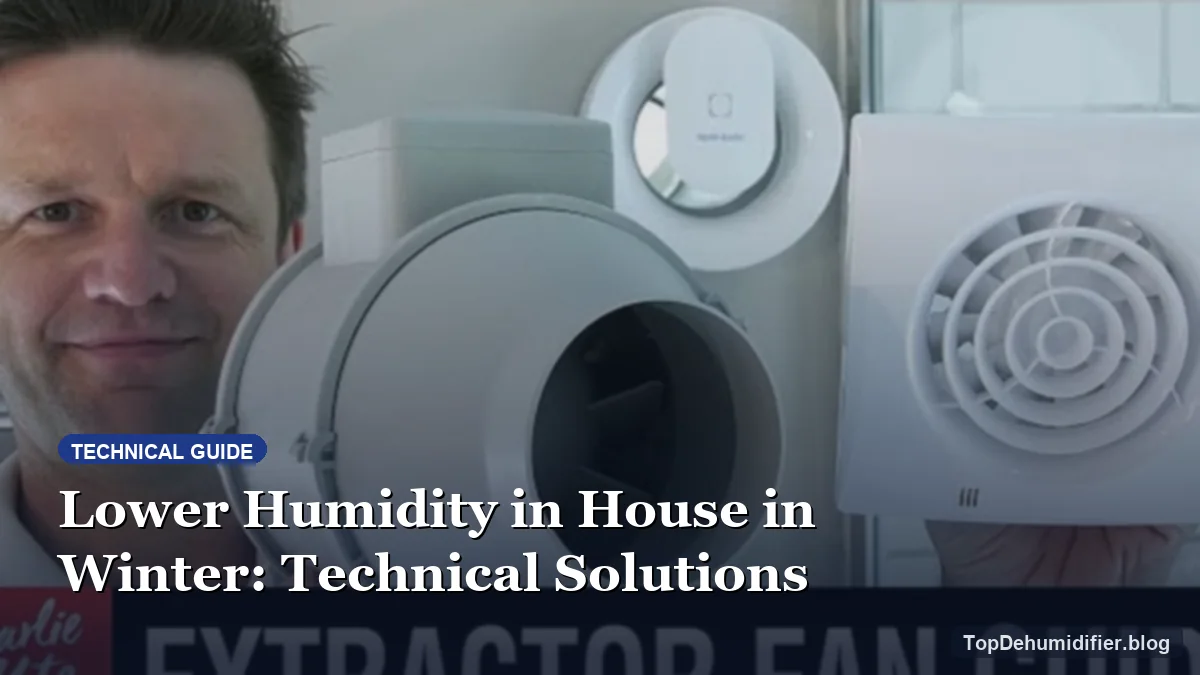
Lower winter humidity by combining continuous mechanical ventilation with strategic source control to maintain relative humidity between 30 and 40 percent without over-drying living spaces.
Looking for matching picks? See our Best Dehumidifier For Winter Use.
Practical Quick-Reference Table
| Scenario / Metric | Recommended Target | Why It Matters |
|---|---|---|
| Indoor Relative Humidity | 30% - 40% | Prevents window condensation and mold growth. |
| Basement Temperature | Above 55°F | Ensures refrigerant dehumidifier coil efficiency. |
| Ventilation Rate | Continuous Low | Dilutes indoor pollutants and excess vapor. |
| Dew Point Target | Below 35°F | Stops moisture phase change on exterior walls. |
| Shower Exhaust Run Time | 20 Minutes | Removes high localized humidity at source. |
| Air Leakage Target | Tight Envelope | Reduces uncontrolled convective moisture transport. |
Understanding Winter Indoor Humidity Dynamics

Cold outdoor temperatures dramatically reduce absolute moisture capacity, yet indoor activities continually generate vapor. Using our pint capacity calculator helps manage moisture migrating toward cold exterior walls and triggering mold.
Homeowners often misinterpret winter condensation on double-pane windows as a simple glass issue. In reality, it serves as an early visual warning indicator that indoor relative humidity levels exceed safe threshold boundaries.
Monitoring indoor relative humidity requires calibrated hygrometers placed away from direct heat sources. Maintaining correct winter levels prevents respiratory discomfort while safeguarding structural framing components from prolonged moisture exposure.
Building physics dictate that warm indoor air holds significantly more vapor than cold exterior air. When this humid air contacts uninsulated headers or rim joists, moisture instantly condenses, creating severe rot hazards.
- Keep indoor relative humidity between 30 and 40 percent during freezing weather.
- Install digital hygrometers on every primary living level for accurate tracking.
- Inspect window perimeters weekly for heavy frost or standing water droplets.
- Avoid humidifiers unless medical conditions specifically require elevated moisture levels.
Dew Points and Thermal Bridging
Thermal bridging occurs where continuous framing bypasses insulation layers, creating localized cold spots on interior drywall surfaces. Understanding dew point calculations helps technicians predict exactly where moisture will phase-change from vapor to liquid water.
Mitigating these cold spots requires targeted insulation upgrades or thermal break installations along exterior wall junctions. Addressing these weak points stops localized humidity accumulation before structural damage manifests.
- Calculate local dew points based on indoor temperature and relative humidity.
- Use thermal imaging cameras to identify hidden thermal bridging paths.
Mechanical Ventilation and Heat Recovery Systems
Modern airtight construction traps indoor pollutants and moisture unless paired with balanced mechanical ventilation. Heat recovery ventilators exhaust stale, humid air while simultaneously incoming fresh outdoor air is pre-warmed.
Operating an HRV continuously during winter months helps dilute indoor humidity without wasting thermal energy. Proper fan speed calibration ensures that moisture removal matches the actual occupancy load of the household.
Duct layout and balancing dampers dictate the overall efficiency of any heat recovery installation. Technicians must measure airflow velocities to guarantee equal supply and exhaust rates across all conditioned zones.
Core maintenance remains critical for maintaining winter ventilation performance and preventing frost blockages. Inspecting and cleaning core elements annually ensures optimal heat exchange and continuous moisture reduction.
- Run ventilation systems continuously on low speed during extreme winter conditions.
- Clean intake screens and recovery cores every six months without fail.
- Verify balancing damper settings using calibrated flow hood instruments.
- Check condensate drainage lines for freezing during sub-zero cold snaps.
Balancing CFM and Static Pressure
Static pressure restrictions directly impact the cubic feet per minute delivery of ventilation blowers. Technicians must calculate total external static pressure to prevent motor burnout and maintain rated airflow.
Upgrading undersized duct runs eliminates whistling noises and restores balanced moisture extraction across complex floor plans. Proper sizing guarantees that stale air is evacuated efficiently from high-humidity zones.
- Measure static pressure drops across all system filters and duct elbows.
- Select rigid smooth-wall ducting to minimize internal friction losses.
Video Walkthrough: Why You Need to Keep Moisture Low this Winter
Whole-House Dehumidification Integration Strategies
Integrating the best dehumidifier for whole house solutions ties directly into existing forced-air HVAC ductwork. These robust systems utilize refrigerated coils to extract excess vapor before distributing dry air throughout your living spaces.
Unlike portable units, integrated systems operate quietly in basements or utility closets with automated humidistat controls. This centralized approach eliminates the tedious chore of emptying collection buckets during freezing weather.
Choosing the quietest whole house dehumidifier options and proper electrical wiring protects compressors from voltage drops. Professional installation ensures seamless integration with existing furnace blower controls.
Setting the integrated control board requires balancing recovery targets with heating system runtime parameters. Homeowners should avoid excessive drying to protect wooden flooring from shrinking and cracking.
- Integrate dedicated return air drops for optimal moisture capture efficiency.
- Calibrate internal humidistats against wall-mounted reference hygrometers annually.
- Install gravity drain lines with code-compliant slope to prevent overflows.
- Change high-efficiency air filters every three months to maintain airflow.
Ductwork Placement and Return Air Paths
Isolating the dehumidifier return from the main furnace return prevents short-cycling and thermal conflict. Strategic placement ensures that moist air is pulled effectively from high-generation zones like kitchens and bathrooms.
Sealing all duct joints with mastic prevents conditioned air loss into unconditioned crawlspaces or attics. Proper insulation of these runs stops condensation from forming on cold duct surfaces.
- Locate dehumidifier returns in central hallways or basement common areas.
- Wrap unconditioned duct runs with R-8 thermal insulation blankets.
Air Sealing and Envelope Tightening Protocols
Controlling indoor winter humidity starts by stopping uncontrolled air leakage through the building envelope. Sealing attic bypasses and rim joists prevents warm, moist air from entering cold structural cavities.

Blower door testing helps locate hidden air infiltration pathways that contribute to localized moisture accumulation. Professional air sealing reduces the total volume of moisture entering wall assemblies from the exterior.
Expanding foam and acoustic sealants provide durable barriers against convective moisture transport in framing gaps. Every sealed penetration directly improves the overall thermal and moisture performance of the home.
Careful execution prevents over-tightening without adequate mechanical ventilation, ensuring indoor air quality remains high. Balancing air tightness with controlled ventilation is the cornerstone of modern building science.
- Seal top plates and electrical penetrations in attic floors thoroughly.
- Apply continuous caulk beads along baseboard and window trim joints.
- Insulate rim joists with closed-cell spray foam for vapor protection.
- Conduct pre- and post-sealing blower door tests to verify results.
Vapor Barriers and Insulation Integrity
Installing appropriate vapor retarders on the warm-in-winter side of assemblies stops moisture diffusion. Modern building codes specify perm ratings based on regional climate zones to prevent trapped moisture.
Damaged or missing vapor barriers allow winter indoor moisture to condense directly on cold sheathing. Repairing these compromised areas protects structural wood from permanent fungal decay and weakening.
- Verify vapor barrier placement matches local climate zone requirements.
- Patch punctured polyethylene sheeting with approved acoustical tape.
Portable Refrigerant and Desiccant Units in Cold Spaces
Selecting best crawl space dehumidifiers helps combat high winter moisture levels effectively. Choosing the correct technology depends heavily on ambient operating temperatures and overall space volume.
Standard refrigerant dehumidifiers struggle significantly when ambient temperatures drop below 65 degrees Fahrenheit. Frost accumulates rapidly on cold coils, rendering traditional compressor units ineffective during deep winter cold snaps.
Desiccant dehumidifiers utilize moisture-absorbing rotor wheels, making them superior for cold basements and unheated garages. These units maintain high extraction rates regardless of low ambient temperature conditions.
Continuous drainage setups prevent overflow issues when operating portable units in unattended remote locations. Utilizing gravity hoses or condensate pumps ensures reliable, maintenance-free winter moisture removal.
- Choose desiccant models for spaces dropping below 55 degrees Fahrenheit.
- Position portable units centrally to maximize unobstructed airflow circulation.
- Connect direct drain lines to eliminate manual bucket emptying tasks.
- Plug units into dedicated circuits to prevent electrical breaker trips.
Low-Temperature Operating Limitations
Compressor-based units require functional auto-defrost cycles to melt ice accumulation from evaporator coils. Without this feature, low winter temperatures will destroy the compressor motor through continuous strain.
Monitoring coil frost buildup prevents permanent equipment failure during extended periods of freezing weather. Always verify manufacturer operating temperature specifications before deploying units in unconditioned zones.
- Test auto-defrost cycles on refrigerant units prior to winter.
- Maintain minimum ambient operating temperatures specified by manuals.
Source Control and Everyday Moisture Mitigation
Mechanical systems work best when household occupants actively practice daily moisture source control habits. Simple behavioral adjustments drastically reduce the total volume of water vapor released indoors.
Running exhaust fans during and after showers removes large volumes of moisture at the point of origin. Leaving bathroom doors open slightly after bathing aids cross-ventilation and speeds drying times.
Covering cooking pots with lids prevents massive steam releases across kitchen surfaces during meal preparation. Operating range hoods venting directly outdoors captures airborne grease and humidity simultaneously.
Drying laundry outdoors or utilizing properly vented clothes dryers stops massive moisture loads inside living spaces. Indoor drying introduces gallons of water vapor into tight winter homes almost instantly.
- Run bathroom exhaust fans for 20 minutes after every shower.
- Always use kitchen range hoods when boiling water or cooking.
- Inspect dryer transition ducts annually to ensure unobstructed venting.
- Limit indoor plant collections in heavily moisture-prone sleeping areas.
Appliance Venting and Exhaust Management
Unvented gas heaters and fireplaces release immense quantities of water vapor directly into indoor spaces. Converting these to direct-vent systems eliminates moisture production and improves combustion safety.
Inspecting exterior exhaust hoods ensures backdraft dampers close properly against cold winter winds. Preventing cold air drafts stops localized condensation inside exhaust duct interiors.
- Prohibit the use of unvented combustion appliances indoors.
- Clean lint and debris from exterior dryer vent flaps regularly.
Frequently Asked Questions
Why is my house humid in winter?
Everyday household activities like cooking, showering, and breathing constantly release water vapor that gets trapped inside tightly sealed winter homes. Without adequate mechanical ventilation, this excess moisture condenses on cold windows, elevating indoor relative humidity levels significantly.
What is the ideal indoor humidity level during winter?
Maintaining indoor relative humidity between 30 and 40 percent provides the optimal balance for health and structural protection. Lower levels dry out mucous membranes, while higher levels trigger destructive condensation inside exterior wall cavities.
Can I use a standard dehumidifier in an unheated basement?
Standard refrigerant dehumidifiers lose effectiveness and freeze up when ambient temperatures drop below 65 degrees Fahrenheit. For unheated winter spaces, you must use desiccant dehumidifiers equipped with specialized moisture-absorbing rotor wheels.
How do heat recovery ventilators help control winter humidity?
Heat recovery ventilators continuously exhaust stale, humid indoor air while simultaneously bringing in fresh outdoor air. They transfer thermal energy between the air streams, reducing indoor humidity without wasting expensive heating energy.
Why do my windows fog up when it is freezing outside?
Window condensation occurs when warm indoor air containing water vapor contacts glass surfaces that have dropped below the dew point. This visible moisture serves as an early warning sign that your indoor humidity is far too high.