How Does a Refrigeration Dehumidifier Work?
Understanding the thermodynamic cycle behind mechanical moisture extraction. This technical guide breaks down the physics and internal mechanics of standard units.


Refrigeration dehumidifiers draw humid air across a cold evaporator coil to condense water vapor via dew point depression, rejecting latent heat back into the conditioned space.
Ready to compare models? Start with our Best Dehumidifier: Top Picks for Basements & Homes.
Practical Quick-Reference Table
| Scenario / Metric | Recommended Target | Why It Matters |
|---|---|---|
| Ambient Operating Temp | 65°F to 90°F | Prevents severe coil icing and compressor strain. |
| Relative Humidity | 45% to 50% RH | Optimal balance for comfort and mold prevention. |
| Airflow Velocity | 150 to 350 CFM | Ensures adequate contact time with evaporator coils. |
| Refrigerant Pressure | Manufacturer Specs | Guarantees proper phase change and cooling efficiency. |
| Drainage Slope | 1/4 inch per foot | Facilitates reliable gravity flow without pooling. |
| Filter Maintenance | Clean every 2 weeks | Preserves static pressure and airflow volume. |
Core Thermodynamic Principles of Moisture Removal
Refrigeration dehumidifiers operate on basic thermodynamic laws to extract moisture from ambient air. By utilizing a closed-loop refrigeration cycle, these systems manipulate temperature and pressure to condense water vapor efficiently.
When warm, humid air passes over a refrigerated surface, its temperature drops below the dew point. This rapid cooling forces moisture in the air to transition from vapor to liquid condensate instantly.
The entire process relies on removing both sensible and latent heat from the indoor environment. Technicians should use our pint capacity calculator to properly size units for specific room volumes.
Maintaining precise control over these thermodynamic phases ensures optimal moisture removal without overloading the compressor. Engineers design these systems to balance airflow velocity against thermal transfer rates effectively.
- Utilizes closed-loop vapor compression cycles continuously.
- Lowers processed air temperature below the local dew point.
- Extracts both sensible and latent thermal heat loads.
- Converts airborne water vapor into manageable liquid condensate.
Latent and Sensible Heat Exchange
Latent heat removal involves changing water from a gas to a liquid state. This phase change releases energy that the refrigeration system must manage safely.
Sensible heat refers to the measurable temperature changes in the airstream. Balanced heat exchangers ensure the discharged air remains comfortable for occupants.
- Phase change converts gas directly to liquid.
- Sensible heat dictates final discharge air temperature.
Mechanical Components and Refrigerant Circuitry
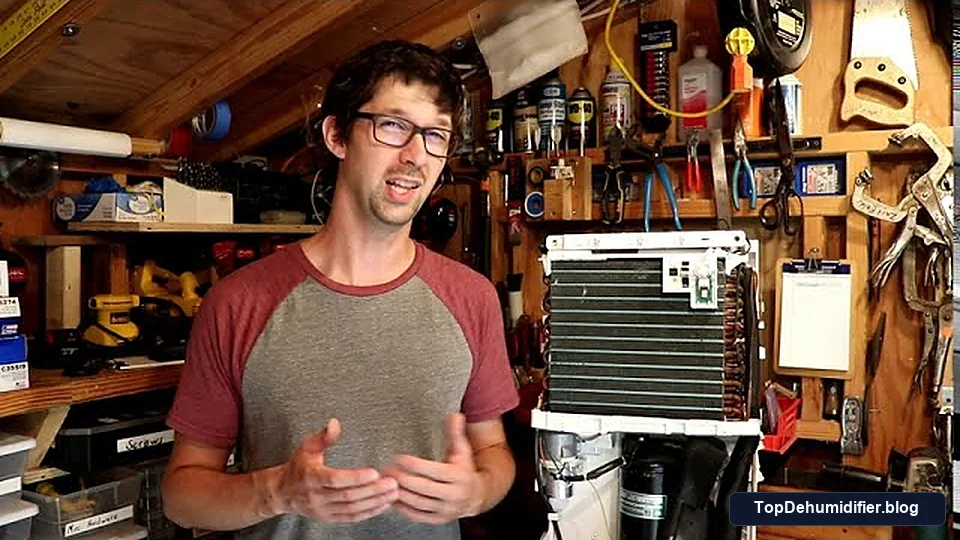
The internal refrigerant circuit consists of four primary mechanical components working in sequence. Each part alters the pressure and temperature of the working fluid to facilitate continuous heat transfer.
Closed copper tubing hermetically seals the refrigerant, preventing leaks during normal operation. Technicians monitor system pressures closely during diagnostics to verify that the charge level remains within tolerance.
Understanding how these parts interact helps maintenance personnel troubleshoot cooling failures quickly. Any restriction in the sealed tubing will immediately disrupt the entire moisture extraction cycle.
Proper insulation on suction lines prevents unwanted thermal gain before the gas reaches the compressor inlet. This engineering detail maximizes overall system efficiency across varying ambient load conditions.
- Hermetically sealed copper tubing prevents refrigerant loss.
- Pressurized fluid changes state from liquid to gas.
- Suction lines require insulation to maintain low temperatures.
- System diagnostics rely on accurate pressure gauge readings.
Compressor and Expansion Valve Dynamics
The compressor acts as the mechanical heart of any top-rated best dehumidifier, pressurizing refrigerant gas. This high-pressure gas moves toward the condenser coils, where it releases thermal energy.
After releasing heat, the liquid refrigerant passes through an expansion valve. This strict restriction drops pressure dramatically, causing the refrigerant to cool down significantly before evaporator entry.
- Compressor pressurizes circulating refrigerant gas.
- Expansion valve creates a sharp pressure drop.
Video Walkthrough: Dehumidifiers: How do they work?
Airflow Dynamics and Fan Motor Mechanics
A centrifugal or axial fan draws untreated room air through the cabinet intake grille. Maintaining proper cubic feet per minute airflow is vital for effective moisture capture across coils.
If airflow drops due to a clogged filter, the evaporator coil gets too cold. Reviewing details in our dehumidifier vs humidifier comparison helps explain why this restricted airflow causes ice to form.
Fan motors feature sealed bearings designed to withstand high humidity environments without seizing. Regular lubrication and dust removal extend the operational lifespan of these critical rotating parts.
Duct attachments or internal baffles direct the conditioned air smoothly across the heat exchangers. Optimal aerodynamic design minimizes turbulence and reduces overall fan operating noise levels.
- Intake fan pulls ambient air through physical filters.
- Restricted airflow triggers dangerous evaporator coil icing.
- Sealed fan bearings resist humid operating conditions.
- Aerodynamic baffles reduce turbulence and acoustic noise.
Heat Exchanger Mechanics: Evaporator and Condenser Coils
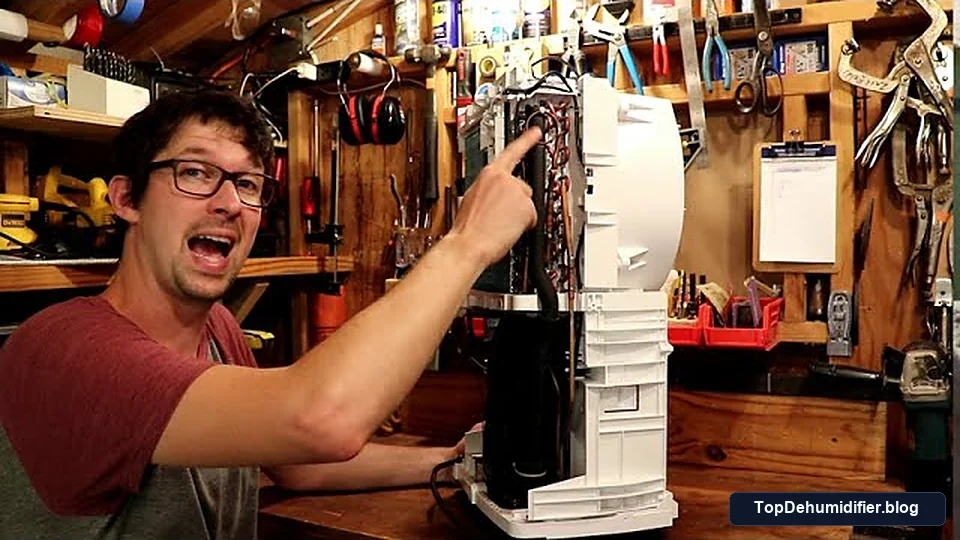
Both heat exchangers work in tandem to alter air temperatures continuously during operation. The evaporator absorbs heat and moisture, while the condenser reheats the air before discharging it indoors.
Copper tubing and aluminum fins maximize the surface area for rapid thermal exchange. Technicians inspect these coils regularly for refrigerant leaks or oil residue indicating component failure.
Hydrophilic coatings on modern evaporator fins help water droplets slide down into the reservoir. Without this coating, water might bridge the gap between fins and restrict airflow.
The condenser coil accepts superheated gas and rejects heat picked up from the room. This sensible heat addition ensures our recommended basement dehumidifier selection does not overcool the target indoor space.
- Evaporator coils chill air below the dew point.
- Aluminum fins maximize surface area for heat transfer.
- Hydrophilic coatings accelerate condensate drainage off coils.
- Condenser coils reject absorbed heat back into air.
Condensate Collection, Drainage Systems, and Gravity Flow
As water condenses on the cold evaporator, gravity pulls it downward into a collection tray. A sloped collection pan prevents stagnant water pooling and minimizes microbial growth risks.
Gravity drainage setups require a continuous downward slope toward a floor drain. Installers must secure drain hoses tightly to prevent accidental leaks or water damage hazards.
Units equipped with internal condensate pumps can lift water vertically to higher discharge points. These small motorized pumps rely on float switches to activate when the reservoir fills completely.
Safety float switches shut down the compressor automatically if the drainage path becomes clogged. This fail-safe mechanism prevents overflow disasters in unattended residential or commercial basements.
- Gravity pans require precise downward installation angles.
- Internal pumps lift condensate vertically through tubing.
- Float switches trigger automatic shutoff during backups.
- Regular reservoir cleaning prevents bacterial slime buildup.
Video Walkthrough: How Desiccant Dehumidifiers Work | Complete Working Principle Explained
Defrost Cycles, Frost Prevention, and Low Limits
Operating refrigeration dehumidifiers in cool environments triggers frost formation on evaporator coils. When temperatures drop below normal thresholds, moisture freezes solidly into an insulating ice layer.
Modern units feature electronic frost sensors that detect temperature drops on the coil surface. Once triggered, the unit initiates a defrost cycle to melt accumulated ice safely via warm gas bypass.
Some controllers simply shut off the compressor while letting the fan run to melt ice. This passive defrost method takes longer but protects the sealed system from excessive pressure spikes.
Understanding temperature limitations prevents premature equipment failure in unheated spaces. Standard refrigeration units should never run continuously in spaces below sixty degrees Fahrenheit.
- Low ambient temperatures cause evaporator coil icing.
- Electronic sensors detect frost formation automatically.
- Defrost cycles use warm gas or fan-only operation.
- Avoid running standard units below sixty degrees Fahrenheit.
Energy Efficiency, Compressor Ratings, and Electrical Safety
Electrical efficiency depends heavily on compressor design and refrigerant thermodynamic properties. High-efficiency rotary compressors consume less electricity while maintaining high moisture extraction rates.
Energy performance metrics evaluate water removal volume relative to total power consumption. Technicians verify electrical draw using clamp meters to ensure the compressor operates within nameplate amperage limits.
Dedicated electrical circuits prevent voltage drops that can overheat compressor motor windings. Proper grounding protects users against electrical shock hazards in damp, humid basement environments.
Modern electronic controls optimize run times based on real-time relative humidity readings. This intelligent cycling reduces wear and tear on electrical relays and thermal overload switches.
- Rotary compressors deliver high energy efficiency ratios.
- Nameplate amperage checks verify safe electrical draw.
- Dedicated circuits prevent harmful voltage drop issues.
- Smart humidistats minimize unnecessary compressor cycling.
Comprehensive Maintenance Protocols for Optimal Performance
Routine maintenance preserves thermal transfer efficiency and extends equipment operational life. Technicians must clean air filters every two weeks to maintain proper static pressure.
Coil cleaning requires specialized foaming detergents that remove oily residue and dust buildup. Dirty coils severely reduce moisture removal capacity and increase compressor electrical loads.
Inspecting electrical terminals for corrosion prevents intermittent power failures and component burning. Tightening wire connections ensures safe power distribution across all internal control relays.
Checking condensate lines for blockages avoids sudden water overflow and property damage. Regular upkeep guarantees reliable performance throughout peak humid seasons without unexpected mechanical breakdowns.
- Wash air filters bi-weekly to maintain airflow.
- Apply specialized detergents to clean heat coils.
- Inspect electrical terminals for signs of corrosion.
- Flush condensate drain lines to prevent clogs.
Frequently Asked Questions
Why does water form on a refrigeration dehumidifier coil?
Water forms when humid air contacts the chilled evaporator surface, dropping below its dew point temperature. This rapid thermal drop forces airborne moisture to condense into liquid.
What happens if ice builds up on the evaporator coils?
Ice acts as an insulator, blocking airflow and stopping thermal transfer. This reduces efficiency and can overheat the sealed refrigeration compressor.
Can refrigeration dehumidifiers run in unheated winter basements?
Standard units should not run in temperatures below sixty degrees Fahrenheit. Low ambient heat causes severe coil icing and potential compressor mechanical damage.
How does the condenser coil warm the air back up?
The condenser accepts hot, high-pressure refrigerant gas and releases heat. This sensible heat warms the processed air before it exits the unit discharge grille.
Why is proper airflow critical for moisture extraction?
Sufficient airflow maintains correct pressure and temperature across the coils. Without adequate CFM, the system fails to capture moisture and risks catastrophic frost buildup.