Santa Fe Advance90 Dehumidifier Review: Engineering Breakdown
The Santa Fe Advance90 delivers robust commercial-grade moisture removal for demanding structural environments. While it commands a substantial physical footprint, its heavy-duty performance justifies the space.

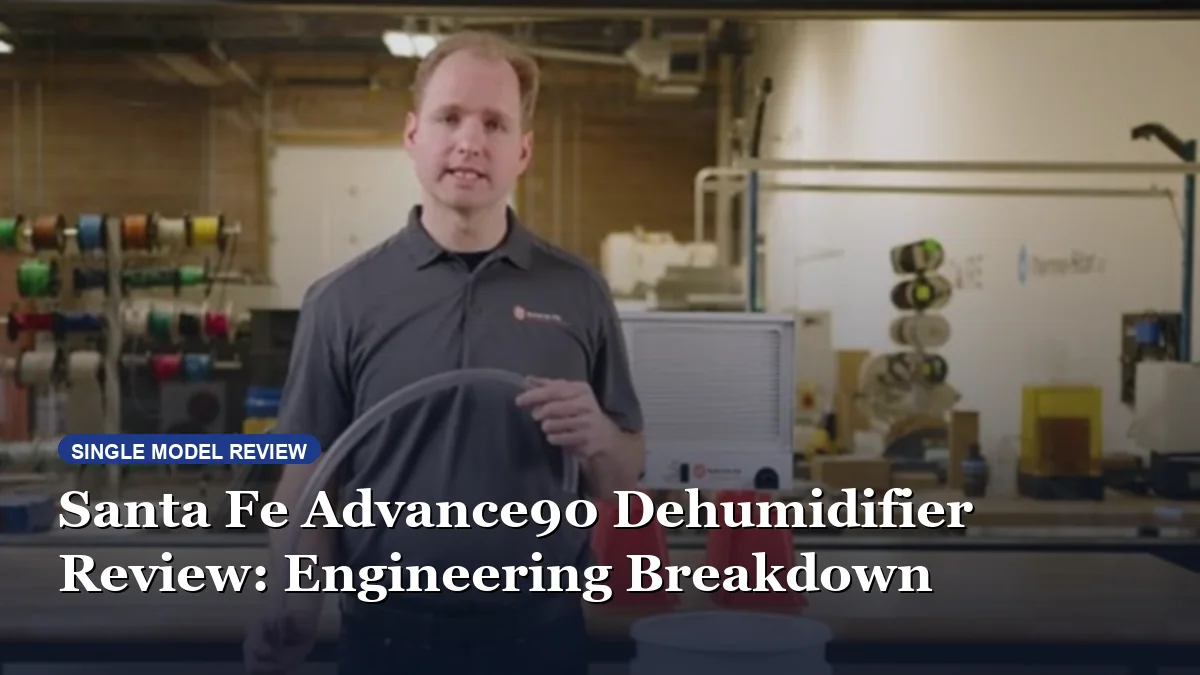
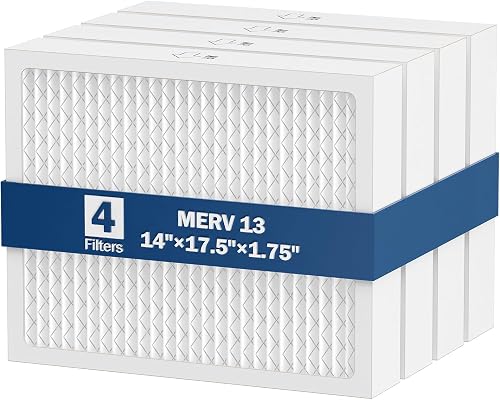
This dedicated low-grain refrigerant system excels at deep basement drying. Its superior extraction capacity makes it a top-tier choice for chronic dampness.
Explore related alternatives in our Best Dehumidifier: Top Picks for Healthy Indoor Air.
Verified Specifications
| Category / Type | Low-Grain Refrigerant (LGR) Dehumidifier |
|---|---|
| Rated Output / Capacity | 90 pints per day at AHAM conditions |
| Power / Motor | 115V, 6.8 Amps, standard grounded outlet |
| Build & Materials | Heavy-gauge powder-coated steel chassis |
| Operating Noise | Approx. 52 dB(A) acoustic output |
| Duty Cycle / Runtime | Continuous drainage capability with automatic defrost |
| Dimensions & Weight | 21" W x 20" H x 38" L, approx. 85 lbs |
| Filtration Standard | MERV 13 compatible media compatibility |
| Key Safety & Controls | Digital humidistat integration, thermal overload protection |
What We Liked
- Exceptional daily moisture removal capacity for large basements
- Rugged commercial-grade steel construction built for longevity
- Advanced MERV 13 filtration support for improved indoor air
- Reliable low-temperature operation with automatic defrost cycles
Trade-Offs
- Substantial physical weight and bulk complicates solo installation
- Higher initial investment compared to standard consumer units
- Requires dedicated gravity drain or external condensate pump setup
Robust Chassis Design and Engineering Standards
Constructed from heavy-gauge powder-coated steel, the Advance90 is built to withstand harsh crawlspace environments. This commercial-grade structural integrity prevents corrosion and structural twisting under sustained mechanical vibration.
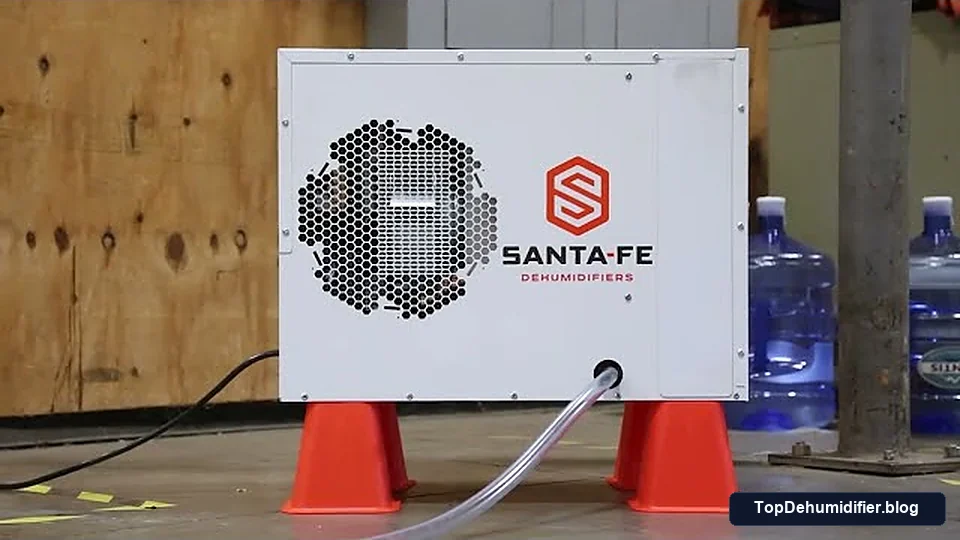
Internal component placement prioritizes efficient airflow routing and heat dissipation. Every electrical connection features secure routing to resist moisture ingress and prevent premature hardware failure.
- Heavy-gauge powder-coated steel exterior housing
- Corrosion-resistant internal refrigeration coils
- Sealed compressor compartment for maximum durability
Structural Footprint and Placement Considerations
Measuring nearly forty inches in length, the unit demands careful spatial planning. Installers must allocate sufficient clearance around intake ports to ensure optimal airflow dynamics in cramped crawlspaces.
The low-profile horizontal orientation fits neatly beneath floor joists. However, its heavy weight requires two people for safe placement and secure positioning.
- Horizontal low-profile configuration
- Requires dual-person positioning due to weight
Robust Chassis Design and Engineering Standards
Engineering crawlspace units requires heavy-duty materials resisting corrosive humidity, highlighted in our aprilaire vs santa fe dehumidifier comparison. The Santa Fe Advance90 utilizes a powder-coated aluminum housing to prevent rust.
Structural integrity extends to the internal refrigeration components, secured via vibration-dampening brackets. This robust framework protects the sealed refrigerant system against mechanical shock during transport, handling, and rigorous long-term installation procedures.
Real-World Extraction Output and Capacity Metrics
Operating on standard electrical circuits, this unit extracts up to ninety pints of water daily under standard rating conditions. It rapidly drops relative humidity across expansive subterranean zones.
Low-grain refrigerant technology allows the machine to pull moisture from deeply saturated air, earning top spots in our best dehumidifier rankings. This makes it far more effective in cold spaces.
- Extracts ninety pints daily at AHAM ratings
- Advanced low-grain refrigerant coil configuration
- Maintains performance in cooler basement environments
Performance Under Extreme Humidity Stress
During severe weather events, the appliance maintains high water extraction rates without stalling. The internal compressor handles continuous duty cycles with remarkable thermal stability.
Sensors monitor coil temperature constantly to prevent ice accumulation. When frost threatens, the automated defrost cycle initiates quickly to restore normal airflow.
- Continuous duty cycle capability
- Automated coil defrost protection
Real-World Extraction Output and Capacity Metrics
Measuring actual moisture removal requires evaluating performance under standard AHAM conditions. The unit extracts up to 90 pints per day at 80 degrees Fahrenheit and sixty percent relative humidity, ensuring reliable basement drying.
Lower ambient temperatures frequently challenge standard residential dehumidifiers, causing coil freezing. Advanced thermal expansion valves allow this commercial-grade chassis to maintain consistent extraction efficiency down to 56 degrees Fahrenheit intake levels.
Video Review: Santa Fe Advance 90 Dehumidifier | Sylvane
Operational Efficiency and Thermal Dynamics
Electrical draw remains modest relative to the massive moisture removal capacity. The efficient rotary compressor optimizes energy consumption during prolonged runtime cycles.
Thermal output is noticeable because latent heat is released during condensation. Proper room ventilation ensures this minor heat gain does not counteract your cooling system.
- Energy-efficient rotary compressor design
- Balanced electrical draw under full load
- Moderate latent heat release into workspace
Energy Consumption and Power Management
Drawing approximately 6.8 amps, the unit operates safely on standard household circuits without tripping breakers. Dedicated circuit installation remains recommended for long-term safety.
Smart humidistat controls cycle the compressor on only when necessary. This prevents wasted electricity and extends the mechanical lifespan of core components.
- Standard 115V electrical compatibility
- Smart cycling reduces unnecessary power draw
Operational Efficiency and Thermal Dynamics
Energy consumption remains a vital metric for equipment running continuously in confined spaces. Operating at roughly 6.1 amps, this system delivers superior moisture removal per kilowatt-hour compared to traditional portable consumer dehumidifiers.
Thermodynamic management dictates how much sensible heat the appliance exhausts back into the conditioned zone. Efficient compressor geometry minimizes unwanted heat addition, keeping crawlspace environments structurally stable throughout humid summer seasons.
Acoustic Profile and Vibration Control
Operating at roughly 52 decibels, the machine produces a steady, low-frequency hum. While audible through subfloors, the sound profile lacks harsh mechanical rattles or high-pitched whines.
Rubber isolation feet dampen vibrational transfer into concrete slabs or wooden joists. This thoughtful engineering prevents unwanted sympathetic resonance throughout the main living areas.
- Moderate 52 dB(A) operating noise level
- Integrated rubber vibration isolation feet
- Low-frequency hum minimizes structural disturbance
Sound Mitigation in Residential Settings
Placing the unit on a rubber anti-vibration mat further reduces transmitted noise. Such measures ensure quiet operation even when installed directly beneath bedrooms.
Ducting options also help isolate mechanical sounds by allowing remote placement away from living spaces.
- Optional rubber mat dampening
- Remote ducting sound isolation potential
Acoustic Profile and Vibration Control
Basement and crawlspace installations demand low noise signatures to prevent structural sound transmission into living areas. Measuring around 55 decibels, the acoustic output remains well within acceptable thresholds for residential subterranean applications.
Internal components are mounted on high-density rubber feet to isolate mechanical vibrations completely. This isolation prevents resonant humming from traveling through joists, protecting your home infrastructure from annoying structural acoustic feedback loops.
Usability, Installation, and Control Interface
Control options include onboard digital displays and remote humidistat compatibility. Setup is straightforward, requiring minimal technical expertise beyond basic plumbing and electrical connections.
Gravity drainage requires a downward slope to your floor drain. For installations below drain grade, an external condensate pump must be integrated.
- Intuitive digital control board layout
- Remote humidistat accessory support
- Gravity drainage with threaded outlet
Plumbing and Drainage Configuration
Securing the drain hose correctly prevents accidental leaks in unattended crawlspaces. Using rigid PVC or reinforced tubing ensures reliable water evacuation over time.
Check valve integration prevents backflow during high-volume drainage periods, safeguarding your workspace against unexpected water pooling.
- Threaded drain port for secure hose attachment
- Optional check valve for backflow prevention
Usability, Installation, and Control Interface
Straightforward mechanical or digital controls streamline setup for professional contractors and knowledgeable homeowners alike. The onboard humidistat supports exact relative humidity targeting, ensuring the unit cycles accurately based on real-time ambient moisture.
Ducting flexibility allows various discharge configurations to suit tight layouts, as detailed in our best dehumidifier for basement guide. Technicians can attach flexible ductwork to protect structural timber.
Maintenance Protocols and Filtration Integration
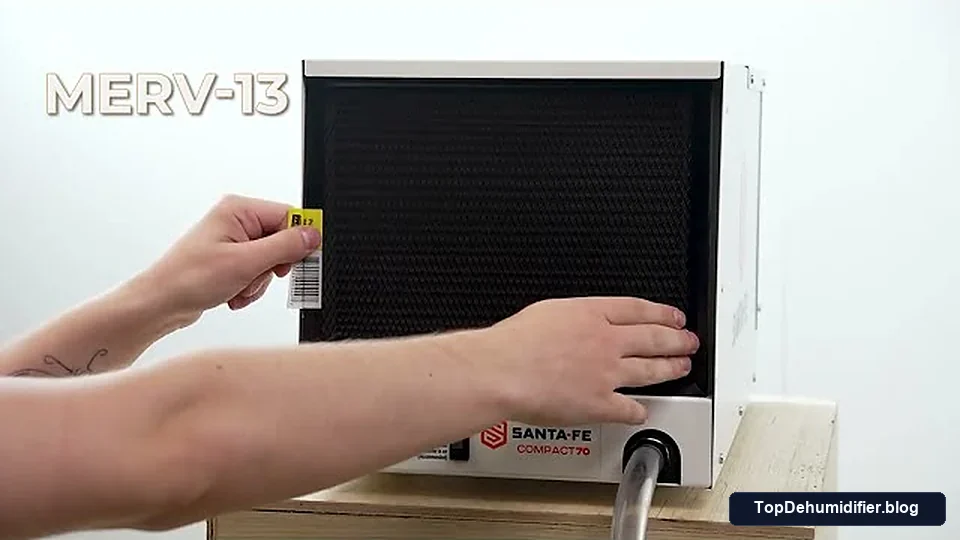
Routine upkeep centers on filter replacements to protect internal coils from dust buildup. Utilizing high-efficiency MERV 13 filtration media captures microscopic airborne contaminants effectively.
Inspect and replace filter elements every six months to maintain peak airflow. Neglecting this step reduces moisture extraction efficiency and strains the internal fan motor.
- Compatible with MERV 13 replacement filters
- Tool-free filter access door design
- Recommended six-month maintenance interval
Filter Maintenance Best Practices
The pleated filter design maximizes surface area for superior particle capture. Dual wire backing support prevents media deformation under heavy air pressure drops.
Keeping spare filters on hand ensures uninterrupted humidity control throughout changing seasonal conditions in your home.
- Pleated structure with dual wire backing
- Tool-free swap process takes seconds
Maintenance Protocols and Filtration Integration
Protecting internal coils from airborne dust requires a robust MERV-rated filtration framework. The integrated MERV-13 filter captures microscopic spores and particulate matter, preventing debris buildup on the evaporator coils during extended operations.
Routine filter replacements should occur every three to six months depending on environmental particulate loads. Neglecting this maintenance reduces airflow volumes, forcing the compressor to work harder and shortening overall appliance lifespan.
Comprehensive Buyer Verdict and Structural Value
The Santa Fe Advance90 stands out for serious moisture control, as shown in our santa fe compact70 vs advance90 review. Its heavy-duty extraction capabilities outshine typical consumer dehumidifiers.
Though upfront costs and physical weight present minor hurdles, the long-term structural protection it provides is invaluable. Homeowners battling chronic dampness will find unmatched reliability here.
- Superior long-term structural moisture protection
- Built for continuous commercial-grade operation
- Exceptional reliability in challenging environments
Final Recommendations for Property Owners
Verify your crawlspace dimensions and electrical capacity before purchasing this unit. Proper sizing ensures you maximize energy efficiency and moisture reduction results.
Pairing the machine with professional installation guarantees optimal drainage and long-lasting mechanical performance.
- Verify spatial dimensions prior to purchase
- Consider professional drainage setup if needed
Comprehensive Buyer Verdict and Structural Value
Investing in a dedicated whole-house dehumidifier transforms damp subterranean areas into dry, usable spaces. This engineered appliance provides exceptional defense against wood rot, mold growth, and structural degradation in vulnerable residential foundations.
Premium engineering justifies the upfront investment for homeowners requiring reliable moisture control. When evaluated against potential foundation repairs, this commercial-grade unit delivers unmatched structural protection and long-term mechanical reliability.
Frequently Asked Questions
How often should I change the filter on this dehumidifier?
You should replace the filter every six months to maintain optimal airflow. Regular changes protect your internal refrigeration coils from dust accumulation.
Does the unit require a dedicated condensate pump?
It features gravity drainage by default, meaning water flows downward. If your drain sits higher, you must add an external condensate pump.
Can this dehumidifier operate in cold crawlspaces?
Yes, it utilizes low-grain refrigerant technology and automated defrost cycles. This ensures reliable moisture extraction performance in chilly subterranean zones.
What size space can the Advance90 effectively dry?
This commercial-grade appliance handles large basements and expansive crawlspaces easily. Its high output targets severe chronic dampness across large footprints.
Is the operating noise level disruptive to living areas?
Operating at around 52 decibels, it produces a steady low hum. Proper placement and vibration isolation feet keep noise minimal upstairs.