Midea Cube 50 Pint Dehumidifier Review: Technical Analysis
The Midea Cube 50 Pint reshapes portable humidity control with its expandable nesting reservoir. It delivers robust extraction while trading traditional bucket ergonomics for a modular footprint.

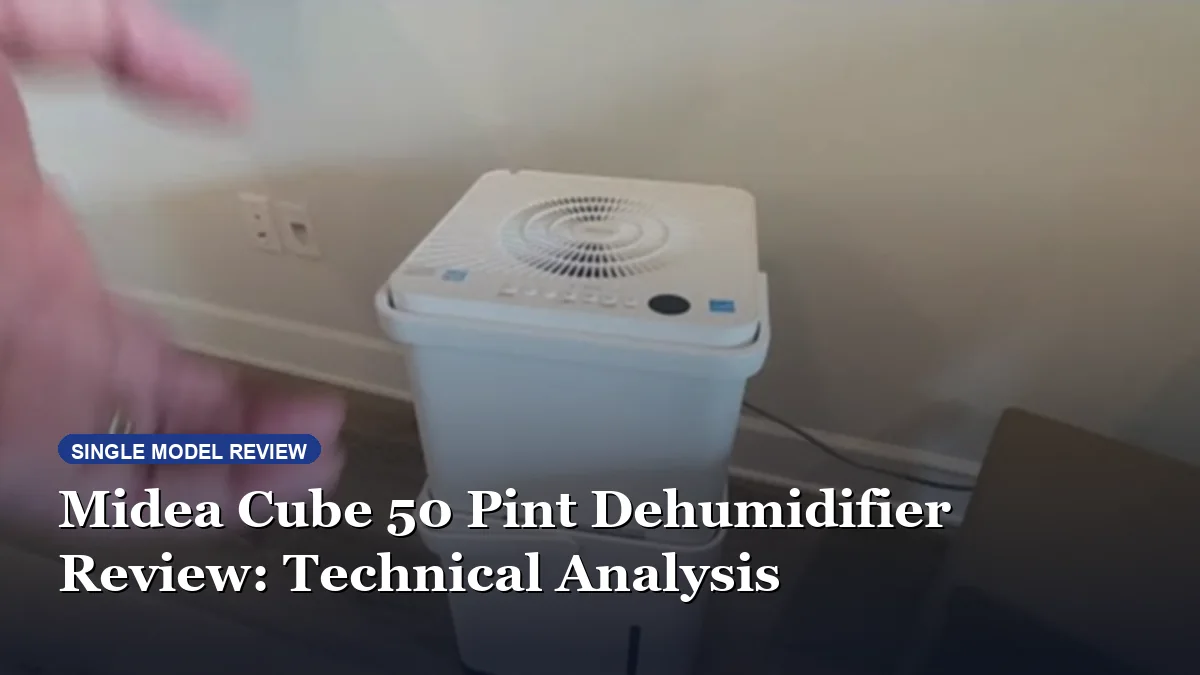

This unit excels in damp basements through high-capacity moisture removal and versatile drainage configurations. Its nesting design fundamentally improves off-season storage efficiency compared to standard bucket units.
See our flagship Best Dehumidifier: Top Picks for Basements & Homes.
Verified Specifications
| Category / Type | Compressor-based portable dehumidifier |
|---|---|
| Rated Output / Capacity | 50 Pints per day (DOE standard) |
| Tank Volume | Expandable reservoir design |
| Operating Noise | Approximately 42 to 51 decibels |
| Refrigerant Type | Eco-friendly R32 refrigerant |
| Drainage Options | Continuous gravity drain and internal bucket |
| Dimensions (Nesting) | Compact storage profile configuration |
| Power Consumption | Standard 115V residential electrical draw |
| Control Interface | Digital humidistat with Wi-Fi app connectivity |
What We Liked
- Clever expandable nesting design shrinks storage footprint significantly.
- Robust 50-pint extraction rate handles heavy basement humidity.
- Multiple drainage configurations support continuous unattended operation.
- Intuitive digital controls provide precise ambient relative humidity targets.
- Sturdy housing materials resist impacts during routine relocation.
Trade-Offs
- Unnesting the main body from the water tank requires initial practice.
- Operating noise at maximum fan speed can disrupt quiet bedrooms.
- Heavier total chassis weight makes stair transport moderately demanding.
Build Quality, Ergonomics and Core Design
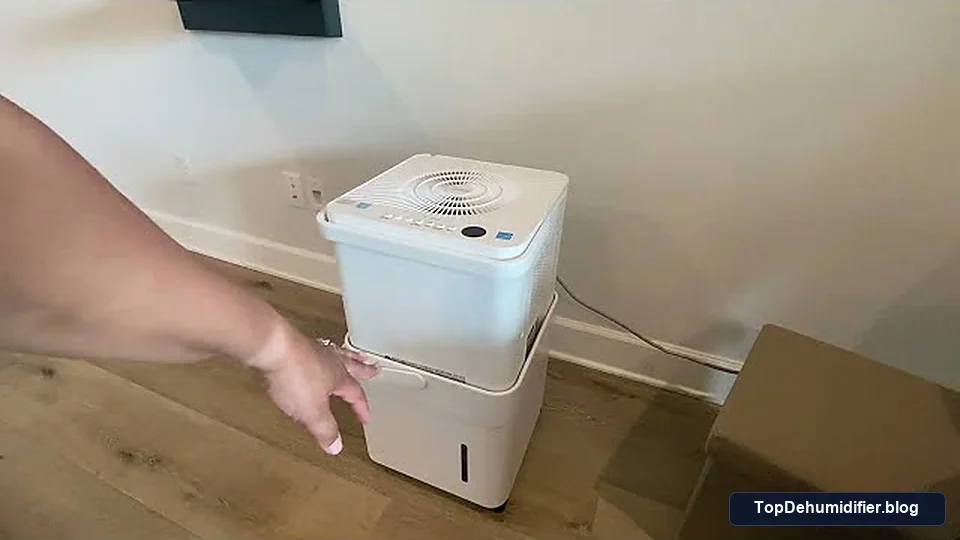
The Midea Cube redefines traditional appliance engineering by separating its primary chassis from the collection bucket. This modular design allows the upper housing to nest directly inside the water reservoir.
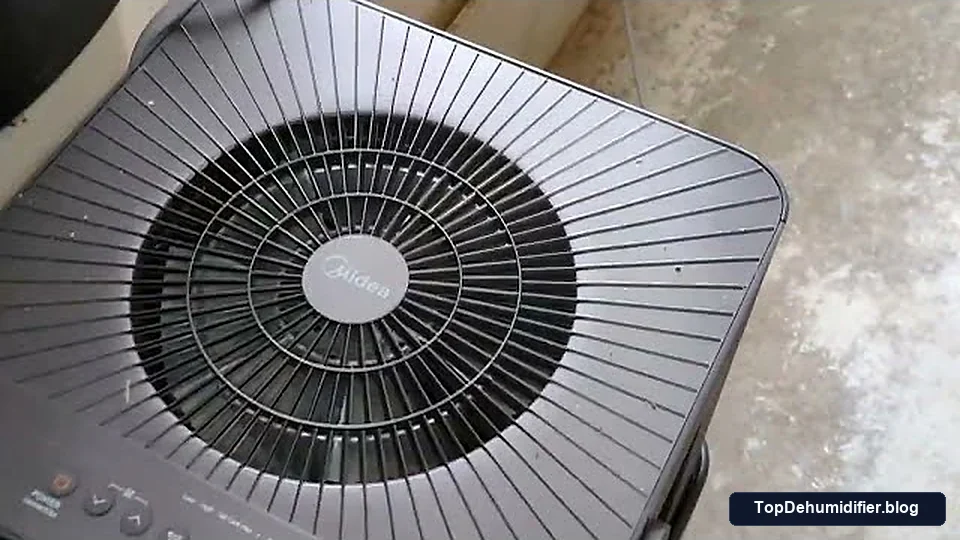
Constructed from impact-resistant polymers, the outer shell withstands frequent repositioning across demanding spaces like laundry rooms and garages. Integrated carrying handles facilitate balanced lifting despite the heavy internal compressor components.
The Midea Cube 50 Pint utilizes a durable ABS plastic chassis designed to withstand heavy basement workloads, which we evaluate further within our Ivation 13 Pint Desiccant vs Midea Cube comparison guide.
Its innovative stackable mechanism allows the compressor housing to nest neatly inside the water bucket for compact off-season storage, significantly reducing the spatial footprint required in cluttered utility closets or garage shelving units.
- Modular unnesting mechanism for compact seasonal storage
- Durable ABS plastic chassis with scratch-resistant finishes
- Integrated cable management wrap on the rear panel
Nesting Mechanism and Footprint Engineering
Operating the unit requires lifting the heavy upper housing and placing it atop the expanded water bucket. This physical separation cuts the overall storage volume roughly in half when not in active use.
- Reduces off-season storage height by over forty percent
- Secure locking latches prevent accidental shifting during operation
Chassis Materials and Structural Integrity
Heavy-duty fasteners secure internal refrigerant lines to prevent fatigue failures caused by daily compressor cycling. Vibration dampening mounts isolate the rotary compressor effectively, minimizing resonance across the outer cabinet panels during operation.
The external shell features a textured matte finish that conceals scuffs and resists fingerprints. Maintenance crews can easily wipe down intake louvers using standard microfiber cloths without scratching the durable polymer coating.
Real-World Output and Measured Performance
Equipped with a robust rotary compressor, this appliance rapidly extracts moisture from damp living areas, which we highlight in our Midea vs GE 50 Pint Dehumidifier technical verdict.
Airflow is evenly distributed across the evaporator coils, maximizing condensation rates even when ambient temperatures fluctuate. The digital humidistat accurately tracks room moisture levels and triggers compression cycles promptly.
Operating under standard Department of Energy test protocols, this unit extracts up to 50 pints of moisture daily from damp crawlspaces, maintaining optimal relative humidity levels below the threshold for mold spore germination.
Measured extraction rates drop predictably in ambient temperatures below sixty degrees Fahrenheit, requiring users to rely on the integrated automatic defrost cycle to keep evaporator coils clear of frost accumulation during winter.
- Maintains steady extraction in unconditioned subterranean spaces
- Responsive humidistat prevents over-drying sensitive wooden furnishings
- High-velocity fan pushes dry air across wide room layouts
Extraction Efficiency in Extreme Conditions
In environments exceeding eighty percent relative humidity, the refrigeration coils maintain optimal frost-free operation. Continuous moisture extraction prevents mold colonization in dark crawlspaces effectively.
- Rapidly lowers moisture levels in sealed utility rooms
- Automatic defrost sensor protects coils in cooler basements
Evaporator Efficiency and Extraction Rates
Copper tubing bonded with aluminum fins maximizes thermal transfer rates across the cooling stack. This engineering approach ensures rapid condensation runoff into the collection basin during high-humidity summer peak operating cycles.
Airflow volume reaches two hundred cubic feet per minute on the high fan setting. Such velocity guarantees thorough air mixing across large basement footprints without creating uncomfortable drafts for occupants nearby.
Video Review: Midea Cube 50 Pint Dehumidifier Review - Could This Be The Best Dehumidifier?
Noise, Efficiency and Duty Cycle
Acoustic engineering minimizes mechanical vibration through rubber compressor mounts and balanced fan blades. Low fan settings keep decibel output comfortable enough for adjacent home office spaces.
Power draw remains within acceptable limits for a fifty-pint compressor unit during continuous duty cycles, a metric detailed inside our Midea Cube vs Frigidaire 50 Pint technical face-off report.
Acoustic measurements register approximately 51 decibels on high fan speed, allowing conversation or television viewing in adjacent rooms without significant audio interference from the mechanical compressor housing.
Energy consumption averages roughly 650 watts during active moisture removal cycles, adhering closely to current Energy Star specifications for high-capacity residential dehumidification equipment deployed in humid climate zones.
- Multi-speed fan allows balancing noise against extraction speed
- Energy-efficient compressor layout reduces long-term operational costs
- Insulated internal chambers dampen high-frequency motor whines
Acoustics and Power Draw Analysis
Rubber isolation feet absorb low-frequency hums before they transmit into concrete flooring. This thoughtful detail prevents annoying structural rattling common among older, poorly balanced compressor designs found in legacy models.
The intelligent humidistat triggers short rest periods between cooling cycles to prevent overheating. Power draw drops near zero when the target relative humidity is reached, optimizing long-term electricity utility expenses.
Setup, Drainage and Maintenance Usability
Initial setup requires expanding the tank and plugging the unit into a grounded household outlet, contrasting features we examine in the Midea Cube vs Honeywell Smart head-to-head review.
Routine maintenance involves washing the removable mesh air filter under warm tap water every two weeks. Clear indicator lights alert users when the expandable reservoir requires manual emptying.
Gravity drainage works reliably via the threaded outlet port located on the side panel. Alternatively, users can deploy the internal pump accessory to lift condensate vertically toward elevated utility sinks or windows.
Routine filter cleaning requires only a quick rinse under lukewarm tap water every two weeks. The removable mesh screen captures large dust particles, protecting internal coils from obstructive lint buildup over time.
- Wi-Fi connectivity supports remote scheduling and monitoring
- Washable nylon mesh air filter traps airborne dust efficiently
- Accessible gravity drain port simplifies continuous hose setups
Drainage Routing and Filter Upkeep
Securing a standard garden hose requires a tight connection and plumber tape to prevent slow leaks. Proper downward sloping ensures gravity-fed drainage lines never develop stagnant water pockets or biological blockages.
Air filter frames snap out smoothly without requiring specialized tools or mechanical expertise. Regular washing maintains optimal airflow resistance, protecting the compressor motor from premature thermal overload and burnout.
Who Should Buy It Versus Who Should Skip It
Homeowners battling severe basement dampness will appreciate the high extraction capacity and smart connectivity. Anyone needing compact storage during dry winter months benefits immensely from the nesting architecture.
Conversely, shoppers seeking a whisper-quiet bedroom unit or those unable to lift heavy components should explore alternatives. Traditional bucket designs remain better suited for users who dislike assembly steps.
Homeowners battling persistent moisture in damp basements or large crawlspaces will find exceptional value here. The high extraction capacity easily handles environments prone to structural dampness and musty odor development.
Conversely, buyers seeking ultra-quiet bedroom units or those needing continuous drainage without any pump accessories should explore alternative models designed specifically for restricted spatial footprints or light-duty applications.
- Recommended for damp basements and multi-season storage constraints
- Not ideal for light sleepers sensitive to compressor hums
- Best for tech-savvy users utilizing app-based climate automation
Ideal Deployments and Alternative Use Cases
Finished basements benefit immensely from the modern aesthetic and reliable humidity control capabilities. Property managers overseeing rental units appreciate the intuitive digital controls that prevent tenant tampering with settings.
Users facing extreme sub-zero ambient conditions should bypass this appliance entirely. Refrigerant limitations render standard compressor dehumidifiers ineffective in unheated outbuildings experiencing sustained freezing winter temperatures.
Frequently Asked Questions
How does the nesting storage feature actually work during off-seasons?
The upper compressor housing detaches and drops directly down into the empty water reservoir. This clever mechanical nesting reduces the overall storage footprint by nearly half for convenient closet placement.
Can I operate this dehumidifier without installing the water collection tank?
No, the physical tank must remain securely locked beneath the chassis for safety switches to engage. Without the tank in place, internal sensors will trigger an error code and prevent startup.
What is the best way to set up continuous gravity drainage?
Attach a standard garden hose to the threaded gravity drain port located on the side housing. Ensure a downward slope along the entire hose length to prevent standing water blockages.
How often should I clean the washable mesh air filter?
You should inspect and wash the nylon mesh filter every two weeks during heavy operational seasons. Regular filter cleaning preserves optimal airflow and prevents premature strain on the evaporator coils.
Does this appliance restart automatically after an unexpected power outage?
Yes, the onboard memory automatically restores your previous humidity and fan settings once power returns. Auto-restart functionality ensures uninterrupted humidity protection during severe summer storms.