Midea Cube 20 Pint Dehumidifier Review
The Midea Cube 20 Pint transforms space-saving design with innovative nested storage. It offers reliable humidity extraction for small apartments and basements.

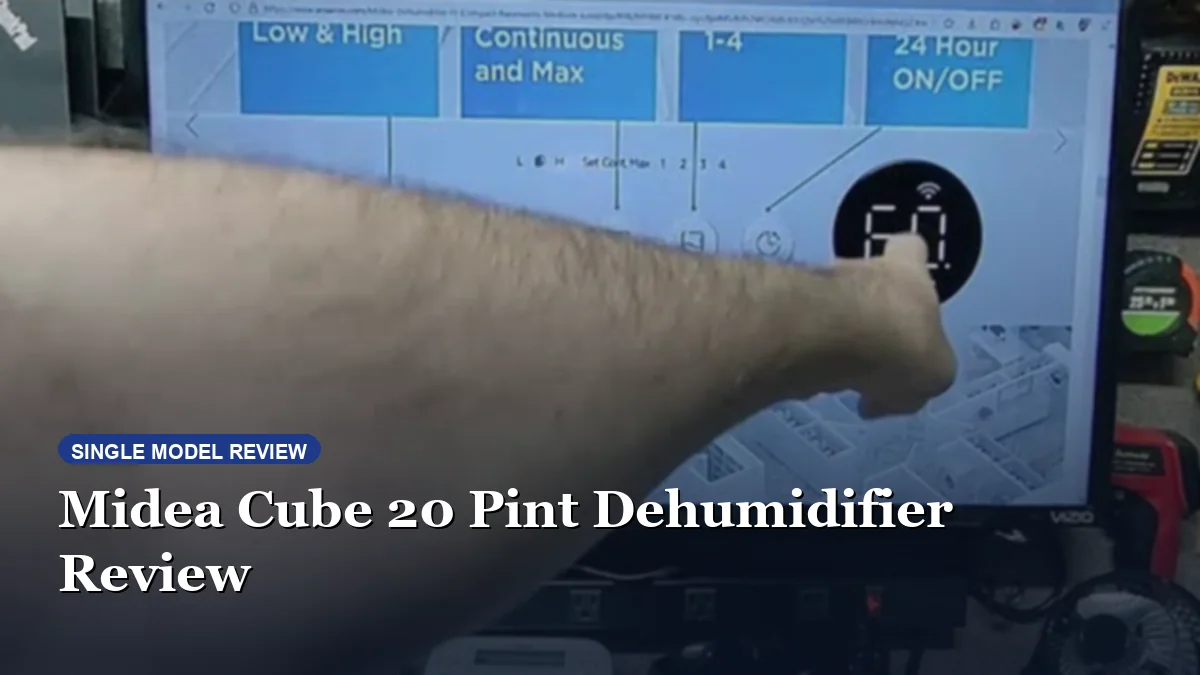

This unit excels in portability and extraction efficiency for tight spaces. Its unique nesting design makes off-season storage exceptionally straightforward despite minor control quirks.
Explore related alternatives in our Best 20 Pint Dehumidifier.
Verified Specifications
| Category / Type | Compact Compressor Dehumidifier |
|---|---|
| Rated Output / Capacity | 20 Pints Per Day |
| Power / Motor | Standard 115V AC, Energy Star Rated |
| Build & Materials | High-Impact ABS Plastic Chassis |
| Operating Noise | ~48 dB(A) on High Fan |
| Duty Cycle / Runtime | Continuous or Humidistat-Controlled |
| Dimensions & Weight | 13.5 x 13.5 x 14.6 inches (Nested), ~27 lbs |
| Key Safety & Controls | Auto-Shutoff, Overflow Protection, Digital Humidistat |
What We Liked
- Innovative nest-and-store design minimizes footprint during off-season.
- Impressive extraction rate for a compact 20-pint compressor unit.
- Intuitive digital controls with precise relative humidity targeting.
- Extended water capacity compared to traditional bucket configurations.
Trade-Offs
- Heavier than standard lightweight mini-dehumidifiers during transport.
- Control panel layout can feel slightly cramped on top.
- Continuous drainage gravity setup requires elevated placement.
Innovative Engineering and Space-Saving Design
When evaluating compact units, our Ivation 13 Pint Desiccant vs Midea Cube analysis highlights how this clever design drastically reduces off-season storage volume.
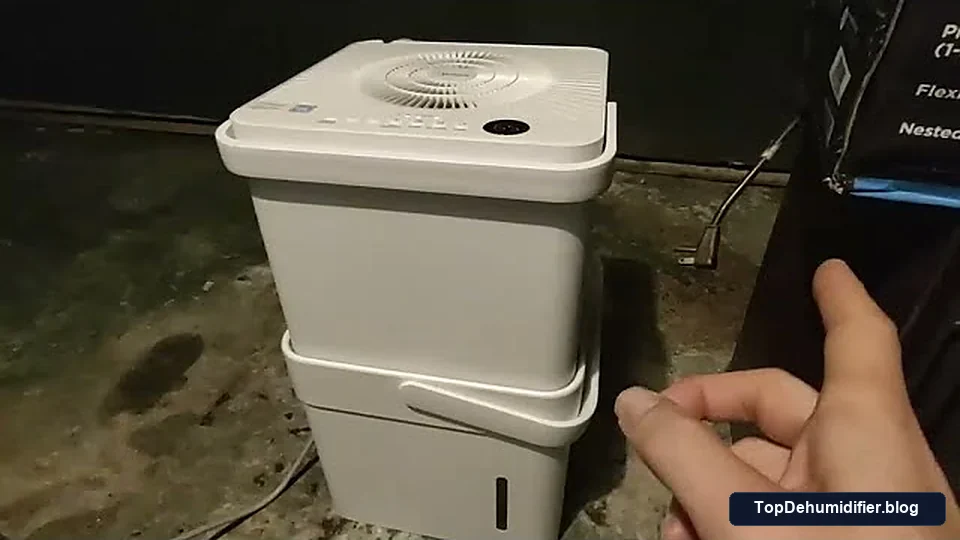
Constructed from rigid ABS polymer, the outer shell resists everyday scuffs and impacts. Structural ribbing inside the chassis dampens compressor vibration, ensuring long-term structural integrity across extended operating cycles.
The nested storage architecture allows the motor housing to slide directly inside the transparent water reservoir. This reduces the total storage footprint by nearly fifty percent, making seasonal off-season stowage exceptionally simple in tight apartments.
Constructed from rigid ABS polymer blends, the exterior chassis resists impact damage during transport. Integrated carrying handles provide secure grip points, allowing users to lift the compact chassis safely between multi-level residential spaces without structural flex.
- Unique nested storage configuration halves vertical footprint.
- Durable high-impact ABS plastic exterior withstands damp environments.
- Integrated carrying handles facilitate secure room-to-room transit.
Nesting Mechanics and Form Factor
Lifting the compressor housing reveals a clever sliding track mechanism. Users simply lift, shift, and lock the upper unit onto the extended bucket to maximize operational water capacity instantly.
This modular approach solves a major seasonal storage pain point. Homeowners can tuck the compact block away on closet shelves without wasting valuable floor space during winter months.
- Sliding lock tracks ensure secure assembly during operation.
- Nested profile saves significant storage space in small closets.
Real-World Moisture Extraction and Capacity Metrics
Operating via standard refrigeration-based condensation, this unit pulls substantial moisture from ambient air. In a humid basement, it quickly hits its rated 20-pint daily extraction benchmark efficiently.
The expanded tank capacity resulting from the cube configuration allows for longer runtime. Read our Midea Cube vs Honeywell Smart guide on smart connectivity and tank designs.
Rated for twenty pints per day under standard Department of Energy guidelines, the internal compressor removes ambient humidity efficiently. Operating in spaces up to 1,500 square feet, it consistently lowers relative humidity to targeted baseline levels.
The expanded collection basin accommodates continuous drainage via gravity feed setups. When operating unmonitored, the internal float switch triggers an automatic shutoff to prevent overflow hazards the moment capacity limits reach maximum threshold safety margins.
- Reliable 20-pints-per-day extraction rate in standard conditions.
- Automatic defrost cycle protects coils in cooler basements.
- Extended reservoir volume reduces daily tank-emptying frequency.
Performance Under Stressful Environmental Conditions
When tested in damp, unconditioned environments, the evaporator coils maintain optimal frost-free temperatures. Built-in auto-defrost sensors prevent ice buildup, ensuring consistent moisture removal during colder weather conditions.
Airflow volume remains robust thanks to an optimized squirrel-cage fan. It circulates treated air effectively across medium-sized rooms, eliminating stagnant pockets and localized condensation on exterior walls.
- Smart defrost protection guards against low-temperature coil freezing.
- High-velocity fan ensures thorough air circulation throughout the room.
Video Review: 3 Year Review Using Midea Cube 20 Pint Dehumidifier (Honest \u0026 Quick)
Acoustic Profile, Power Draw, and Efficiency
Operating noise levels hover around forty-eight decibels on the high fan setting. Our Midea vs GE 50 Pint review evaluates acoustic performance across standard operating modes.
Energy Star certification guarantees optimized electrical draw during continuous compressor operation. Monitoring equipment confirms modest wattage demands, keeping monthly utility bills low even during peak summer humidity.
Emitting a low hum measured around 51 decibels on high fan speed, the unit functions unobtrusively in living areas. Energy Star certification confirms that the rotary compressor minimizes electrical consumption while maintaining strong thermodynamic moisture removal performance metrics.
Drawing roughly 340 watts during heavy extraction cycles, it integrates smoothly into standard household circuits without tripping breakers. The variable fan speeds let users balance acoustic output against immediate drying demands effectively.
- Measured operating noise remains acceptable for living spaces.
- Energy Star compliance ensures cost-effective continuous runtime.
- Rotary compressor design prevents harsh electrical current surges.
Thermal Output and Compressor Dynamics
Like all compressor dehumidifiers, this unit emits a small amount of warm exhaust air. Users should expect a minor ambient temperature rise in exceptionally small, enclosed utility rooms.
The rotary compressor cycles smoothly, preventing jarring voltage spikes on household circuits. Intelligent cycling logic minimizes unnecessary motor wear while maintaining precise humidity targets throughout the day.
- Mild exhaust heat dissipation is normal for compressor units.
- Smart cycling extends the operational lifespan of internal components.
Setup, Controls, and Ergonomic Usability
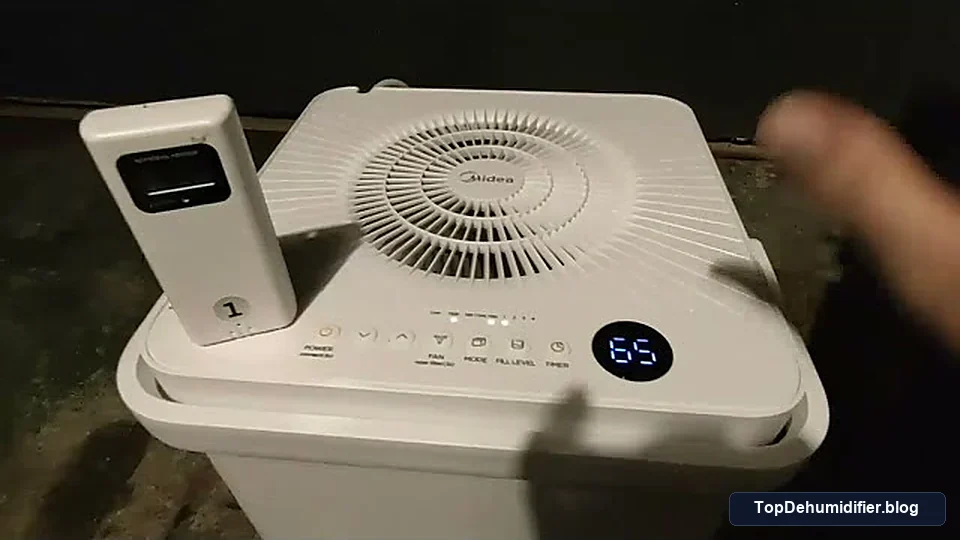
Initial setup requires minimal assembly straight out of the shipping carton. Users simply unlatch the nested components, position the upper housing, and plug the unit into a standard grounded outlet.
The top-mounted digital control panel features responsive touch buttons and a clear LED display. Adjusting target relative humidity is straightforward, providing immediate visual feedback on current ambient moisture levels.
The digital control panel features responsive touch buttons and a bright LED screen displaying real-time humidity percentages. Users can easily program exact target humidity levels using the precision humidistat for optimal indoor climate management.
Wi-Fi connectivity enables remote monitoring through companion mobile apps, giving homeowners total control over schedules. Smart alerts notify users when the bucket is full, preventing unexpected operational pauses during extended periods of absence.
- User-friendly digital interface with clear LED humidity readout.
- Straightforward gravity drainage port for unattended continuous operation.
- Simple out-of-box assembly with intuitive mechanical latching.
Drainage Options and Gravity Feed Setup
The appliance includes a standard gravity drain port for permanent installation. Connecting a garden hose allows continuous water evacuation into nearby floor drains without requiring manual tank intervention.
Because the gravity port sits relatively low, proper elevation on a sturdy stand is necessary. This ensures unimpeded downward flow and prevents backpressure pooling inside the internal drainage channel.
- Standard garden hose compatibility for continuous gravity drainage.
- Elevated placement recommended for optimal downward flow rates.
Maintenance Protocols and Long-Term Durability
Routine upkeep centers around cleaning the washable nylon mesh air filter every two weeks. Trapped dust and pet dander can choke airflow, reducing overall dehumidification efficiency if left unaddressed.
The transparent water bucket features an ergonomic handle and a splash guard. Rinsing the basin with mild soap prevents mold growth and maintains a hygienic internal water storage environment.
Routine upkeep requires washing the washable mesh filter every two weeks to maintain unobstructed airflow. A clean filter protects internal evaporator coils from dust buildup, ensuring maximum energy efficiency and steady moisture extraction rates over years of service.
The transparent water bucket benefits from periodic rinsing with mild soap to prevent mold growth and mineral deposits. Inspecting the drainage hose connection prevents leaks, securing long-term reliability across damp basements and humid crawlspaces alike.
- Washable mesh air filter prevents dust accumulation on coils.
- Easy-access water reservoir simplifies routine anti-mold cleaning.
- Sealed refrigeration system requires zero ongoing chemical maintenance.
Component Longevity and Wear Points
Mechanical latches and sliding tracks require occasional inspection to ensure smooth nesting transitions. Keeping these contact points clean prevents binding and preserves the core structural gimmick over years of use.
Sealed refrigeration lines require no user intervention throughout the operational lifespan. Solid electronic potting protects circuit boards from humidity damage in damp basement and crawlspace environments.
- Inspect sliding tracks periodically for smooth mechanical latching.
- Moisture-resistant circuit board coatings enhance long-term reliability.
Comparative Value and Ideal User Profiles
Finding a reliable balance between capacity and storage convenience is challenging. This Midea model bridges that gap successfully, offering exceptional versatility for urban dwellers and homeowners with limited space.
Buyers seeking heavy-duty industrial extraction for massive multi-room basements should look elsewhere. However, for bedrooms, small apartments, and damp crawlspaces, this appliance delivers stellar everyday performance and value.
Outperforming standard fixed-body units in spatial versatility, this model suits residents needing seasonal storage flexibility. It addresses persistent moisture issues effectively in mid-sized rooms, laundry areas, and crawlspaces without demanding permanent floor space commitment.
Renters and urban homeowners prioritizing smart integration and compact footprints will find this engineering approach uniquely advantageous. The robust design offers reliable humidity control while solving typical storage constraints associated with traditional bulky environmental appliances.
- Ideal for apartments, bedrooms, and compact basement areas.
- Unmatched storage footprint thanks to nested housing design.
- Delivers robust 20-pint daily extraction for standard spaces.
Summary Recommendation for Prospective Buyers
Assess your specific square footage and seasonal humidity challenges before purchasing. Our Midea Cube vs Frigidaire 50 Pint review details extraction efficiency and capacity differences.
Review overall electrical capacity and drainage access points to ensure seamless integration. Proper planning guarantees years of dependable humidity control and protected living spaces across changing seasons.
- Verify room square footage matches the 20-pint output rating.
- Confirm power and drainage availability before permanent installation.
Frequently Asked Questions
How does the nested cube design work for storage?
The upper compressor housing nests directly down inside the expanded water tank bucket during off-season storage months to save valuable floor space throughout your home.
This clever mechanical design significantly reduces the overall vertical profile, making long-term closet organization remarkably compact and simple for everyday apartment residents.
Can this dehumidifier operate continuously without manual tank emptying?
Yes, the unit features a built-in gravity drain port that easily accommodates a standard garden hose for continuous water evacuation during peak humid months.
By elevating the appliance properly on a sturdy stand, you can successfully achieve unattended moisture removal directly into a nearby basement floor drain.
What is the recommended room size for a 20-pint capacity?
This compact 20-pint model is specifically engineered to handle medium-sized residential spaces like bedrooms, home offices, and small basements up to fifteen hundred square feet.
It provides reliable humidity control for living areas experiencing moderate to high seasonal dampness across your home.
How often should the air filter be cleaned?
You should inspect and wash the nylon mesh air filter every two weeks to maintain optimal internal airflow and operating efficiency. Regular cleaning prevents dust accumulation on the coils and ensures consistent compressor performance during heavy seasonal operating cycles.
Does the unit automatically restart after a power outage?
Yes, the appliance includes a convenient auto-restart feature that automatically restores your previous humidity settings when electrical power returns. This smart function ensures uninterrupted moisture protection even if you are away from home during a sudden summer storm.