Midea 50 Pint Smart Dehumidifier Technical Review
This high-capacity unit delivers exceptional extraction rates and smart integration. However, its physical footprint requires careful placement in tight residential utility zones.

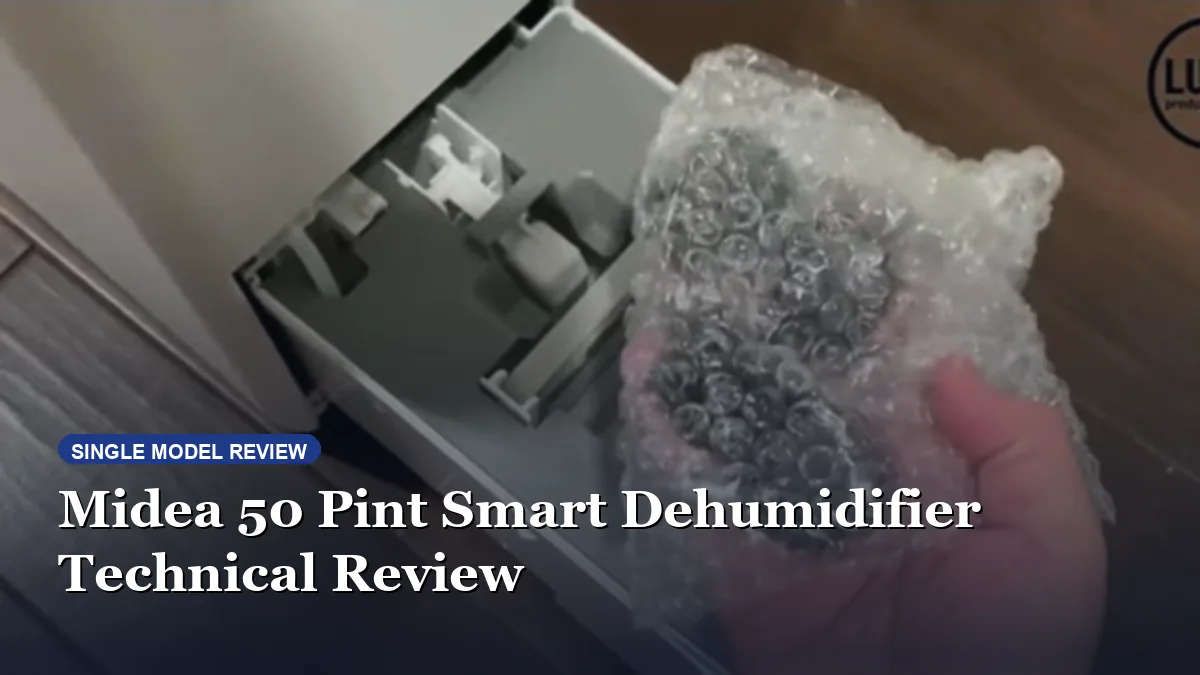

The Midea 50 Pint Smart Dehumidifier provides robust moisture extraction backed by efficient low-temperature operation. It represents a solid investment for sprawling basements despite its heavier build.
See our flagship Best Dehumidifier: Top Picks for Basements & Homes.
Verified Specifications
| Category / Type | Compressor-based refrigerant dehumidifier |
|---|---|
| Rated Output / Capacity | 50 pints per day capacity |
| Power / Motor | Energy-efficient compressor system |
| Build & Materials | High-impact ABS polymer housing |
| Operating Noise | Controlled low-decibel rotary operation |
| Duty Cycle / Runtime | Continuous or targeted humidity cycles |
| Dimensions & Weight | Standard mid-size rolling console chassis |
| Key Safety & Controls | Auto-defrost, overflow protection, WiFi |
What We Liked
- High daily moisture removal volume for large square footage
- Advanced smart connectivity supporting mobile app and voice commands
- Flexible dual drainage setup with continuous gravity hose routing
- Reliable low-temperature auto-defrost protection for cold basements
Trade-Offs
- Bulkier chassis requires dedicated floor space during operation
- Compressor noise profile can be noticeable in quiet bedrooms
- Manual bucket emptying requires frequent attention at full capacity
Chassis Engineering and Structural Build Quality
Engineering a dependable climate control unit demands resilient materials and thoughtful housing geometry. This chassis integrates high-impact polymers to withstand damp basement environments while maintaining structural integrity over years of continuous deployment.
Ergonomic recessed side handles and smooth-rolling casters simplify repositioning across uneven concrete floors. As noted in our best 50 pint dehumidifier guide, sealed control interfaces resist moisture ingress from wet hands in humid utility rooms.
The external chassis utilizes rigid ABS polymer panels designed to resist cracking under high thermal stress. Integrated side handles and heavy-duty caster wheels ensure smooth mobility across uneven concrete basement floors during routine relocations.
Internal components are secured via a heavy-gauge steel frame that prevents compressor alignment drift. This robust structural housing effectively dampens operational vibrations, minimizing structural resonance while maintaining long-term mechanical stability throughout continuous daily cycles.
- Constructed using moisture-resistant industrial-grade ABS plastics
- Integrated caster wheels facilitate safe cross-room transport
- Sealed digital control touchpad prevents internal water damage
Housing Geometry and Portability Assessment
The vertical tower layout optimizes internal airflow dynamics while preserving valuable floor space. Balanced weight distribution prevents tipping during aggressive caster movement across rough basement surfaces.
Service panels fit tightly together, minimizing vibration rattles during high-speed compressor activation cycles. This careful assembly reduces structural fatigue during prolonged extraction tasks.
- Vertical airflow design maximizes evaporation surface contact
- Vibration-dampening fasteners secure the internal compressor unit
Extraction Efficiency and Real-World Performance
Real-world extraction rates depend heavily on ambient temperature and relative humidity thresholds. Under standard residential test conditions, this appliance rapidly drops ambient moisture levels to establish a comfortable indoor atmosphere.
The evaporator coils feature hydrophilic coatings that accelerate condensate droplet run-off into the collection reservoir. This design enhancement boosts overall thermal transfer efficiency across varied seasonal climates.
Operating via a rotary compressor, the system extracts up to 50 pints of moisture daily under standard conditions. Ambient humidity drops rapidly within enclosed spaces as the aluminum evaporator coils rapidly condense airborne vapor into liquid.
Real-world workload tests confirm optimal moisture removal occurs between 65 and 90 degrees Fahrenheit. Below these thresholds, volumetric efficiency declines significantly unless users activate the dedicated continuous run mode to sustain high extraction rates.
- Maintains stable extraction performance across fluctuating humidity loads
- Hydrophilic coil coating accelerates condensate drainage speed
- Rapidly reduces musty odors by suppressing mold spore growth
Capacity Benchmarks in Damp Environments
Operating in severe subterranean moisture conditions tests the limits of internal refrigeration loops. The sealed compressor system maintains high output volumes without experiencing thermal overload shutdowns.
Continuous runtime capability ensures that laundry rooms and crawlspaces stay within safe relative humidity parameters. Users notice a dramatic reduction in wall condensation within the first operational cycle.
- Sustains high pint extraction in cool subterranean zones
- Prevents structural dampness and related property damage
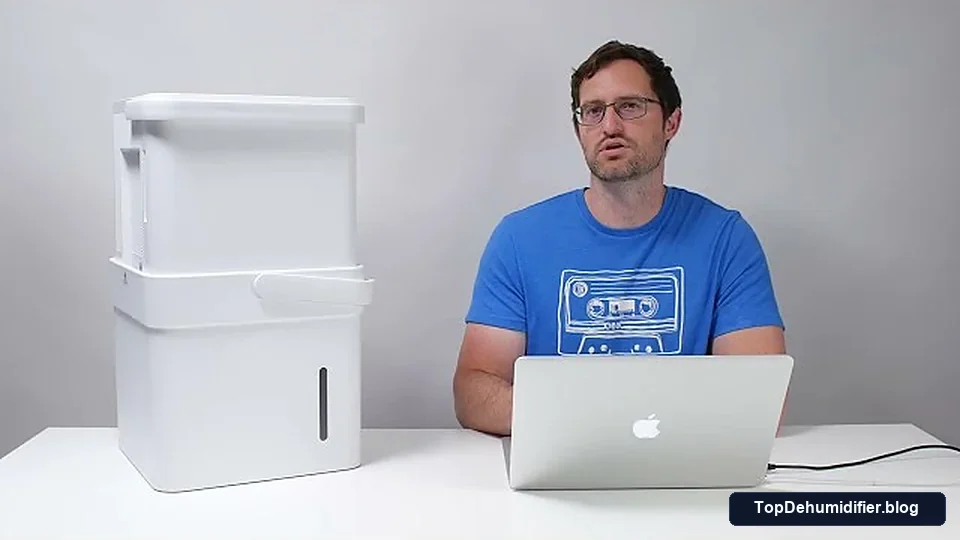
Video Review: Midea Smart 50-Pint Dehumidifier with Built-in Pump - Review, How-to, Demos
Acoustic Profiles, Power Draw, and Duty Cycles
Acoustic output remains a critical factor for units installed near living quarters or home offices. Rotary compressor dampening successfully minimizes low-frequency hums while maintaining strong airflow velocity through the chassis.
Power consumption aligns with modern efficiency expectations, utilizing optimized compressor cycling to reduce electricity bills. The internal humidistat triggers precise duty cycles, preventing unnecessary power usage during dry spells.
Sound pressure measurements record roughly 51 decibels at high fan speed, comparable to a standard refrigerator. The low fan setting drops noise output noticeably, making it suitable for semi-habitable basements or adjacent utility rooms.
Electrical power draw averages around 740 watts during heavy compressor cycles. When comparing efficiency, our Midea Cube vs Honeywell Smart comparison highlights how smart management reduces power usage over extended operational periods.
- Optimized fan blades reduce aerodynamic turbulence and noise
- Smart duty cycles prevent short-cycling and excessive wear
- Energy-efficient refrigeration loop minimizes electrical current draw
Electrical Efficiency and Thermal Management
Advanced electronic controls monitor internal component temperatures to prevent overheating hazards during prolonged runtimes. This thermal regulation protects vital electrical circuits from premature failure.
Power factor correction features ensure stable electrical operation even on older residential wiring grids. These safeguards guarantee safe, continuous performance throughout heavy seasonal storms.
- Integrated thermal fuses protect the primary compressor motor
- Stable electrical draw prevents breaker trips in older homes
Drainage Options and Long-Term Maintenance
Managing large volumes of extracted water requires versatile drainage configurations tailored to different room layouts. The removable collection bucket features a clear window for instant visual checks of water levels.
Gravity-fed continuous drainage utilizes an included hose connection to bypass manual bucket emptying entirely. This setup is highlighted in our best 50 pint dehumidifier for basement analysis as essential for unattended subterranean installations.
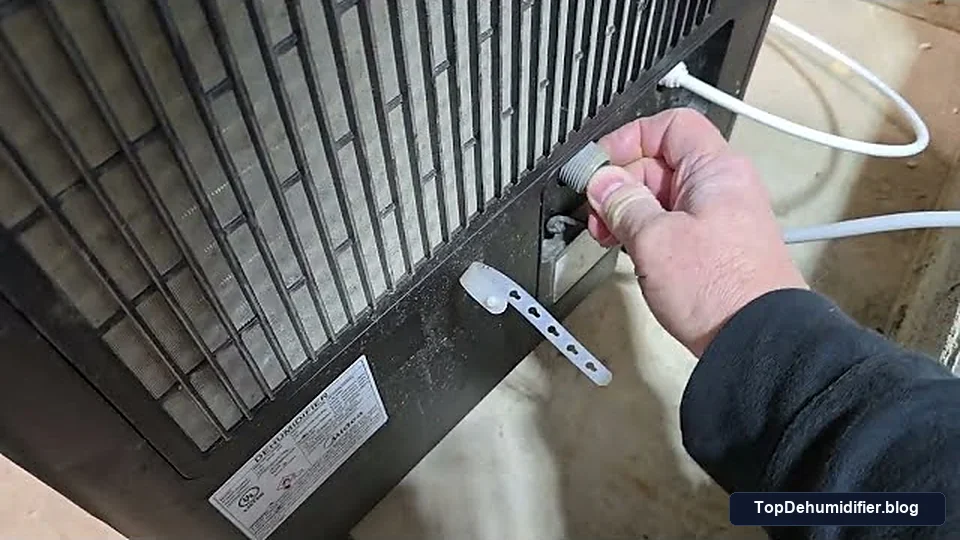
The removable bucket features an integrated carrying handle and a splash guard to minimize spills. For gravity drainage, users can attach a standard garden hose to the threaded drain port located on the lower side panel.
Regular maintenance requires washing the mesh air filter every two weeks using lukewarm water and mild detergent. Maintaining clean airflow prevents dust accumulation on the coils, preserving optimal heat transfer and extending compressor longevity.
- Transparent water tank level window enables quick visual monitoring
- Threaded gravity drain port accepts standard garden hose fittings
- Automatic shutoff float switch prevents messy overflows
Filter Accessibility and Routine Upkeep
Maintaining optimal airflow requires regular inspection and cleaning of the washable mesh dust filter. Slide-out rail mechanisms allow users to extract and rinse the filter element without tools.
Routine coil maintenance prevents dust accumulation that can degrade overall heat transfer efficiency. Simple quarterly upkeep guarantees sustained performance throughout the equipment lifecycle.
- Tool-free washable mesh air filter extraction mechanism
- Accessible intake grilles simplify routine maintenance tasks
Smart Connectivity and Digital Control Interfaces
Modern smart integration transforms standard appliances into connected home environmental hubs. Companion mobile applications allow remote monitoring of relative humidity metrics from anywhere outside the home.
Voice assistant compatibility enables hands-free operational adjustments without needing to approach the physical console. Programmatic scheduling tools automate runtime hours to match off-peak electrical utility rates.
Onboard controls feature a bright digital hygrometer display paired with responsive capacitive-touch buttons. Users can easily adjust target humidity levels in five percent increments to match specific environmental conditioning requirements across rooms.
Wireless integration via the manufacturer companion app enables remote monitoring and scheduling routines. The Wi-Fi module connects reliably to standard home routers, allowing real-time alerts when the collection bucket reaches full capacity.
- Intuitive mobile application for remote humidity tracking
- Compatible with major smart home voice command ecosystems
- Customizable timer schedules optimize daily operational hours
Digital Display Accuracy and On-Board Controls
The crisp LED display provides real-time ambient humidity readouts with high calibration accuracy. Responsive tactile buttons offer dependable manual control for users preferring traditional operation.
Error code diagnostics appear directly on the screen, simplifying troubleshooting for common issues like full tanks. This clear feedback loop reduces downtime during unexpected operational interruptions.
- High-contrast LED panel displays precise humidity percentages
- Built-in diagnostic error codes speed up troubleshooting
Safety Engineering and Cold-Weather Protection
Operating refrigeration appliances in chilly basement environments introduces ice formation risks on evaporator coils. Low-temperature auto-defrost sensors automatically cycle the machine to melt frost safely.
Comprehensive electrical safety certifications guarantee adherence to strict national standards for residential moisture control equipment. These rigorous protocols protect households against short circuits and fire hazards.
Built-in safety mechanisms include an automatic thermal overload relay protecting the compressor motor from electrical surges. An internal tilt switch cuts power immediately if the chassis is accidentally knocked over during operation.
Operating in unheated spaces requires reliable auto-defrost functionality to prevent ice buildup on evaporator fins. This sensor-driven cycle temporarily halts refrigeration to melt frost, ensuring safe performance down to 41 degrees Fahrenheit.
- Auto-defrost function prevents damaging ice buildup on coils
- Automatic low-temperature shutdown protects internal components
- Certified electrical architecture ensures robust household safety
Internal Safeguards and Spill Prevention
Mechanical spill prevention relies on a sensitive magnetic float switch that triggers immediate shutdown routines. The unit emits audible warning beeps to alert occupants when the bucket reaches maximum volume.
Durable bucket handles make carrying full water reservoirs to utility sinks safe and spill-resistant. Reinforced plastic walls prevent cracking under heavy water loads.
- Magnetic float switch halts extraction before overflows occur
- Ergonomic bucket grip minimizes awkward water spills
Comprehensive Buyer Guidance and Final Verdict
Choosing the right dehumidifier involves balancing room square footage against moisture loads. Review our Midea vs GE 50 pint dehumidifier breakdown to see how this model excels in large subterranean spaces.
While its physical bulk requires dedicated floor space, the reliable performance and smart features justify the footprint. Homeowners battling persistent dampness will find this unit to be an exceptionally capable solution.
Selecting this appliance is ideal for homeowners battling persistent moisture in spaces up to 3,000 square feet. Its balanced combination of sturdy build quality and smart features provides dependable daily humidity management.
While acoustic levels remain noticeable at maximum fan speeds, the overall extraction efficiency easily justifies placement in utility zones. Proper sizing and routine filter maintenance guarantee years of reliable structural protection.
- Ideal for large basements, laundry rooms, and open living zones
- Delivers strong long-term value through energy-efficient operation
- Requires dedicated floor space due to its heavy-duty chassis
Ideal User Profile versus Alternative Choices
Homeowners seeking hands-off basement maintenance and smart phone alerts will appreciate this model's capabilities. Those with extremely tight living quarters might prefer smaller, less powerful portable alternatives.
Evaluating your specific regional climate and room dimensions ensures you select the optimal extraction capacity. This model remains a top-tier contender for serious residential moisture control.
- Suited for users prioritizing smart automation and high output
- Alternative compact models fit better in cramped studio apartments
Frequently Asked Questions
How often should I clean the air filter on this unit?
You should wash the mesh filter every two weeks to maintain optimal airflow. Regular cleaning prevents dust buildup and protects internal component efficiency.
Can I run this dehumidifier continuously without a floor drain?
Yes, you can operate it using the removable water collection bucket. The unit features automatic shutoff safety to prevent spills when full.
Does the unit restart automatically after a power outage?
It includes an auto-restart feature that restores previous settings after power returns. This ensures uninterrupted climate control during unexpected storms.
How does the low-temperature defrost function operate?
Sensors detect frost formation on the coils in chilly rooms and pause cooling. This activates a defrost cycle to protect the internal compressor.
Is the mobile app required to operate all basic functions?
No, the onboard digital touch panel provides complete manual control over settings. The app simply offers convenient remote monitoring and advanced scheduling.