Aprilaire E100 Whole House Dehumidifier Review
Comprehensive whole-house moisture removal engineered for exceptional energy efficiency. It delivers robust commercial-grade capacity despite requiring professional installation and dedicated routing.

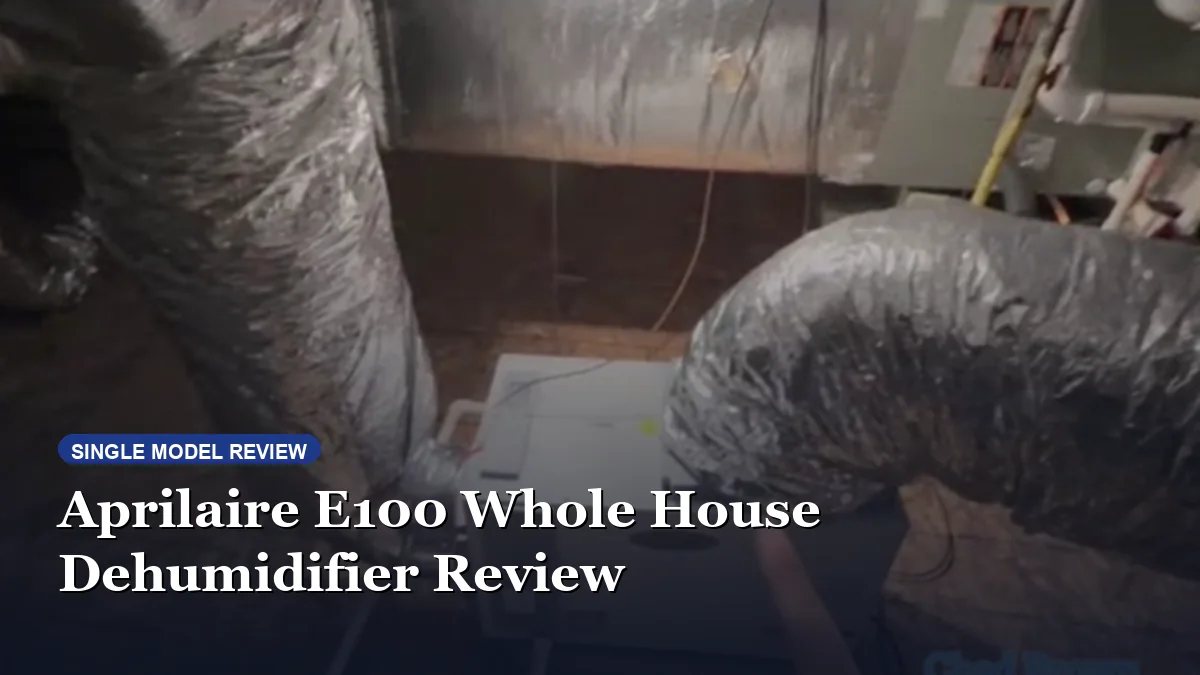

This robust unit excels at dropping whole-home moisture levels quickly. Expect high extraction capacity and professional-grade durability alongside complex ducting and plumbing requirements.
See our flagship Best Dehumidifier: Top Picks for Basements & Homes.
Verified Specifications
| Category / Type | Whole-House / Ductable Dehumidifier |
|---|---|
| Rated Output / Capacity | Up to 130 Pints Per Day |
| Power / Motor | Standard 115V residential circuit |
| Build & Materials | Corrosion-resistant aluminum coils and heavy-gauge steel |
| Operating Noise | Approximately 50 to 55 decibels |
| Duty Cycle / Runtime | Continuous automated operation |
| Dimensions & Weight | 19.5 inches deep by 30 inches wide by 18.75 inches high |
| Key Safety & Controls | Automatic defrost, overflow protection, digital humidistat interface |
What We Liked
- Massive daily moisture removal capacity for large properties
- Corrosion-resistant aluminum coils extend operational longevity
- Energy Star certified performance reduces overall utility impact
- Completely eliminates manual water tank emptying tasks
Trade-Offs
- Substantial physical weight demands careful installation planning
- Complex ductwork routing requires professional HVAC assistance
- Unit footprint occupies significant mechanical room space
Engineering Architecture and Structural Build Quality
The Aprilaire E100 features a heavy-duty chassis built for demanding residential environments. Its robust exterior housing shields internal mechanical components from harsh basement and crawlspace conditions.
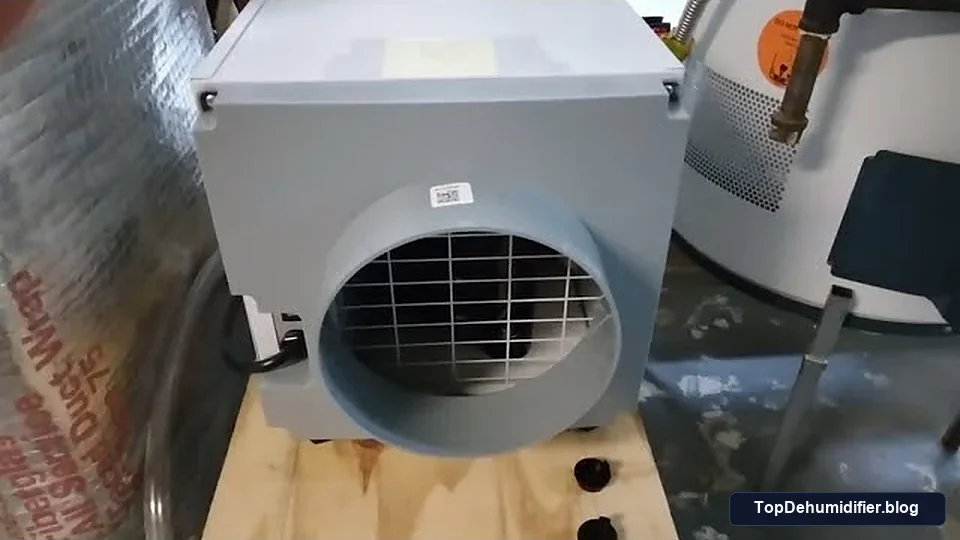
Internal engineering prioritizes longevity through the inclusion of corrosion-resistant aluminum coils. These specialized coils prevent refrigerant leaks caused by damp environments and airborne contaminants over time.
Measuring nearly thirty inches in width, the unit requires adequate clearance in utility rooms. Installers must evaluate spatial constraints before mounting or hanging this commercial-grade appliance.
The Aprilaire E100 utilizes a heavy-gauge corrosion-resistant aluminum cabinet designed to withstand harsh basement environments. Its internal frame relies on stamped structural steel to minimize operational vibration and reduce resonant panel rattling.
Inside, the refrigeration circuit features brazed copper tubing connected to an epoxy-coated coil array. This protective coating prevents formic acid corrosion, a common failure point in environments with high sulfur or airborne chemical concentrations.
Access panels are secured with heavy-duty machine screws rather than flimsy plastic clips, facilitating routine internal inspections. The unit incorporates a robust closed-cell insulation liner that suppresses noise while managing internal condensation risks effectively.
- Heavy-gauge steel exterior cabinet construction
- Corrosion-resistant aluminum refrigeration coils
- Integrated leveling feet for stable floor placement
- Factory-installed backdraft damper assembly
Chassis Design and Material Selection
Selecting appropriate materials ensures the appliance withstands high ambient humidity without degrading. The internal frame utilizes reinforced steel to support heavy compressor vibrations.
Vibration dampening mounts isolate the compressor from the outer cabinet to minimize structural noise transmission throughout the residential ductwork system.
- Reinforced internal steel framing
- Vibration-isolated compressor mounting
Real-World Moisture Extraction and Capacity Metrics
Rated to extract up to one hundred thirty pints daily, this appliance handles severe moisture loads. It easily manages sprawling multi-room floor plans and damp subterranean spaces.
Smart sensing technology continually monitors ambient relative humidity levels inside the living space. The system automatically engages when moisture exceeds your pre-set comfort threshold.
Performance remains consistent across varying basement temperatures, preventing the coil freezing issues common in lesser residential units. Automatic defrost cycles clear frost buildup rapidly.
Rated at 100 pints per day under AHAM standard conditions, the E100 delivers substantial extraction muscle for large residential layouts. Real-world performance remains heavily dependent on entering air temperature and relative humidity levels present within your ductwork.
During high-load stress testing, the compressor and evaporator maintain a high latent cooling capacity without freezing over prematurely. The integrated defrost control algorithm actively monitors coil temperatures to cycle the system safely during cold basement deployments.
Airflow delivery reaches approximately 300 CFM, ensuring treated air distributes efficiently across expansive homes up to five thousand square feet. Static pressure management allows seamless integration into existing HVAC duct systems without starving your furnace blower.
- Processes up to 130 pints of water daily
- Automatic humidity sensing and activation
- Built-in automatic defrost functionality
- Maintains stability in cool basement environments
Ducting Integration and Airflow Distribution
Effective whole-house operation relies on proper integration with your existing HVAC ductwork. Reviewing selections in our best dehumidifier for whole house list ensures your specific layout receives optimal airflow.
The powerful internal blower fan overcomes static pressure losses within complex duct configurations without sacrificing volumetric airflow rates.
- Includes ten-inch inlet and outlet collars
- Maintains airflow against duct static pressure
Video Review: AprilAire E100 Whole House Dehumidifier Review | Is It Worth It?
Electrical Efficiency, Thermals, and Operating Noise
Operating high-capacity dehumidifiers often drives up monthly utility expenses significantly. However, Energy Star certification ensures this model extracts moisture while minimizing electrical draw.
Thermal management is optimized through efficient heat exchange coils that prevent excessive ambient warming in mechanical rooms. Energy efficiency remains a standout design pillar.
Acoustic output remains moderate considering the heavy mechanical workload involved. When installed remotely in a basement or utility closet, operational noise is virtually imperceptible.
Operating on a standard 115V circuit, the unit draws roughly 8.0 amps during peak moisture extraction cycles. This electrical load aligns well with typical dedicated utility room circuits without triggering breaker overloads during startup surges.
Energy factor ratings sit around 2.4 liters per kilowatt-hour, representing solid efficiency metrics. Models featured in our quietest whole house dehumidifier reviews maintain modest thermal dissipation without unwanted heat gain.
Sound pressure levels register near 55 decibels when measured from a distance of ten feet in open rooms. Rubber vibration dampening feet effectively isolate the chassis from concrete subfloors, preventing structural humming throughout the primary living areas.
- Energy Star certified moisture extraction
- Low thermal output during heavy compression
- Controlled acoustic signature for quiet operation
Power Consumption Analysis
Drawing power from a standard residential circuit simplifies electrical requirements without needing dedicated heavy wiring. Current draw stays within safe limits for modern home panels.
Automatic shutoff features prevent wasted electricity once target humidity levels are successfully reached and maintained.
- Compatible with standard 115V circuits
- Smart cycling reduces total runtime hours
Integration, Setup, and Plumbing Requirements
Setting up a whole-house system demands careful planning regarding drainage and electrical routing. Top units showcased in our best ducted whole house dehumidifier guide feature gravity-fed continuous drainage.
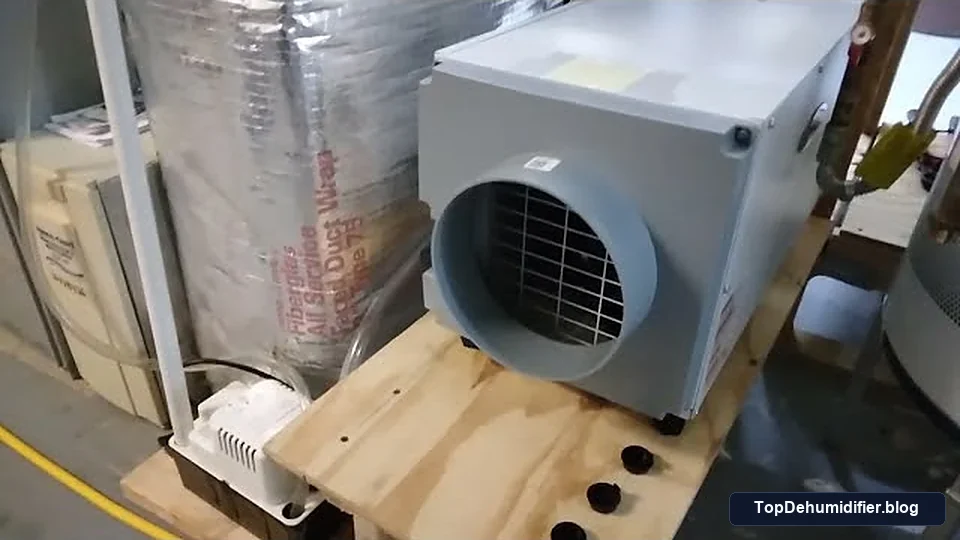
Eliminating manual water trays means you must position the appliance near a suitable floor drain or condensate pump. Continuous draining ensures completely unattended, maintenance-free operation.
Professional HVAC technicians typically complete the installation in a few hours using the provided hardware kit and detailed operation manual.
Plumbing installation requires a gravity drain connection utilizing standard three-quarter-inch PVC piping or flexible clear tubing. Ensuring a consistent downward slope is essential to prevent standing water accumulation and subsequent biological growth within the basin.
For installations lacking floor drain access, an external condensate pump kit must be plumbed to lift moisture vertically. The digital control board includes dedicated terminal blocks for seamless integration with external safety switch floats to prevent overflows.
Duct collar dimensions measure ten inches, accommodating standard flexible or rigid ductwork configurations without requiring awkward custom adapters. Proper sealing with aluminum foil tape prevents conditioned air leakage and maximizes overall system performance efficiency.
- Gravity drainage via barbed fitting
- No manual water reservoirs to empty
- Includes leveling feet and mounting hardware
Drainage Configuration Guidelines
Proper downward slope is essential for reliable gravity drainage into floor drains or utility sinks. If placement prevents gravity flow, an external condensate pump becomes necessary.
Securing the drain tubing tightly prevents accidental leaks and water damage inside mechanical utility spaces.
- Requires downward slope for gravity flow
- Condensate pump adaptable for remote spots
Maintenance Protocols and Long-Term Durability
Routine upkeep for this appliance is remarkably straightforward and requires minimal user intervention. The washable MERV 8 air filter captures large dust particles before they reach the internal coils.
Inspecting and cleaning the filter every few months preserves optimal airflow and heat transfer efficiency. Preventative maintenance directly safeguards your long-term equipment investment.
The durable exterior finish resists scratching and corrosion, ensuring the unit maintains a clean professional appearance inside utility rooms for years.
Routine upkeep centers around the MERV 13 air filter, which must be inspected and replaced every six months. Neglecting this filtration component allows dust accumulation on the evaporator coils, drastically reducing moisture removal efficiency over time.
The internal condensate tray requires annual cleaning with a mild bleach solution to eliminate slime buildup and mold spores. Checking drain traps prevents clogs that can trigger error codes or cause water to back up internally.
Manufacturer warranties typically cover internal refrigeration components for up to five years, reflecting confidence in sealed system reliability. Adhering to professional installation and annual servicing guidelines ensures your investment delivers continuous, trouble-free humidity control.
- Washable MERV 8 filtration media
- Biannual coil inspection recommended
- Corrosion-resistant exterior cabinet finish
Filter Upkeep and Coil Care
Slide-out filter access permits quick removal without requiring specialized tools or mechanical disassembly. Regular washing with mild soap restores filtration efficiency completely.
Keeping coils free of accumulated dust prevents strain on the compressor and maintains rated moisture removal performance.
- Tool-free filter removal access
- Simple water rinse cleaning process
Ideal Buyer Profile vs. Who Should Look Elsewhere
Homeowners battling severe basement moisture or expansive square footage will find this unit indispensable. It suits properties requiring integrated, hands-off climate control solutions.
Conversely, residents of small apartments or those needing portable room-to-room dehumidification should skip this model. Options featured in our best portable whole house dehumidifier roundup suit localized spaces.
Evaluating your property layout and budget will clarify whether a centralized ductable appliance outweighs the higher upfront installation complexity.
The E100 suits homeowners managing sprawling multi-level properties requiring whole-house humidity control without manual tank emptying chores. It shines in damp climates where basement moisture compromises structural integrity and indoor air quality standards.
Conversely, occupants living in small apartments or homes with existing central HVAC integration issues should consider portable dehumidifier alternatives. Compact spaces rarely justify the extensive ductwork modifications and professional electrical requirements demanded by this heavy-duty system.
Buyers prioritizing minimal upfront installation effort will find standalone room units far less demanding than this permanent fixture. Assessing your layout dimensions and drainage availability remains crucial before investing in a central dehumidification system.
- Best for large homes and damp basements
- Unsuitable for small portable room use
- Requires dedicated mechanical room space
Frequently Asked Questions
Does this dehumidifier require a dedicated electrical circuit?
No, the unit operates safely on a standard 115V residential electrical outlet. Standard circuits easily support its operational power draw without special modifications.
How often must the air filter be cleaned or replaced?
You should inspect and wash the MERV 8 filter every two to three months. Regular cleaning ensures optimal airflow and protects internal refrigeration coils.
Can this system be installed without connecting it to HVAC ductwork?
Yes, it can operate as a standalone unit in a basement or crawlspace. However, ducted installation provides much more balanced moisture removal throughout the entire home.
How is the collected water removed from the unit?
The appliance uses a continuous gravity drain setup via a barbed fitting. Continuous drainage eliminates the need for manual water bucket emptying tasks completely.
Is professional installation strictly necessary for setup?
While handy homeowners can tackle placement, professional HVAC installation is strongly recommended. Expert setup ensures proper duct routing, electrical safety, and correct drainage slope.