Typical Indoor Humidity in Winter: Levels
Maintaining correct indoor humidity levels during winter protects structural integrity and occupant health. Proper moisture balance prevents mold growth while avoiding dry air discomfort.


Keep indoor relative humidity between thirty and forty percent during cold weather. This precise balance prevents window condensation and structural decay without causing excessive indoor dryness.
Ready to compare models? Start with our Best Dehumidifier: Top Picks for Basements & Homes.
Practical Quick-Reference Table
| Scenario / Metric | Recommended Target | Why It Matters |
|---|---|---|
| Outdoor Temp Below 20F | 30% to 35% RH | Prevents severe frost and pane degradation. |
| Outdoor Temp 20F to 30F | 35% to 40% RH | Balances comfort with minimal condensation risk. |
| Hygrometer Calibration | +/- 2% RH Accuracy | Ensures reliable baseline environmental readings. |
| Basement Storage Areas | 35% to 50% RH | Stops subterranean dampness and musty odors. |
| Primary Living Spaces | 30% to 40% RH | Protects respiratory health and wood furnishings. |
| Continuous Ventilation Rate | 0.35 ACH Minimum | Flushes out trapped indoor air pollutants. |
Understanding Winter Indoor Relative Humidity Dynamics

Cold outdoor air holds very little moisture compared to warm summer air. When this dry air enters a heated home, its relative humidity plummets unless supplemented.
Conversely, airtight modern construction traps internal moisture from everyday activities. Evaluating the best dehumidifier for winter options helps maintain healthy relative humidity levels without causing excessive window condensation.
Balancing these competing thermodynamic forces requires accurate measurement tools and strategic ventilation. Homeowners must understand how outdoor temperatures dictate safe indoor moisture targets.
Ignoring these seasonal shifts often leads to structural damage or respiratory discomfort. Maintaining proper indoor metrics preserves both building materials and occupant health.
Cold outdoor air holds minimal moisture, which drops indoor relative humidity significantly when heated by your furnace system. Maintaining proper levels prevents respiratory irritation and structural shrinkage across wooden framing elements.
Absolute humidity measures actual water vapor density in grains per pound, while relative humidity changes inversely with air temperature shifts. Understanding this thermodynamic relationship explains why heated spaces feel drastically drier during freezing winter conditions.
ASHRAE Standard 55 recommends keeping indoor environments between 30% and 60% RH for optimal human thermal comfort and health. Falling below the lower threshold often causes static electricity, dry skin, and increased susceptibility to airborne viruses.
Building envelopes lose moisture continuously through vapor diffusion, driven by higher indoor vapor pressure gradients seeking equilibrium. Installing continuous vapor retarders on the warm-in-winter side prevents interstitial condensation within fiberglass batt insulation cavities.
- Cold air entering a home loses moisture capacity.
- Heating systems dry out incoming fresh air rapidly.
- Occupant activities continuously add indoor water vapor.
- Airtight building envelopes trap humidity efficiently.
Analyzing Temperature and Vapor Pressure
Vapor pressure dictates how moisture moves through building assemblies during freezing weather. Warm indoor air pushes water vapor toward colder exterior walls.
If vapor hits a cold surface prematurely, it condenses into liquid water. This hidden moisture creates ideal conditions for wood rot and mold proliferation.
- Vapor pressure drives moisture outward.
- Cold walls act as condensation planes.
Thermodynamic Effects of Cold Weather on Enclosures
Exterior walls and windows experience severe thermal gradients during winter months. The interior surface remains warm while exterior framing drops near ambient temperatures.
This temperature differential creates a dew point transition zone inside the wall cavity. Managing indoor humidity prevents this zone from accumulating destructive moisture.
Double and triple-pane windows offer higher resistance to interior surface condensation. However, extreme indoor humidity will still overcome these thermal barriers.
Building materials absorb excess vapor over time, changing their physical properties. Monitoring ambient moisture protects framing components from premature thermal breakdown.
Exterior walls experience severe thermal bridging at steel or wood stud framing members, lowering local interior surface temperatures drastically. When these surfaces drop below the dew point, airborne moisture condenses into liquid water, promoting mold growth.
Double and triple-pane windows act as primary thermal barriers, but poorly sealed insulated glass units develop edge-seal failures. Upgrading to low-e coatings reflects radiant heat inward, raising interior glass pane temperatures to mitigate localized window condensation.
Basement foundations draw heat from surrounding sub-grade soil, chilling concrete foundation walls below the ambient indoor temperature. Applying rigid extruded polystyrene insulation externally stops moisture migration and elevates foundation wall temperatures above critical condensation thresholds.
Attic assemblies require balanced ventilation to purge warm, moisture-laden air leaking past ceiling penetrations from living spaces below. Installing continuous soffit and ridge vents maintains adequate air exchange rates, preventing destructive frost accumulation on roof sheathing.
- Thermal gradients increase condensation risk.
- Dew point zones shift inside wall cavities.
- Windows serve as early warning indicators.
- Building materials absorb excess indoor vapor.
Evaluating Thermal Bridge Vulnerabilities
Thermal bridges bypass insulation layers and lower local interior surface temperatures. These cold spots attract condensation faster than surrounding insulated drywall areas.
Targeting localized dampness requires inspecting corners and window frames regularly. Correcting insulation gaps stops moisture from pooling on cold structural framing.
- Thermal bridges lower local surface temps.
- Corners concentrate condensation risk.
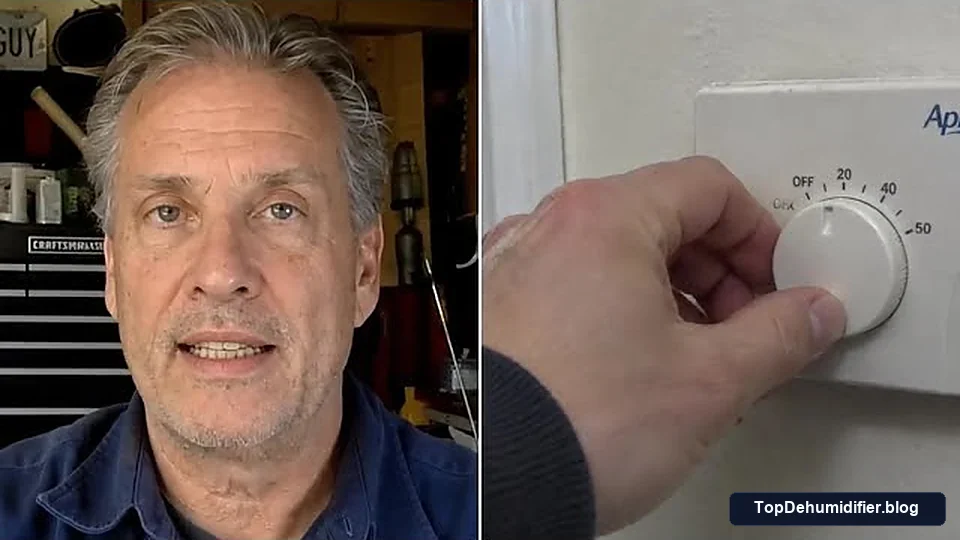
Video Walkthrough: Ask Andrew: Why indoor humidity matters during the cold season
Calibrating Hygrometers and Diagnostic Tools
Accurate humidity tracking starts with properly calibrated hygrometers. Use our pint capacity calculator to determine exact extraction requirements once baseline readings confirm elevated indoor moisture.
The salt test method provides a reliable field calibration baseline for sensors. Place your hygrometer inside a sealed bag with wet salt for six hours.
A correctly calibrated device should read precisely seventy-five percent relative humidity. Adjust any variance on your digital display or mechanical tuning screw immediately.
Place monitors away from direct drafts, heat registers, and exterior doors. Proper placement ensures your readings reflect true room-scale environmental conditions.
Inexpensive dial hygrometers often drift out of calibration over time due to mechanical spring fatigue and temperature fluctuations. Utilizing a salt test calibration kit with saturated sodium chloride solution provides reliable baseline accuracy for digital sensors.
Place your hygrometer inside a sealed airtight plastic bag alongside the salt slurry container for at least twenty-four hours. A properly calibrated sensor should read exactly 75 percent relative humidity at stable room temperature ambient conditions.
Thermal leak detectors use infrared sensors to identify cold bridging and insulation gaps across exterior walls and ceiling junctions. Scanning surfaces during peak heating operation helps pinpoint air infiltration pathways where condensation risks are exceptionally high.
Professional HVAC technicians deploy psychrometers to measure wet-bulb and dry-bulb temperatures simultaneously for precise dew point calculations. These diagnostic readings verify overall HVAC system performance and ensure indoor air quality standards remain compliant.
- Digital sensors require periodic field calibration.
- Salt tests confirm baseline measurement accuracy.
- Avoid placing monitors near direct heat.
- Mount units at standard breathing height.
Executing the Salt Test Protocol
Mix common table salt with distilled water until it forms a slushy consistency. Put this mixture inside a small open container within an airtight bag.
Seal the hygrometer alongside the salt container without letting liquid touch the sensor. Allow the sealed environment to stabilize for at least six hours.
- Use distilled water for clean results.
- Maintain an airtight plastic seal.
Ventilation, Air Exchange, and Mechanical Controls
Controlled mechanical ventilation exhausts stale, humid air while introducing fresh outdoor air. Heat recovery ventilators transfer thermal energy to minimize winter energy loss.

Bathroom exhaust fans should run during and after every shower cycle. Leaving fans running for twenty minutes clears residual moisture effectively.
Kitchen range hoods must vent directly outdoors rather than recirculating air. This captures steam from cooking before it disperses through living areas.
Whole-house air exchangers balance pressure differentials across the entire building envelope. Proper exchange rates prevent stagnant moisture pockets from forming indoors.
Modern airtight construction traps indoor pollutants and excess moisture generated by everyday activities like cooking and hot showers. Operating whole-house mechanical ventilation systems ensures an adequate supply of fresh outdoor air without compromising thermal efficiency.
Energy recovery ventilators transfer sensible and latent heat from outgoing exhaust streams to incoming fresh air. Consult our dehumidifier vs air conditioner guide to master residential humidity control strategies.
Whole-house humidifiers connected directly to your furnace ductwork automatically inject moisture based on outdoor temperature reset controls. Setting the humidistat correctly prevents frost buildup on windows by lowering target humidity during severe cold snaps.
Exhaust fans in bathrooms and kitchens must vent directly outdoors through insulated rigid metal ducting to prevent attic moisture accumulation. Running these fans for twenty minutes post-shower effectively removes high localized vapor loads before condensation occurs.
- Exhaust fans remove localized shower steam.
- Kitchen hoods vent cooking moisture outdoors.
- Heat recovery ventilators save thermal energy.
- Mechanical ventilation stabilizes pressure gradients.
Calculating Required Air Changes
Residential spaces require specific air change rates to maintain indoor air quality. Standard guidelines recommend achieving roughly zero point three five changes per hour.
Adjust mechanical timers to match occupancy levels and daily moisture production cycles. Over-ventilating wastes energy, while under-ventilating traps harmful indoor pollutants.
- Target standard air change rates.
- Match timer schedules to occupancy.
Preventing Condensation and Structural Moisture Damage
Water droplets on window glass indicate that indoor relative humidity is too high. Ignoring this visual cue leads to peeling paint and rotting wooden sills.
Basements and crawl spaces require special attention during freezing weather cycles. Cold foundation walls readily condense ambient moisture from unconditioned earth.
Install continuous vapor retarders over exposed earth in unconditioned crawl spaces. This stops ground moisture from migrating upward into main floor joists.
Maintain adequate clearance between stored items and exterior foundation walls. Good air circulation prevents stagnant microclimates from fostering mold growth.
Interstitial condensation occurs silently inside wall cavities when warm indoor air migrates outward and hits cold structural framing. Utilizing a perm-rated vapor barrier on the heated side restricts this vapor drive effectively throughout harsh winter months.
Crawl spaces represent major moisture sources that affect entire home humidity levels via stack effect air movement dynamics. Installing heavy-duty polyethylene ground covers sealed at all overlapping seams prevents damp earth moisture from entering living spaces.
Plumbing penetrations, electrical boxes, and recessed lighting fixtures require careful air sealing with fire-rated acoustic caulk or expanding foam. Eliminating these hidden bypasses stops convective air currents from depositing hidden moisture loads inside ceiling assemblies.
Inspecting exterior gutters and downspouts ensures roof runoff drains at least six feet away from your foundation perimeter. Controlling surface water prevents hydrostatic pressure from forcing dampness through basement walls, protecting indoor humidity balance.
- Window droplets signal excessive indoor humidity.
- Foundations condense unconditioned earth moisture.
- Vapor retarders block ground moisture migration.
- Clearances ensure proper air circulation.
Addressing Subterranean Dampness Sources
Basement concrete walls transmit moisture via capillary action from cold soil. Applying masonry sealers reduces vapor transmission through porous foundation blocks.
Keep basement heating registers open to maintain wall surface temperatures above the dew point. Warm masonry resists seasonal condensation formation far more effectively.
- Seal porous basement concrete walls.
- Keep foundation heating registers open.
Video Walkthrough: Introduction
Routine Maintenance Protocols for Winter Operation
Regular equipment maintenance ensures your humidity management systems operate at peak efficiency. Inspect mechanical ventilation ducts for blockages and frost accumulation.
Clean or replace air filters monthly to maintain unobstructed airflow through systems. Restricted airflow reduces the effectiveness of whole-house humidity controls.
Examine window seals and door weatherstripping for gaps and cracks. Sealing air leaks stabilizes indoor pressure and reduces unwanted moisture entry.
Check drainage lines on any active moisture control equipment to prevent freezing. Frozen drain tubes cause internal overflows and water damage.
Inspect and replace furnace air filters monthly during heavy winter heating seasons to maintain optimal static pressure drops. Restricted airflow forces heating elements to work harder, reducing overall efficiency and destabilizing indoor climate control.
Humidifier water panels require annual replacement before winter to prevent mineral scaling. Review our dehumidifier vs humidifier guide to understand seasonal moisture management, as accumulated calcium deposits reduce moisture output capacity.
Clean condensate drain lines and collection pans regularly using a mild bleach and warm water flush to prevent microbial growth. Neglected drainage paths lead to overflow hazards, water damage, and elevated indoor humidity levels within HVAC utility closets.
Calibrate smart thermostats and remote humidity sensors biannually to maintain accurate environmental tracking across different living zones. Ensuring system responsiveness prevents erratic cycling and keeps your home within healthy winter humidity parameters.
- Inspect ventilation ducts for frost.
- Replace HVAC air filters monthly.
- Seal door and window weatherstripping.
- Keep equipment drainage lines clear.
Servicing Exhaust and Ventilation Grilles
Dust buildup on exhaust grilles restricts vital airflow and reduces fan performance. Vacuum all bathroom and kitchen ventilation covers at the start of winter.
Verify that exterior vent flaps open freely and are not blocked by ice. Unobstructed exhaust outlets ensure efficient moisture removal during freezing weather.
- Vacuum dust from ventilation grilles.
- Check exterior vents for ice.
Frequently Asked Questions
What is the ideal indoor humidity range for winter?
Maintain indoor relative humidity between thirty and forty percent. This target prevents window condensation while avoiding dry air discomfort.
Why do my windows fog up during freezing weather?
Warm indoor air carries moisture that condenses on cold glass panes. Lowering your indoor relative humidity solves this common problem.
How can I accurately test my home humidity levels?
Use a digital hygrometer verified through a standard salt test. Place the device away from direct heat sources and drafts.
Does burning firewood increase indoor humidity levels?
Wood combustion actually releases water vapor into the living space. Proper chimney draft and ventilation are essential during fireplace use.
Should I run exhaust fans longer during winter showers?
Run bathroom exhaust fans during and for twenty minutes after showering. This clears residual steam before it spreads through the house.