Indoor Air Humidity Winter: Normal Ranges
Controlling indoor moisture during freezing weather prevents structural decay and mold growth. Proper ventilation and extraction protect building envelopes.


Maintain indoor relative humidity between thirty and forty percent during winter. This prevents window condensation while avoiding dry respiratory irritation.
Ready to compare models? Start with our Best Dehumidifier: Top Picks for Basements & Homes.
Practical Quick-Reference Table
| Scenario / Metric | Recommended Target | Why It Matters |
|---|---|---|
| Outdoor Below Freezing | 30% - 35% RH | Prevents severe window frost and frame rot. |
| Outdoor Moderate Cold | 35% - 40% RH | Balances respiratory health with structural safety. |
| Basement Foundation | 35% - 50% RH | Stops subterranean moisture transfer during frost. |
| Hygrometer Placement | Interior Room Center | Ensures accurate dew point readings away from drafts. |
| Compressor Cutoff | Above 65°F Ambient | Protects refrigeration coils from premature icing. |
| Continuous Drainage | Gravity Hose Rigged | Eliminates manual bucket emptying in winter. |
Decoding Winter Atmospheric Physics and Indoor Moisture Load
Cold winter air holds significantly less water vapor than warm summer air. When outdoor temperatures plunge, absolute humidity drops rapidly across most climate zones.
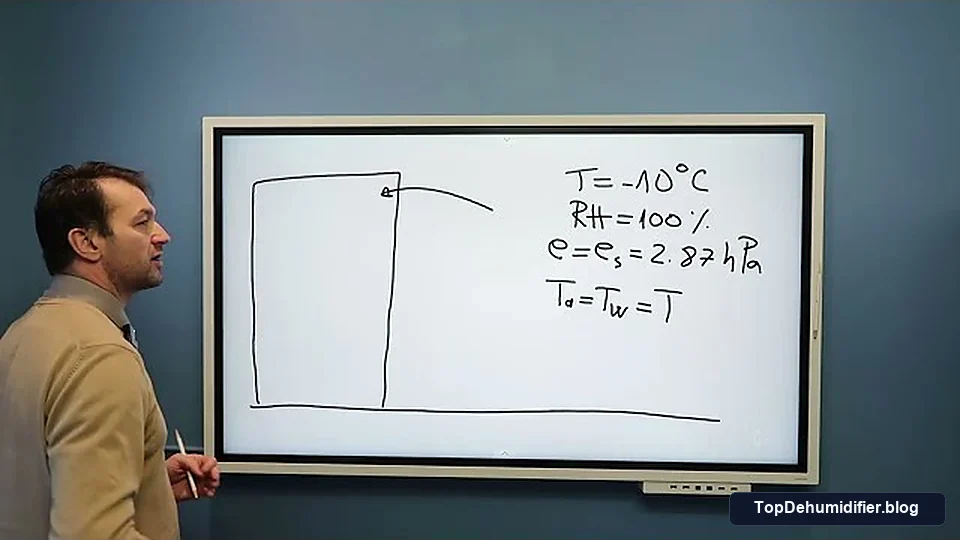
Interior heating sources dry out the air, yet everyday domestic activities continuously release trapped moisture. Cooking, showering, and breathing elevate indoor vapor pressure inside closed spaces.
Without balanced ventilation or active moisture extraction, this warm vapor migrates toward cold exterior walls. The moisture hits the dew point and turns into destructive liquid water.
Grasping thermodynamic shifts helps technicians design effective climate strategies. Evaluating our dehumidifier vs air conditioner for humidity control guide helps you balance heating effects against stubborn moisture generators.
- Cold outdoor air possesses very low absolute moisture capacity.
- Indoor heating systems drive down relative humidity levels sharply.
- Human respiration and cooking add pounds of vapor daily.
- Vapor pressure pushes warm humidity toward cold exterior boundaries.
The Vapor Pressure Differential
High indoor vapor pressure forces moisture through drywall and insulation assemblies. This invisible movement threatens structural sheathing during prolonged freezing snaps.
Installing vapor retarders on the warm side of walls stops migration. Mechanical dehumidification lowers indoor vapor pressure to halt this destructive process.
- Vapor pressure drives moisture through porous building materials.
- Cold sheathing catches migrating vapor and causes hidden rot.
Establishing Optimal Relative Humidity Baselines for Cold Weather
Setting correct relative humidity targets during winter requires monitoring outdoor ambient temperatures closely. As outdoor mercury falls, your indoor humidity target must decrease proportionally.
Aiming for thirty to forty percent relative humidity protects double-pane windows from excessive frosting. Exceeding fifty percent indoors when it freezes outside guarantees heavy condensation.
Dropping indoor humidity below thirty percent causes dry skin, static shocks, and respiratory discomfort. Finding the exact operational sweet spot preserves both building integrity and occupant health.
Calibrate your hygrometers before winter begins to ensure readings remain accurate. Relying on faulty sensors leads to over-drying living spaces or missing critical moisture spikes.
- Scale indoor humidity downward as outdoor temperatures plummet.
- Keep living areas between thirty and forty percent relative humidity.
- Avoid dropping below thirty percent to prevent respiratory irritation.
- Calibrate hygrometers annually to maintain reliable baseline data.
Outdoor Temperature Sliding Scale
When outdoor temperatures drop below zero, indoor targets should hover near thirty percent. This conservative baseline stops ice dams from forming inside wall cavities.
Mild winter days allow targets to rise safely toward forty percent relative humidity. Always adjust controller setpoints manually as local weather patterns shift.
- Sub-zero weather demands a strict thirty percent indoor target.
- Mild cold weather permits a comfortable forty percent baseline.
Video Walkthrough: Ask Andrew: Why indoor humidity matters during the cold season
Sizing Extraction Capacity for Tight Winter Building Envelopes
Modern winterized homes feature tight building envelopes that trap generated moisture effectively. This high tightness factor means even small households produce significant indoor humidity.
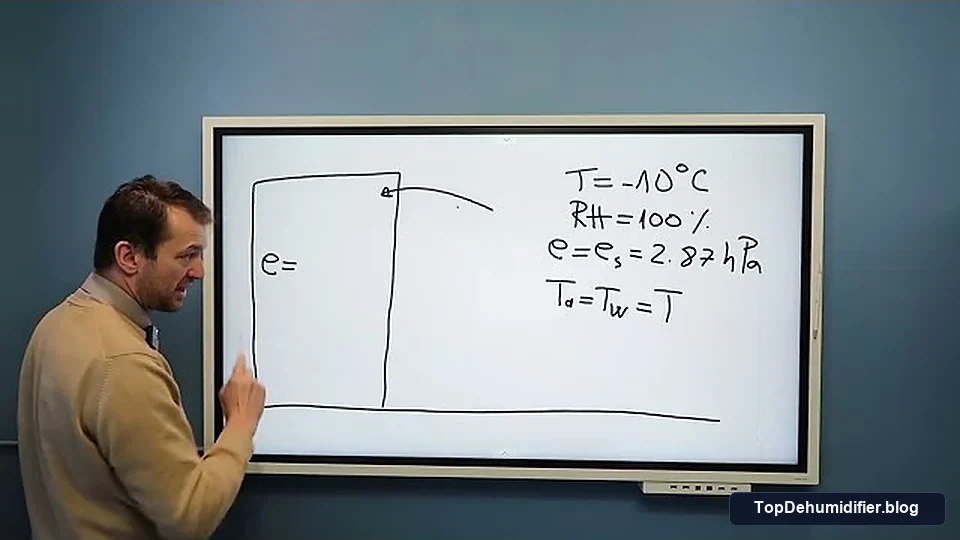
Calculate required extraction capacity using total square footage and cubic volume metrics. An undersized unit will run constantly without achieving target relative humidity reductions.
Pint capacity ratings must reflect cold-climate operating efficiencies rather than standard warm conditions. Refrigerant dehumidifiers lose extraction capacity as ambient room temperatures decrease.
Select units featuring continuous drain hose configurations to handle heavy winter extraction loads. This eliminates the need for manual bucket emptying during freezing weather.
- Tight winter envelopes trap moisture and raise indoor humidity.
- Calculate extraction needs based on total room cubic volume.
- Account for reduced compressor efficiency in cooler room environments.
- Utilize gravity drain hoses for uninterrupted winter operation.
Calculating Cubic Footage Demands
Multiply room length, width, and ceiling height to determine exact cubic footage. High ceilings demand higher airflow CFM ratings from your extraction equipment.
Pair high-volume spaces with multi-speed blowers to circulate dry air thoroughly. Consult our air purifier vs dehumidifier for mold comparison to prevent stagnant cold corners from breeding fungi.
- Measure length, width, and height for accurate volume totals.
- Select high-CFM blowers for multi-story or vaulted areas.
Integrating Dehumidification Systems with Forced Air Heating
Forced air heating systems circulate dry air throughout the home via ductwork networks. Coordinating your dehumidifier placement with supply vents maximizes overall moisture distribution.
Position extraction equipment near central return air paths to capture damp air efficiently. This promotes balanced moisture removal across every connected residential zone.
Avoid placing portable units directly beside heating registers or radiators. Direct heat interference distorts onboard humidistat readings and triggers short-cycling behaviors.
Whole-house mechanical ventilation systems often require interlocking dehumidifier controls. Checking the best dehumidifier and air purifier for basement setups helps prevent the intake of damp outside air.
- Place dehumidifiers near central air returns for optimal circulation.
- Keep extraction units away from direct heating register airflow.
- Prevent short-cycling caused by localized thermal radiation sources.
- Interlock ventilation systems with dehumidifier control switches.
Ductwork Placement Strategies
Dedicated return grilles pull moisture-laden air straight into the filtration loop. This structural layout improves overall system efficiency during peak winter months.
Ensure flexible ducts lack sharp kinks that restrict winter airflow rates. Proper static pressure is vital for maintaining steady moisture extraction performance.
- Use dedicated return grilles to capture ambient moisture.
- Inspect flexible ducting for kinks that reduce airflow CFM.
Preventing Structural Condensation on Thermal Bridging Points
Thermal bridges occur where framing members bypass continuous exterior wall insulation layers. Metal studs, window lintels, and concrete foundations act as major thermal bridges.
These cold spots drop surface temperatures below the interior dew point during winter. Moisture immediately condenses on these freezing structural surfaces, leading to mold blooms.
Operating a dehumidifier lowers the room dew point below critical thermal bridge thresholds. Using our pint capacity calculator ensures you choose extraction equipment that keeps framing dry.
Inspecting hidden corners with an infrared thermometer identifies active thermal bridging zones. Target extra airflow toward these vulnerable areas using auxiliary oscillating fans.
- Thermal bridges allow cold temperatures to penetrate interior walls.
- Surface condensation forms quickly on uninsulated framing elements.
- Lowering indoor relative humidity prevents destructive moisture accumulation.
- Use infrared thermometers to locate cold structural framing points.
Window Frame Mitigation
Aluminum window frames lack thermal breaks and sweat heavily in winter. Lowering humidity stops water pooling on sills and rotting wooden frames.
Apply temporary insulating film over single-pane glass to raise surface temperatures. This reduces local dew point vulnerability around older window assemblies.
- Aluminum window frames require low indoor humidity to stay dry.
- Insulating film raises glass surface temperatures and stops frost.
Video Walkthrough: Outside humidity
Advanced Calibration and Hygrometer Placement Strategies
Accurate relative humidity measurement relies entirely on proper hygrometer calibration and placement. Cheap sensors often drift by ten percent or more over time.
Perform a salt test calibration on digital hygrometers before relying on winter readings. This simple verification ensures your baseline data remains scientifically reliable.
Mount monitoring devices on interior walls away from direct sunlight or drafts. Placing sensors near exterior doors skews data and prompts incorrect equipment adjustments.
Position hygrometers at chest height in primary living spaces for representative averages. Basements and crawlspaces require independent monitoring due to unique thermal profiles.
- Calibrate digital hygrometers using the standard salt test method.
- Mount sensors on interior walls away from drafts and direct sunlight.
- Keep monitoring devices at chest height in frequently used rooms.
- Install independent sensors in basements to track localized microclimates.
Executing the Salt Test
Mix table salt with distilled water until it forms a slushy paste. Seal the paste and your hygrometer inside an airtight bag for six hours.
The reading should settle at seventy-five percent relative humidity. Adjust your digital calibration offset until the display matches this exact benchmark.
- Mix pure table salt with distilled water into a thick paste.
- Seal the sensor and paste inside an airtight bag for hours.
Troubleshooting Low-Temperature Evaporator Coil Freezing
Refrigerant dehumidifiers struggle when operated in unheated winter spaces like garages. Low ambient temperatures cause moisture on the evaporator coils to freeze solid.
Frozen coils block airflow completely and can permanently damage the compressor unit. Most modern machines feature automatic defrost cycles to combat this freezing hazard.
If your unit lacks active defrost, relocate it to a warmer living space. Operating refrigeration units below sixty-five degrees Fahrenheit drastically reduces operating efficiency.
Clean dirty air filters regularly to maintain proper airflow across cold coils. Restricted airflow accelerates frost buildup during chilly winter operation periods.
- Cold winter spaces cause evaporator coils to freeze solid quickly.
- Frozen coils block airflow and stress the internal compressor.
- Relocate portable units to warmer areas if frost accumulates constantly.
- Clean air filters frequently to maintain necessary airflow rates.
Recognizing Frost Symptoms
A white layer of ice coating the evaporator grid signals impending failure. Turn off the compressor immediately and let the ice melt completely.
Check ambient room temperatures before restarting the extraction unit. Never scrape ice off metal coils with sharp metal tools or screwdrivers.
- White ice buildup on evaporator grids indicates coil freezing.
- Power down the unit and allow ice to melt naturally.
Comprehensive Winter Maintenance and Electrical Safety Protocols
Winter heating season places heavy electrical demands on residential wiring circuits. Plug heavy-duty dehumidifiers directly into wall outlets rather than extension cords.
Overloaded extension cords overheat and create severe fire hazards in cold weather. Inspect power cords monthly for cracking, fraying, or damaged insulation jackets.
Clean mesh air filters every two weeks to prevent dust and pet dander accumulation. Clogged filters reduce extraction performance and force blower motors to overheat.
Winterize stored units by draining all internal water reservoirs completely. Store equipment in a dry, temperature-controlled environment until the next heating season.
- Plug dehumidifiers directly into grounded wall electrical outlets.
- Never use extension cords to power high-draw extraction appliances.
- Clean mesh air filters every two weeks during heavy operation.
- Drain internal water reservoirs fully before long-term seasonal storage.
Electrical Circuit Safety
Verify that your dehumidifier runs on a dedicated or lightly loaded circuit. High starting amperage can trip standard household circuit breakers repeatedly.
Test the built-in ground fault circuit interrupter plug monthly. This safety check protects users from electrical shock in damp areas.
- Ensure extraction units operate on stable electrical circuits.
- Test built-in safety plugs monthly for proper trip response.
Frequently Asked Questions
Why does indoor humidity drop so much during winter months?
Cold outdoor air holds very little moisture naturally. When your heating system warms this incoming air, relative humidity drops sharply across all interior rooms.
What is the ideal indoor humidity level for freezing winter days?
Maintain indoor relative humidity between thirty and forty percent. This range prevents window condensation while protecting occupants from dry respiratory irritation.
Can I run a standard dehumidifier in an unheated winter garage?
Most refrigeration units freeze up when operated below sixty-five degrees Fahrenheit. Use specialized low-temperature models or add auxiliary heat to prevent coil icing.
How often should I clean my dehumidifier filters during winter?
Inspect and clean mesh air filters every two weeks during peak heating seasons. Dust accumulation restricts airflow and drastically reduces moisture extraction efficiency.
Why is water forming on my double-pane glass during cold snaps?
Excessive indoor vapor pressure hits the cold glass surface and condenses. Lower your humidistat setpoint immediately to eliminate this destructive window moisture.