Whole House vs Portable Dehumidifier: Technical Matchup
Choosing the right moisture control system requires balancing architectural integration, daily extraction capacity, and long-term operating costs across your entire residential environment.

Choose whole house systems for seamless basement-to-attic climate control and hands-free drainage, or pick portable dehumidifiers for targeted room-by-room moisture mitigation without permanent HVAC ductwork modifications.
Compare all top models in our Best Dehumidifier: Top Picks for Healthy Indoor Air.
Side-by-Side Breakdown
| Criteria | Whole House | Portable Dehumidifier | Edge |
|---|---|---|---|
| Core Design / Build | Tied directly into central HVAC ductwork with rigid sheet metal housings. | Standalone rolling compressor unit with integrated plastic collection bucket. | Whole House |
| Real-World Performance | Removes 70 to 130 pints daily across multi-room square footage layouts. | Extracts 30 to 50 pints daily within single localized rooms. | Whole House |
| Ease of Setup & Use | Requires professional HVAC technician installation, electrical wiring, and duct integration. | Plug-and-play operation straight out of the box with digital humidistat controls. | Portable Dehumidifier |
| Durability & Reliability | Heavy-duty commercial rotary compressors built for ten to fifteen years of service. | Standard consumer refrigeration components rated for three to five years. | Whole House |
| Efficiency / Operating Footprint | Operates on dedicated 220V circuits utilizing high-efficiency ECM blower motors. | Plugs into standard 115V wall outlets drawing moderate amperage during cycles. | Whole House |
| Maintenance Requirements | Annual media filter replacements and professional drain line sanitization checks. | Daily manual water tank emptying and monthly antimicrobial mesh filter washing. | Whole House |
| Best Ideal Use Case | Large multi-level properties with chronic subterranean moisture and centralized HVAC. | Specific damp zones like crawlspaces, home offices, or damp laundry rooms. | Whole House |
Architectural Integration and HVAC Systems
Whole house dehumidifiers integrate directly into your existing central HVAC ductwork to condition every square foot uniformly. This centralized routing prevents isolated humidity pockets from forming throughout multi-story residential properties.
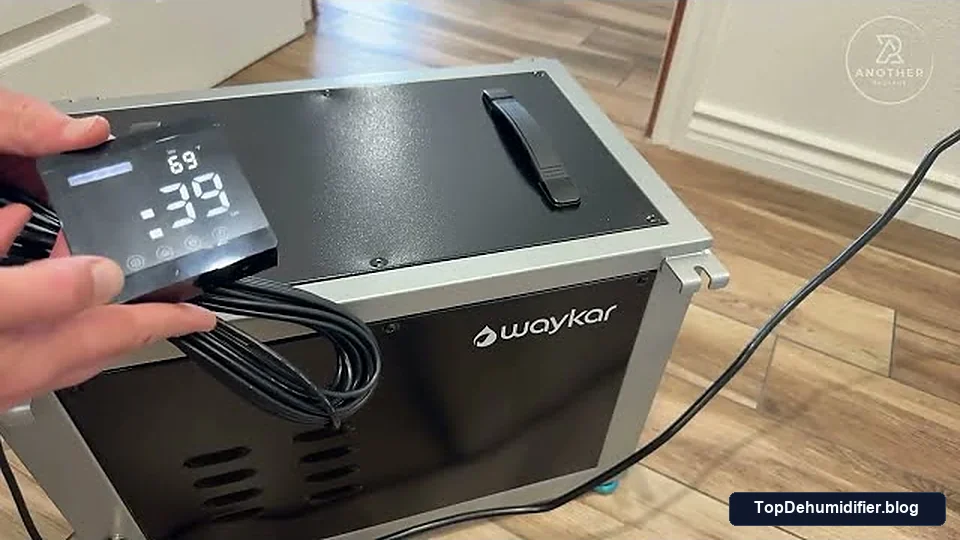
Portable units operate completely independently from your home heating and cooling infrastructure. You simply position the standalone cabinet within a specific humid room and plug the power cord into a standard receptacle.
Duct-integrated systems utilize supply and return bypass configurations to pull damp air from living spaces, process it through refrigeration coils, and distribute dry air evenly via your primary blower fan.
Whole-house units integrate directly into central ductwork, pulling return air and conditioning it. Review top models in our best dehumidifier for whole house roundup which require dedicated supply runs for balanced pressure.
Portable units operate independently from the central heating and cooling infrastructure. They sit inside individual rooms, drawing localized air through internal coils and exhausting heat directly into the living space without ductwork modifications.
Integrating a ducted system demands careful coordination with existing blower motors. Technicians must calculate external static pressure to ensure the central air handler can overcome the added resistance of the dehumidifier core without burning out.
- Whole house units connect directly to return air plenums.
- Portable models rely entirely on localized ambient air circulation.
- Central systems eliminate visible hardware from main living areas.
Ductwork Integration Realities
Connecting a moisture mitigation appliance to residential ductwork demands precise airflow calculations to avoid restricting your primary furnace blower efficiency.
Professional HVAC installers must cut bypass collars into galvanized sheet metal ducts and seal all joints with mastic tape to prevent conditioned air leakage.
- Requires balanced static pressure readings across supply registers.
- Involves meticulous sealing to prevent conditioned air loss.
Capacity, Extraction Rates, and Square Footage
Residential moisture loads vary significantly based on regional climate, basement construction, and family occupancy habits. Understanding daily extraction ratings prevents undersizing your humidity control equipment.
Whole house systems typically extract between seventy and one hundred thirty pints of water daily, easily managing sprawling floor plans. Browse options inside our quietest whole house dehumidifier guide for peaceful subterranean control.
Portable dehumidifiers usually process between thirty and fifty pints daily, making them ideal for single bedrooms, damp basements, or enclosed laundry utility zones.
Whole-house systems routinely extract between 70 to 130 pints of moisture per day. They easily manage massive square footage footprints by leveraging continuous runtime and centralized airflow to dry multi-story residential structures thoroughly.
Portable models typically remove 30 to 50 pints daily, making them ideal for single rooms, damp basements, or isolated zones. Pushing a portable unit beyond its designated square footage creates persistent humidity pockets in distant corners.
Extraction ratings depend heavily on ambient temperature and relative humidity levels. Manufacturers test capacity using standard AHAM conditions of eighty degrees Fahrenheit and sixty percent relative humidity, which rarely matches real-world basement environments.
- Whole house models cover entire structures exceeding three thousand square feet.
- Portable units target isolated spaces under one thousand square feet effectively.
- AHAM testing standards dictate certified moisture removal ratings at specific temperatures.
Understanding AHAM Extraction Ratings
Manufacturers test extraction capacity under strict Association of Home Appliance Manufacturers conditions set at sixty percentage relative humidity and eighty degrees Fahrenheit.
Real-world basement conditions often feature much lower ambient temperatures, which significantly reduces the actual moisture extraction rate of standard consumer refrigeration coils.
- AHAM ratings provide a standardized baseline for performance comparison.
- Lower ambient temperatures cause frost accumulation on evaporator coils.
Installation Complexity and Professional Requirements
Deploying a whole house dehumidification system requires specialized trade skills, electrical wiring modifications, and careful coordination with your existing HVAC layout.
Most homeowners lack the specialized sheet metal tools and high-voltage electrical expertise needed to safely mount and wire a permanent central dehumidification appliance.
Conversely, portable dehumidifiers offer true plug-and-play simplicity right out of the retail box without requiring any permanent home modifications or professional labor.
Installing a whole-house dehumidifier requires advanced carpentry and low-voltage wiring. Homeowners often evaluate options from our best portable whole house dehumidifier guide before hiring licensed HVAC contractors for complex permanent installations.
Portable units offer plug-and-play simplicity straight out of the box. Users simply position the appliance on a level surface, plug it into a standard 115-volt outlet, and manually adjust the onboard humidistat controls.
Professional whole-house setups often involve hanging the heavy chassis from floor joists using vibration isolators. This prevents structural noise transfer and requires specialized tools to cut into galvanized return-air sheet metal plenums.
- Whole house setups demand professional HVAC contractor installation.
- Portable machines require zero tools beyond unboxing and positioning.
- Electrical code compliance often dictates dedicated circuit installation.
Electrical and Mechanical Setup Steps
Installing permanent moisture control equipment involves running low-voltage thermostat wire to a remote humidistat mounted in your main hallway for accurate monitoring.
Licensed electricians must sometimes install dedicated breaker lines if the combined amperage draw exceeds standard household branch circuit limitations during heavy compressor startup.
- Remote humidistat placement ensures accurate whole-home readings.
- Dedicated circuits prevent nuisance tripped breakers during startup.
Energy Efficiency, Amperage, and Power Draw
Running climate control equipment continuously impacts your monthly electric utility bills, making energy efficiency a critical factor in long-term equipment selection.
Whole house units often utilize high-efficiency rotary compressors and electronically commutated motors. Explore top options within our best ducted whole house dehumidifier selection to minimize your monthly wattage consumption.
Portable dehumidifiers run smaller reciprocating compressors that can draw substantial continuous amperage, leading to higher relative energy costs when deployed across multiple rooms.
Whole-house systems utilize high-efficiency rotary compressors that draw significantly fewer amps per pint of water removed. Their continuous operation relies on lower wattage draws optimized for long-term whole-home moisture control and climate regulation.
Portable dehumidifiers consume high bursts of energy during compressor cycles. Operating multiple portable units across different rooms rapidly escalates monthly utility bills compared to running one centralized appliance engineered for efficiency.
Checking the Energy Factor or Integrated Energy Factor ratings helps determine operating costs. Whole-house configurations generally deliver superior electrical efficiency ratings because they utilize larger coils and optimized refrigerant circuit designs.
- Energy Star ratings help identify high-efficiency moisture control appliances.
- Centralized systems optimize power usage across entire floor plans.
- Inverter compressors adjust operating speeds dynamically to save electricity.
Calculating Operating Amperage Costs
Evaluating wattage draw against your local kilowatt-hour utility rates reveals the true operating expense of running continuous humidity mitigation systems.
Modern whole house systems leverage advanced microprocessors to cycle efficiently, reducing unnecessary compressor run times during dry seasonal weather phases.
- Wattage consumption directly correlates with daily compressor runtime.
- Smart humidistats prevent over-drying and reduce unnecessary energy use.
Drainage Mechanics and Gravity versus Pumps
Extracting dozens of pints of water daily creates a significant liquid waste management challenge that must be addressed through reliable drainage engineering.
Whole house systems feature permanent gravity drain lines or integrated condensate pumps that route moisture directly into floor drains or utility sinks.
Portable dehumidifiers rely on removable plastic collection buckets that require manual daily emptying, or optional gravity hoses routed toward low basement windows.
Whole-house dehumidifiers rely primarily on gravity drainage directed straight into a floor drain or condensate pump. Because they often sit in basements or crawlspaces, installing an external condensate pump ensures reliable upward water removal.
Portable units feature small internal buckets that require manual emptying every few hours. Many models also offer a gravity hose connection, but raising the hose above the unit requires an optional condensate pump accessory.
Neglecting drainage maintenance leads to overflow risks and catastrophic water damage. Integrated float switches automatically shut down the compressor when water levels peak, preventing internal basin overflows during heavy extraction cycles.
- Continuous drainage eliminates the hassle of manual bucket emptying.
- Built-in condensate pumps lift moisture vertically to overhead drain lines.
- Overflow safety switches prevent accidental water damage from clogs.
Managing Condensate Disposal Safely
Failing to secure reliable condensate drainage leads to stagnant water pooling, microbial growth, and potential structural water damage within your home.
Gravity drainage remains the most failure-proof method, while internal condensate pumps require periodic cleaning to prevent slime buildup in float switches.
- Gravity drain lines offer maintenance-free long-term reliability.
- Condensate pumps require annual cleaning of internal reservoirs.
Noise Levels, Decibels, and Living Space Comfort
Acoustic comfort is paramount when installing mechanical appliances near bedrooms, home offices, or primary family entertainment living areas.
Whole house units are typically installed in remote mechanical rooms, basements, or attics, meaning compressor vibration noise is completely isolated from living spaces.
Portable dehumidifiers sit directly inside occupied rooms, generating noticeable white noise and compressor humming that can disrupt sleep or conversation.
Whole-house units operate almost silently within living spaces because they reside remotely in utility rooms or basements. Isolating the compressor away from bedrooms ensures ambient decibel levels remain completely undisturbed throughout the night.
Portable dehumidifiers generate persistent mechanical hums and fan noise directly inside occupied rooms. Operating a compressor-heavy appliance at fifty to sixty decibels can severely disrupt television viewing, sleeping, and everyday conversations.
Acoustic dampening feet help reduce vibration transfer on hard flooring surfaces. However, the physical proximity of a portable fan motor makes complete silence impossible, whereas remote duct installations eliminate audible mechanical noise.
- Remote installation keeps mechanical decibel noise out of bedrooms.
- Portable units emit compressor hums ranging from fifty to sixty decibels.
- Rubber isolation feet help minimize structural vibration transmission.
Acoustic Isolation and Decibel Ratings
Decibel ratings quantify sound output, helping sensitive sleepers select quieter portable models or opt for remote whole house installations.
Ductwork attenuation naturally dampens mechanical sound as air travels through insulated flexible runs before reaching living area supply registers.
- Ductwork acts as a natural acoustic muffler for central systems.
- Portable fan speeds directly influence daily operational noise levels.
Upfront Costs, Maintenance Cycles, and Lifespan
Investing in residential humidity control involves balancing initial equipment acquisition expenses against long-term maintenance cycles and component durability.
Whole house systems demand a higher initial financial investment and professional installation, but offer commercial-grade durability lasting over a decade.
Portable dehumidifiers feature lower retail purchase prices but experience higher mechanical wear, typically requiring equipment replacement every few years.
Whole-house systems demand substantial initial investment alongside professional installation expenses. However, their robust commercial-grade components routinely deliver an operational lifespan exceeding ten to fifteen years with proper filter maintenance.
Portable units cost considerably less upfront, appealing to budget-conscious homeowners seeking immediate moisture relief. Unfortunately, consumer-grade compressors typically wear out within three to five years of continuous seasonal operation.
Maintenance schedules dictate long-term reliability for both equipment categories. Whole-house media filters require replacement annually, whereas portable mesh filters need bi-weekly washing to prevent coil blockages and maintain optimal airflow.
- Central systems provide superior long-term return on investment.
- Portable units involve frequent replacement cycles due to consumer-grade builds.
- Routine filter washing preserves compressor health across all units.
Long-Term Equipment Durability Factors
Commercial rotary compressors used in whole house configurations tolerate heavy continuous duty cycles far better than standard consumer refrigeration parts.
Protecting your investment requires adhering to manufacturer-recommended maintenance schedules, including annual filter checks and coil cleaning procedures.
- Commercial compressors outlast consumer reciprocating assemblies.
- Regular maintenance prevents premature system failure and inefficiency.
Frequently Asked Questions
Can a portable dehumidifier control moisture for an entire multi-story home?
No, portable units lack the extraction capacity and airflow power needed to condition multiple levels simultaneously. You must rely on a whole house system for balanced multi-story moisture control.
How difficult is it to install a whole house dehumidification system yourself?
Professional HVAC installation is strongly recommended due to complex ductwork modifications and electrical requirements. Certified technicians ensure proper airflow balance and code-compliant wiring throughout your home.
What is the primary maintenance requirement for portable dehumidifiers?
Users must manually empty the water collection bucket daily or attach a gravity drain hose. Additionally, washing the mesh air filter monthly prevents dust accumulation on refrigeration coils.
Do whole house dehumidifiers operate more quietly than portable models?
Yes, because central units sit in remote basements or utility rooms. This isolates mechanical noise away from primary living spaces, whereas portable units sit directly inside occupied rooms.
Which option offers better long-term durability and lifespan?
Whole house systems feature heavy-duty commercial components designed to last over a decade. Portable units utilize consumer-grade parts and typically require replacement every three to five years.