Smart Wifi vs Manual Mechanical Dehumidifiers
Choosing the right moisture control system requires evaluating automation features against bare-bones durability. Understanding internal mechanics ensures long-term basement and crawlspace health.

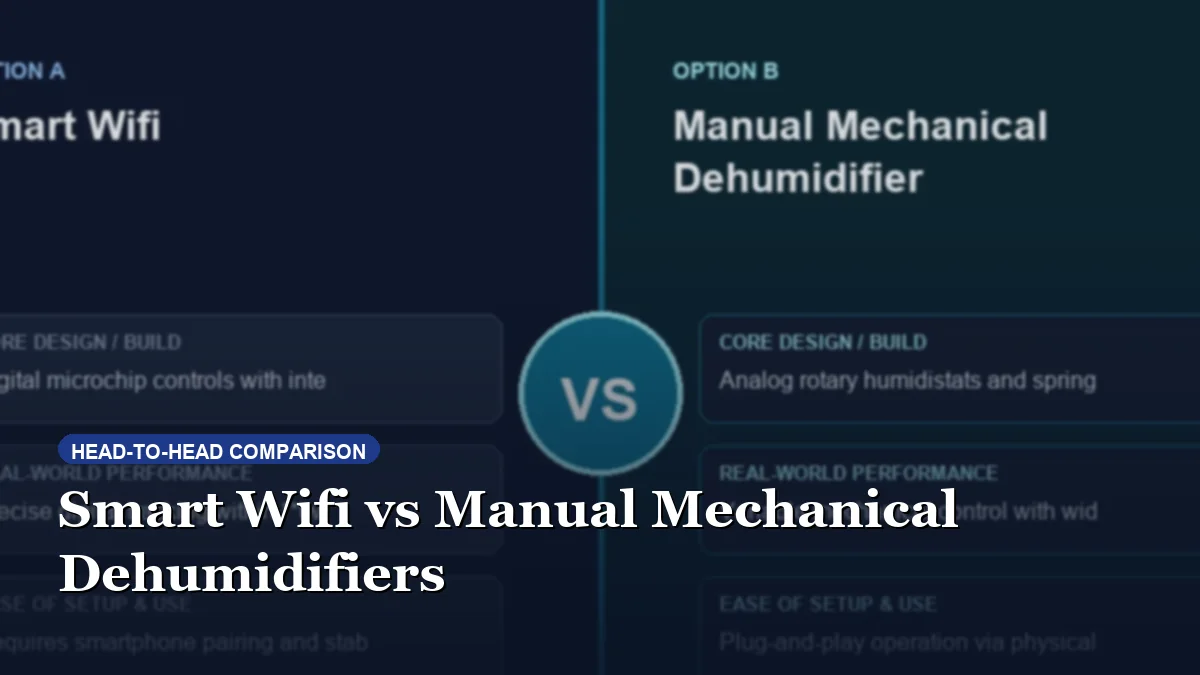
Choose smart Wi-Fi units for remote mobile monitoring and precise scheduling. Select manual mechanical models for unyielding power outage resilience in damp, unattended utility spaces.
Compare all top models in our Best Dehumidifier: Top Picks for Healthy Indoor Air.
Side-by-Side Breakdown
| Criteria | Smart Wifi | Manual Mechanical Dehumidifier | Edge |
|---|---|---|---|
| Core Design / Build | Digital microchip controls with integrated Wi-Fi modules. | Analog rotary humidistats and spring-loaded switches. | Side B |
| Real-World Performance | Precise digital tracking within two percent accuracy. | Variable mechanical control with wider hysteresis swings. | Side A |
| Ease of Setup & Use | Requires smartphone pairing and stable wireless routers. | Plug-and-play operation via physical dial rotation. | Side B |
| Durability & Reliability | Vulnerable to microcontroller glitches and power surges. | Built with heavy-duty mechanical relays resistant to spikes. | Side B |
| Efficiency / Operating Footprint | Optimized cycle timing reduces unnecessary compressor run times. | Constant baseline power draw during humid conditions. | Side A |
| Maintenance Requirements | Standard filter cleaning plus app notification resets. | Basic physical filter washing and bucket emptying. | Side A |
| Best Ideal Use Case | Finished living areas needing remote environmental oversight. | Unfinished basements prone to dirty power and dust. | Side B |
Engineering Architecture and Interface Design
Modern climate control relies heavily on integrated circuit boards and wireless transmitters. These complex systems process sensor data to optimize indoor air quality through smartphone applications and automated cloud platforms.
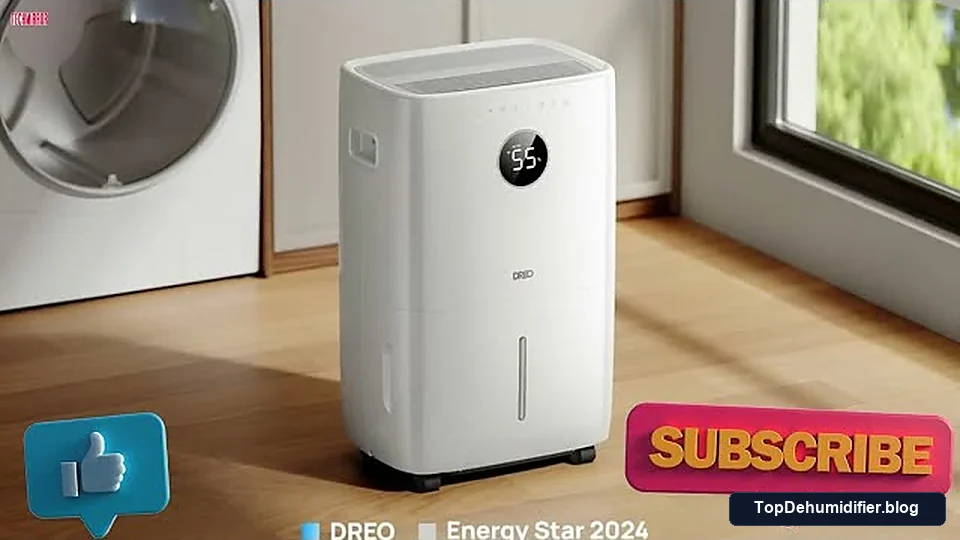
Conversely, traditional moisture extractors utilize physical dials and capillary tube thermostats. This analog hardware bypasses delicate microchips to deliver straightforward, physical control over compressor operations without software dependencies.
Mechanical units rely on analog hygrostats utilizing bimetallic coil sensors that expand or contract based on ambient moisture levels, directly actuating physical micro-switches without relying on complex circuit boards or microcontrollers.
Modern models evaluated in our Midea Cube 20 Pint review integrate Wi-Fi microchips and capacitive touch panels alongside traditional relays, allowing remote mobile telemetry while maintaining basic manual operation if network connectivity fails.
- Microcontroller boards manage digital sensor arrays.
- Rotary humidistats use physical expansion bellows.
- Wireless modules operate on standard frequencies.
Circuitry and Control Panels
Digital interfaces feature LED readout screens and capacitive touch buttons. Users can program exact relative humidity targets down to single-digit percentages for specialized storage rooms.
Mechanical control panels rely on spring tension and physical contact points. These robust switches withstand frequent mechanical abuse in harsh utility environments where digital displays might fail.
- Capacitive touch panels replace physical buttons.
- Spring-loaded dials prevent accidental setting changes.
Operational Performance and Humidity Regulation
Advanced units tested in our Midea Cube 50 Pint review feature smart sensors that measure ambient moisture continuously, ensuring the compressor engages only when strictly necessary for optimal building protection.
Mechanical units use broader hysteresis bands to prevent rapid short-cycling. While less exact, this design philosophy reduces mechanical wear on heavy compressor motors during prolonged seasonal operations.
Precision control relies heavily on hysteresis bands, where smart models maintain +/- 2 percent RH accuracy through digital sampling, whereas standard analog dials often drift by up to ten percent over time.
Continuous drainage performance requires proper gravity fall angles, yet smart compressors can dynamically adjust fan speeds to optimize evaporator coil frost management during heavy moisture loads in damp basements.
- Digital sensors maintain tight ambient thresholds.
- Analog thermostats feature wider operational tolerances.
- Compressor protection timers prevent motor burnout.
Hysteresis and Cycling Behavior
Tight hysteresis keeps humidity within a narrow window. This prevents damp air pockets from forming in tightly sealed modern basements and sensitive archival storage rooms.
Wide hysteresis allows relative humidity to fluctuate significantly. This approach suits rustic cabins and garages where absolute precision is less critical than overall drying capacity.
- Narrow bands maintain strict environmental stability.
- Wide bands reduce compressor cycling frequency.
Setup Complexity and Network Integration
Installing connected appliances involves downloading proprietary mobile software and syncing local network credentials. Users must troubleshoot router firewall settings to maintain stable remote access to their equipment.
Mechanical machines eliminate digital onboarding entirely through straightforward physical installation. Operators simply plug the power cord into a grounded wall receptacle and turn the dial to the desired level.
Initial deployment of mechanical variants involves simply plugging the unit into a grounded 115-volt outlet and turning the rotary dial to your desired relative humidity threshold without any software configuration.
Setting up units featured in our best smart wifi dehumidifier guide demands compatible 2.4 gigahertz router frequencies, stable bandwidth, and companion app authentication during initial firmware update cycles.
- App pairing requires active Wi-Fi network signals.
- Physical dials offer instant, zero-friction setup.
- Firmware updates occasionally patch connectivity bugs.
Connectivity and App Ecosystems
Smart appliances integrate smoothly with major home automation platforms. Homeowners receive push notifications when water buckets reach maximum capacity or when air filters require cleaning.
Non-connected units operate entirely independently of external networks. They remain immune to router outages, server disconnects, and cybersecurity vulnerabilities affecting smart home ecosystems.
- Push alerts notify users of full reservoirs.
- Local operation ensures privacy and reliability.
Reliability Factors and Mechanical Longevity
Electronic components face risks from voltage spikes and electrostatic discharge. Surge protectors are essential to prevent permanent damage to sensitive microcontrollers housed inside connected dehumidifiers.
Mechanical alternatives feature fewer points of electrical failure. Their robust relays and heavy-duty switches endure harsh electrical grid fluctuations common in older rural residential properties.
Analog switches boast fewer electronic components susceptible to power surge damage, resulting in superior mean time between failures in harsh, unconditioned environments like damp crawlspaces or dusty workshops.
Wi-Fi modules and digital displays introduce additional thermal and electrical vulnerabilities, meaning circuit boards can suffer premature solder joint degradation under extreme operating humidity and temperature fluctuations.
- Microchips are sensitive to power grid surges.
- Analog switches tolerate dirty electrical currents.
- Capacitor degradation affects both system types.
Surge Vulnerability and Circuit Protection
Models analyzed in our best wifi dehumidifier roundup feature smart control boards that can be fried by power surges, making replacement motherboards costly compared to purchasing a brand-new appliance.
Mechanical systems lack complex logic boards susceptible to electrical noise. Technicians can easily service or replace simple switches using standard hand tools and universal parts.
- Integrated boards require expensive component replacements.
- Universal analog parts simplify field repairs.
Energy Efficiency and Power Management
Energy consumption depends on compressor efficiency and cycle management. Smart models reduce wasted electricity by utilizing sophisticated algorithms that anticipate humidity spikes based on historical patterns.
Mechanical units run continuously until the physical humidistat breaks contact. This can result in excessive power consumption if the analog sensor falls out of calibration over time.
Mechanical dehumidifiers draw zero standby power when switched off physically, ensuring absolute efficiency regarding phantom electrical loads within residential utility monitoring frameworks and standard household circuits.
Smart appliances maintain constant low-voltage power to internal radios, consuming minor standby wattage while offering scheduled runtime programming to leverage off-peak electricity rates effectively.
- Algorithmic scheduling minimizes unnecessary power draw.
- Continuous analog running increases monthly electricity bills.
- Energy Star ratings apply to both designs.
Power Restoration and Auto-Restart
Smart units remember previous settings after a blackout if they feature non-volatile memory chips. However, network-dependent schedules may require manual resyncing after extended power outages.
Mechanical rotary dials physically hold their position during blackouts. As soon as grid power returns, the machine resumes normal operation instantly without manual user intervention.
- Non-volatile memory preserves digital user preferences.
- Physical dials maintain settings during blackouts.
Routine Maintenance and Drainage Protocols
Proper upkeep ensures sustained moisture extraction performance across all dehumidifier styles. Removable mesh air filters require periodic washing with warm water and mild detergent to maintain proper airflow.
Gravity drain hoses and internal condensate pumps operate identically regardless of control type. However, smart models provide digital reminders on your smartphone when filter maintenance is overdue.
Standard maintenance mandates regular bucket emptying, antimicrobial filter washing, and checking condensate hose connections for kinks to prevent localized flooding and mold growth within the collection reservoir.
Smart systems enhance maintenance protocols by sending automated push notifications for filter cleaning reminders and full-bucket alerts directly to your smartphone, minimizing human oversight requirements.
- Mesh filters trap airborne dust and lint.
- Condensate pumps lift water to elevated drains.
- Reservoir buckets require regular antimicrobial cleaning.
Filter Hygiene and Reservoir Care
Neglected filters restrict evaporator coil airflow, leading to ice formation and compressor strain. Keeping coils clean maximizes energy efficiency and extends the operational lifespan of the refrigeration system.
Water collection buckets must be emptied frequently to prevent mold colonization. Installing continuous drain hoses bypasses the reservoir entirely for hassle-free maintenance in damp crawlspaces.
- Dirty coils reduce overall moisture extraction rates.
- Drain hoses eliminate manual bucket emptying tasks.
Best Application Environments and Buyer Fit
Choosing between these technologies depends on your specific installation location and technical preferences. Finished basements and living spaces benefit greatly from the quiet operation and automation of smart units.
Unfinished cellars, crawlspaces, and rental properties are better suited for mechanical units. Their rugged construction handles neglected environments where digital interfaces might succumb to high humidity.
Mechanical dehumidifiers suit rental properties, unattended outbuildings, and users prioritizing rugged reliability over advanced automation features in environments prone to severe power fluctuations.
Smart units benefit tech-savvy homeowners, multi-room property managers, and users requiring precise moisture tracking for antiquated furniture preservation or sensitive indoor plant cultivation spaces.
- Smart models suit finished living spaces.
- Mechanical units thrive in utility basements.
- Consider your personal comfort with mobile apps.
Tailoring Selection to Household Needs
Tech-savvy homeowners who travel frequently appreciate monitoring home humidity levels remotely. Receiving instant alerts prevents catastrophic basement flooding from overflowing water collection reservoirs.
Property managers preferring zero-maintenance reliability choose analog appliances for rental units. Tenants cannot accidentally misconfigure complex digital schedules or break fragile touch-screen displays.
- Remote monitoring brings peace of mind during travel.
- Simple dials prevent tenant operation errors.
Frequently Asked Questions
Can a smart dehumidifier operate without an active internet connection?
Yes, smart dehumidifiers function normally using their onboard control panels without Wi-Fi. However, you will lose remote mobile monitoring and scheduling capabilities until the network reconnects.
Do mechanical dehumidifiers consume more electricity than digital models?
Mechanical units can consume slightly more power due to wider operational hysteresis bands. This causes the compressor to run longer than strictly necessary during transitional seasonal humidity shifts.
How do I protect my smart dehumidifier from power surges?
Always plug your smart dehumidifier into a dedicated heavy-duty surge protector. This absorbs voltage spikes that could otherwise fry the sensitive internal microcontroller boards.
Why is my mechanical dehumidifier dial losing its calibration?
Analog expansion bellows degrade over years of exposure to extreme moisture fluctuations. Replacing the worn rotary humidistat restores accurate threshold control to your traditional extraction unit.
Which type lasts longer in extremely damp crawlspaces?
Mechanical dehumidifiers generally outlast smart models in harsh environments due to fewer electronic parts. Simple switches resist moisture corrosion better than delicate microcircuitry boards.