Santa Fe Compact70 vs Advance90: Head-to-Head Comparison
Choosing the right crawlspace dehumidifier ensures moisture control and structural health. Compare these two commercial-grade units for your specific space requirements.

Pick the Compact70 for restricted crawlspace clearances and tighter square footage. Choose the Advance90 when maximum moisture removal and higher daily extraction capacities are required.
Compare all top models in our Best Dehumidifier: Top Picks for Healthy Indoor Air.
Side-by-Side Breakdown
| Criteria | Santa Fe Compact70 | Advance90 | Edge |
|---|---|---|---|
| Core Design / Build | Horizontal low-profile layout | Vertical multi-directional configuration | Tie |
| Real-World Performance | 70 pints per day extraction | 90 pints per day extraction | Advance90 |
| Ease of Setup & Use | Flexible ducting and hanging kits | Optimized for floor or platform mounts | Compact70 |
| Durability & Reliability | Commercial-grade aluminum coils | Heavy-duty brazed aluminum construction | Tie |
| Efficiency / Operating Footprint | Superior energy factor per pint | Higher total energy draw | Compact70 |
| Maintenance Requirements | Standard MERV-13 filter replacement | Accessible side-load filtration system | Tie |
| Best Ideal Use Case | Low-clearance damp crawlspaces | Large residential or commercial basements | Advance90 |
Core Design & Engineering Differences
When evaluating commercial crawlspace dehumidifiers, understanding the structural differences helps determine long-term reliability. Both units utilize robust refrigeration systems engineered for demanding underground environments.
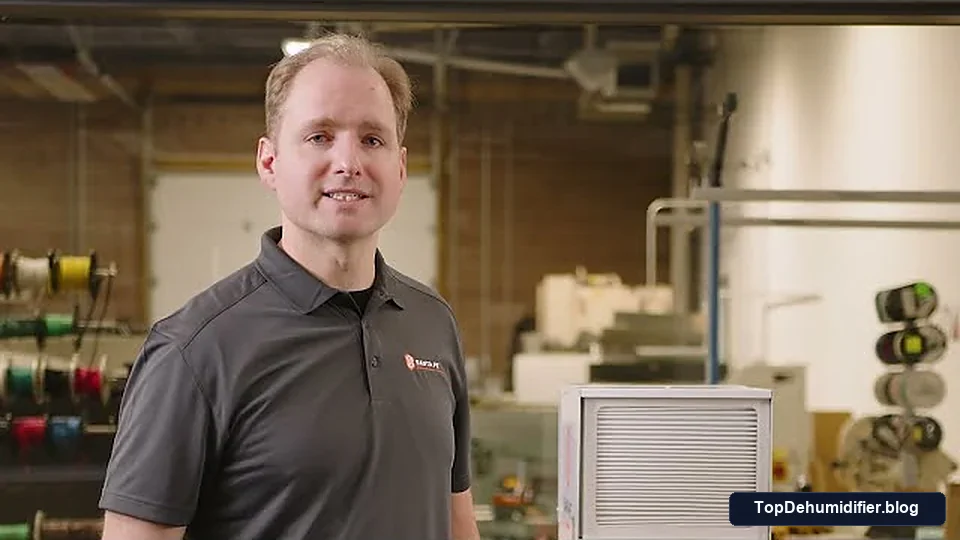
The Santa Fe Compact70 features a low-profile, horizontal footprint designed for tight spaces. You can evaluate the alternative chassis design through our detailed advance90 review.
The Santa Fe Compact70 utilizes a horizontal configuration engineered explicitly for low-clearance crawlspaces, whereas the Advance90 employs a taller vertical chassis built for larger residential basements and multi-room ducted installations.
Internal refrigeration circuits feature heavy-duty copper tubing with aluminum fins, protected by an electro-coated coil to prevent corrosion in aggressive sub-floor environments where moisture and soil gases accelerate structural degradation.
- Low-profile horizontal cabinet design
- Vertical configuration for enhanced airflow
- Commercial-grade rotary compressor technology
Chassis Dimensions and Clearance Requirements
Crawlspaces often present severe spatial constraints that dictate equipment selection. Measuring your access points and overhead clearance before purchasing prevents costly installation mistakes.
The Compact70 easily slides into shallow pits where headroom is severely limited. Meanwhile, the Advance90 demands slightly more vertical clearance while delivering increased volumetric air exchange.
- Minimum clearance thresholds
- Structural positioning options
Real-World Performance & Extraction Capacities
Moisture removal rates dictate how effectively a system combats relative humidity spikes. Environmental conditions heavily influence daily water extraction metrics across both units.
The Compact70 removes approximately 70 pints of moisture daily under standard AHAM testing. Further performance metrics are outlined inside our Santa Fe Compact70 review.
Water removal rates differ significantly under AHAM conditions, with the Compact70 extracting 70 pints per day and the Advance90 scaling up to 90 pints to handle heavier moisture loads effectively.
Static pressure capabilities also diverge, allowing the Advance90 to maintain optimal airflow through longer duct runs while the Compact70 is optimized for un-ducted open crawlspace configurations with minimal resistance.
- AHAM rating standards at 80 degrees
- Severe moisture load handling
Water Removal Dynamics in Sub-Optimal Temperatures
Temperature drops significantly affect refrigeration-based dehumidification efficiency in subterranean spaces. Both units incorporate advanced defrost mechanisms to maintain performance during cooler months.
Low-temperature operation prevents frost buildup on evaporator coils without manual intervention. This ensures continuous moisture removal even when basement or crawlspace temperatures dip below optimal thresholds.
- Automatic defrost control boards
- Low-temperature operational thresholds
Energy Efficiency & Operating Footprints
Energy consumption remains a primary operational cost for continuous-run dehumidification equipment. Balancing electrical draw against total moisture extraction defines true system efficiency.
The Compact70 offers exceptional energy factor ratings for its size class. The Advance90 consumes more electricity overall due to its higher capacity compressor and larger blower motor.
Energy factor metrics demonstrate that the Advance90 consumes roughly 2.8 kilowatts per hour per gallon, matching the efficiency levels seen in our Santa Fe Ultra120 review.
The Compact70 draws approximately 5.4 amps during standard operation, minimizing electrical strain on standard 115-volt residential circuits while delivering continuous low-wattage dehumidification across damp subterranean environments.
- Energy factor measurements per kilowatt-hour
- Continuous operational cost comparisons
Electrical Requirements and Circuit Loads
Standard household electrical circuits easily support both dehumidifiers without requiring specialized wiring. Connecting units to dedicated grounded outlets ensures safe, uninterrupted performance over years of service.
Proper circuit management protects internal electronic components from voltage fluctuations and power surges. Always verify local electrical codes before finalizing your permanent installation plan.
- 115-volt standard circuit compatibility
- Dedicated outlet safety guidelines
Installation, Ducting & Ergonomic Layouts
Proper installation layout maximizes air circulation and prevents dead zones in large spaces. Flexible ducting options allow customized airflow direction tailored to your specific layout.
The Compact70 supports versatile ducting kits for targeted intake and discharge. The Advance90 provides similar configuration flexibility but requires more expansive room for optimal routing.
Professional setup requires careful positioning of the condensate drain line, utilizing gravity drainage or an optional external condensate pump kit to reliably manage moisture evacuation without risking overflow.
Supply and return collars on the Advance90 support robust flex ducting configurations, enabling targeted dehumidification across separated basement rooms or complex architectural layouts with restricted natural airflow.
- Supply and return collar kits
- External condensate pump integration
Condensate Management and Drainage Options
Effective gravity drainage or reliable pump systems prevent standing water hazards near the equipment. Ensuring proper downward slope for drain lines eliminates potential overflow risks.
Both units accommodate standard tubing sizes for continuous gravity-fed water removal. Integrating an external condensate pump allows vertical water lift when floor drains sit higher.
- Gravity drainage drop requirements
- External pump vertical lift specs
Filtration Systems & Air Quality Maintenance
Indoor air quality heavily depends on effective filtration protecting internal refrigeration coils, which remains a primary criterion in our best dehumidifier guide for safeguarding sensitive mechanical components.
The Compact70 utilizes high-efficiency MERV-13 filters to capture microscopic airborne particles. Similarly, the Advance90 incorporates advanced filtration media to safeguard internal mechanical parts from premature wear.
Both platforms utilize standard MERV-13 filters designed to capture microscopic particulate matter, reducing mold spores and airborne allergens while protecting internal coils from dust accumulation and performance degradation.
Routine filter replacement every three to six months ensures consistent airflow rates and prevents static pressure spikes that can prematurely stress the internal blower motor assembly.
- MERV-13 filtration standards
- Coil protection against debris
Filter Replacement Intervals and Access
Routine inspections dictate when replacement filters become necessary for peak operation. Accessible side-load designs simplify routine maintenance tasks in confined subterranean installation environments.
Neglecting filter changes reduces airflow volume and forces compressors to work harder. Establishing a strict quarterly replacement schedule extends operational lifespan significantly.
- Quarterly inspection schedules
- Tool-free filter access panels
Durability, Materials & Construction Standards
Long-term durability relies on premium materials capable of resisting corrosive subterranean conditions. Heavy-duty construction standards protect vital internal mechanisms from moisture-induced degradation.
Both manufacturers utilize heavy gauge powder-coated steel cabinets to prevent rust formation. Brazed aluminum coils further enhance longevity by resisting refrigerant leaks over extended service periods.
Heavy-gauge powder-coated steel cabinets provide superior impact resistance compared to standard plastic housings, preventing structural cracking during rigorous transport or harsh residential crawlspace installations.
Hermetically sealed rotary compressors feature internal thermal overload protection and heavy-duty vibration isolators, minimizing mechanical noise and ensuring reliable long-term operation in demanding subterranean environments.
- Powder-coated steel exterior housings
- Corrosion-resistant refrigeration coil designs
Warranty Protection and Manufacturer Support
Comprehensive manufacturer warranties provide valuable peace of mind for heavy-duty investments. Understanding coverage limits ensures proper maintenance adherence throughout the operational lifespan.
Leading brands stand behind their engineering with multi-year restricted parts and labor guarantees. Registering your equipment immediately after installation activates full warranty protection benefits.
- Multi-year sealed system coverage
- Component replacement policy guidelines
Selecting the Right Unit for Your Setup
Matching equipment specifications to your unique spatial dimensions guarantees optimal performance results. Assessing total square footage and moisture sources clarifies which model fits your needs.
Choose the Compact70 when dealing with tight crawlspaces and moderate humidity loads. Select the Advance90 for expansive basements demanding aggressive daily moisture extraction capacity.
Choosing the correct model depends primarily on total square footage, ceiling height, and ambient moisture levels, with the Compact70 suiting confined crawlspaces and the Advance90 handling large basements.
Consulting a professional HVAC contractor ensures accurate load calculations and prevents oversizing or undersizing errors that compromise indoor air quality and overall energy efficiency.
- Square footage coverage guidelines
- Regional humidity load considerations
Final Purchasing Considerations for Homeowners
Investing in commercial-grade humidity control protects your property foundation from costly moisture damage. Consulting professional HVAC technicians helps finalize placement and electrical requirements.
Proper setup transforms damp, musty spaces into dry, usable structural zones safely. Review all manufacturer guidelines before beginning your installation process.
- Structural protection benefits
- Professional installation consultation tips
Frequently Asked Questions
Can both dehumidifiers be ducted in a crawlspace?
Yes, both commercial units fully support flexible supply and return ducting kits to distribute dry air evenly across complex subterranean layouts. This advanced engineering capability guarantees complete moisture elimination without ever creating stagnant air pockets in remote foundation corners.
What is the primary difference in daily water extraction?
The Santa Fe Compact70 extracts approximately seventy pints of moisture daily under standard AHAM testing conditions. In comparison, the larger Advance90 scales up performance to handle ninety pints per day for more demanding environments.
Do these models require specialized electrical wiring during setup?
Neither model requires complex or specialized electrical wiring because both operate smoothly on standard household circuits. Connecting each unit to a dedicated grounded outlet ensures safe continuous operation over many years of service.
How often should filters be replaced for optimal performance?
You should inspect and replace your MERV-13 air filters every three to four months depending on local dust levels. Maintaining a strict replacement schedule prevents airflow restriction and protects the internal refrigeration coils from premature wear.
Which unit works best in low-clearance crawlspace installations?
The Santa Fe Compact70 features a specialized low-profile horizontal cabinet specifically engineered for tight vertical spaces. Meanwhile, the Advance90 requires slightly more overhead clearance due to its distinct internal airflow and extraction configuration.