Peltier vs Compressor Dehumidifier: Concise Verdict
Understanding thermodynamic Peltier modules versus refrigerant compressor systems helps you choose the ideal moisture removal device. Selecting the correct technology prevents structural dampness and indoor mold growth.

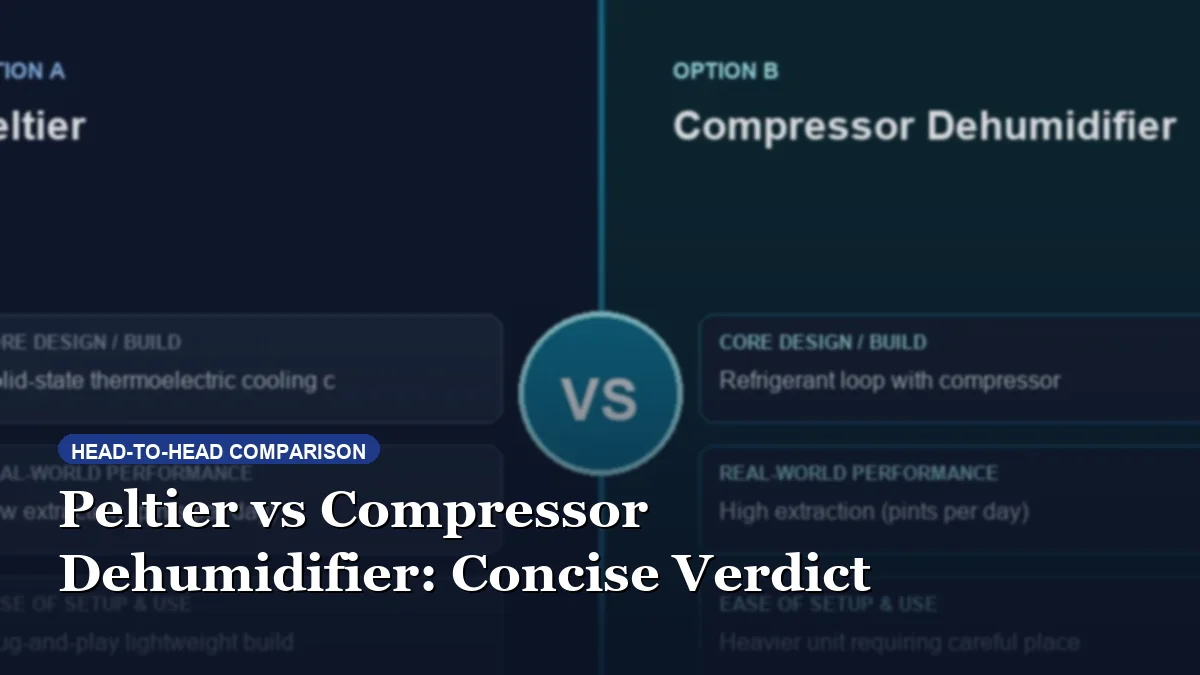
Choose a Peltier model for tiny enclosed spaces like gun safes or RV cabinets. Select a compressor unit for full-sized basements and living areas requiring high daily water removal.
Compare all top models in our Best Dehumidifier: Top Picks for Healthy Indoor Air.
Side-by-Side Breakdown
| Criteria | Peltier | Compressor Dehumidifier | Edge |
|---|---|---|---|
| Core Design / Build | Solid-state thermoelectric cooling chips | Refrigerant loop with compressor | Compressor Dehumidifier |
| Real-World Performance | Low extraction (pints per day) | High extraction (pints per day) | Compressor Dehumidifier |
| Ease of Setup & Use | Plug-and-play lightweight build | Heavier unit requiring careful placement | Peltier |
| Durability & Reliability | Few moving parts, long electronic life | Mechanical wear on compressor parts | Peltier |
| Efficiency / Operating Footprint | Low wattage, poor moisture removal ratio | Higher wattage, superior energy efficiency | Compressor Dehumidifier |
| Maintenance Requirements | Basic reservoir cleaning and dusting | Filter washing and coil maintenance | Peltier |
| Best Ideal Use Case | Small closets, RVs, and display cases | Basements, crawlspaces, and humid rooms | Compressor Dehumidifier |
Fundamental Operating Mechanics and Thermodynamic Principles
Refrigerant compressor dehumidifiers rely on a closed-loop refrigeration cycle containing liquid coolant, evaporator coils, and condenser coils. This mechanical system pulls humid air across freezing coils to condense water vapor efficiently.
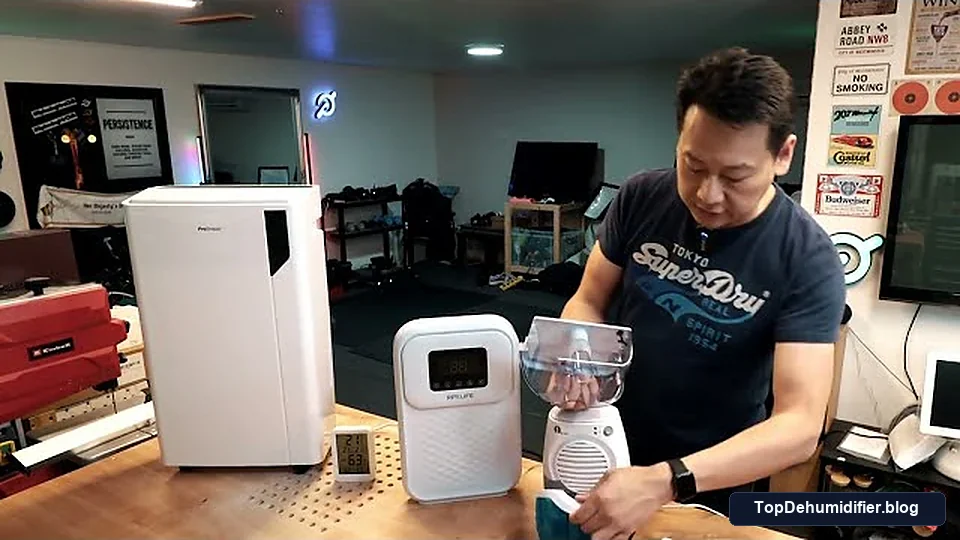
Conversely, Peltier dehumidifiers utilize the thermoelectric effect by passing electrical current through dissimilar semiconductor materials. One side of the module becomes extremely cold, causing airborne moisture to condense instantly.
Understanding these foundational differences clarifies why thermodynamic physics dictates performance limits. Solid-state modules lack mechanical pumps, drastically restricting their overall rate of latent heat and moisture exchange.
- Compressors use phase-change refrigerant thermodynamics.
- Peltier units apply direct electrical thermoelectric cooling.
- Refrigerant systems require mechanical expansion valves.
The Refrigerant Cycle Breakdown
Compressor systems force high-pressure refrigerant through expansion valves to drastically reduce temperature. Ambient air blown across these frosted coils drops below its dew point, featured across leading best dehumidifier models.
The cooled air then passes over warm condenser coils to normalize temperature before exiting the exhaust port. This multi-stage thermal processing demands significant electrical wattage and robust mechanical engineering.
- Evaporator coils drop below ambient dew point temperatures.
- Condenser coils reheat processed air before room discharge.
The Solid-State Peltier Design
Solid-state dehumidifiers eliminate moving pumps entirely by depending strictly on direct current electronics. A small DC fan pushes ambient air across the chilled ceramic heat sink inside the chassis.
Water droplets form on the cold plate and gravity pulls liquid down into a collection bucket. This simplistic design reduces manufacturing complexity but caps daily moisture extraction performance severely.
- Direct current powers the semiconductor cooling junction.
- Small DC fans provide minimal airflow over heat sinks.
Extraction Capacity and Environmental Limitations
Compressor dehumidifiers dominate real-world extraction metrics by pulling substantial daily water volumes from damp indoor environments. Standard household units easily extract thirty to fifty pints of water every single day.
Peltier dehumidifiers typically capture less than one pint per day under identical baseline test conditions. This meager output makes thermoelectric devices completely useless for damp basements or flooded crawlspaces.
Environmental temperature and relative humidity levels impact both technologies differently. Compressors thrive in warm, humid spaces, whereas Peltier models suffer drastic performance drops as ambient temperatures decline.
- Compressors handle severe whole-room moisture loads effortlessly.
- Peltier units suit restricted micro-environments under fifty square feet.
- Cold ambient air reduces thermoelectric condensation efficiency rapidly.
Performance in Humid Basements
Basement environments present severe moisture challenges that demand heavy-duty mechanical compressor intervention. High humidity combined with cool foundation walls requires robust refrigeration cycles to dry masonry effectively.
Trying to deploy a small Peltier unit in a damp basement results in total failure. The tiny solid-state core cannot process the massive volume of ambient moisture present in subterranean levels.
- Subterranean spaces require high daily pint capacities.
- Thermoelectric units lack the necessary airflow volume.
Micro-Environment Applications
Small sealed enclosures like camera lockers, gun safes, and boat cabins benefit greatly from Peltier technology. These confined spaces trap humidity without introducing massive continuous moisture influxes from outside.
The gentle, silent extraction prevents mold growth on stored optics and leather goods safely. Compact physical footprints allow placement inside custom cabinetry where traditional compressors cannot fit.
- Ideal for safeguarding musical instruments and optics.
- Fits inside small cabinets and specialized storage vaults.
Energy Consumption and Power Efficiency Metrics
Evaluating electrical efficiency requires analyzing the ratio of moisture removed per kilowatt-hour consumed. Compressor systems draw higher wattage, but their massive water removal output delivers superior overall energy efficiency.
Peltier dehumidifiers draw very low electrical wattage, usually between forty and seventy watts continuously. However, their dismal extraction rates mean they consume excessive power relative to every single drop of water collected.
Homeowners seeking low utility bills must consider total operating duration. While compressors cycle intermittently via humidistat triggers, Peltier modules run constantly, avoiding confusion related to dehumidifier fans running continuously with inactive compressors.
- Compressors offer high energy factor ratings per pint.
- Peltier modules consume low watts but poor moisture ratios.
- Humidistat controls optimize compressor runtime cycles efficiently.
Wattage Demands and Grid Impact
Standard compressor dehumidifiers draw three hundred to seven hundred watts during active refrigeration cycles. This electrical draw requires dedicated circuit awareness to prevent tripping breakers in older residential properties.
Thermoelectric devices pull minimal amperage, making them safe for solar setups and small backup batteries. Their modest power demands make them attractive for off-grid RV living and tiny mobile homes.
- Compressors require stable household electrical grid currents.
- Peltier units integrate easily with portable power stations.
Smart Humidistat Integration
Modern compressor units feature precise humidistats that shut down the refrigeration cycle when target humidity is reached. This intelligent cycling saves electricity and prevents unnecessary wear on mechanical components.
Most budget Peltier models lack adjustable humidistat controls and run continuously until manually unplugged. This constant operation wastes electrical energy in spaces where moisture levels fluctuate moderately.
- Adjustable humidistats automate compressor runtime intervals.
- Continuous Peltier operation lacks intelligent power-saving logic.
Acoustic Footprint and Mechanical Vibration Profiles
Acoustic comfort remains a critical buying factor for dehumidifiers placed in bedrooms or home offices. Compressors generate noticeable noise from spinning fan blades, refrigerant hissing, and compressor motor vibration.
Peltier dehumidifiers operate with exceptional acoustic discretion due to their lack of heavy mechanical compressors. Only a tiny brushless DC cooling fan produces a soft, unobtrusive white noise during operation.
Vibration isolation feet help reduce compressor rumbling on hard wooden flooring surfaces. Solid-state devices vibrate negligibly, allowing placement on delicate glass shelves or antique wooden furniture.
- Compressor units produce noticeable mechanical humming sounds.
- Thermoelectric models offer near-silent library-quiet operation.
- Vibration dampening pads mitigate compressor floor resonance.
Compressor Noise and Vibration
The internal rotary compressor creates low-frequency humming that travels through walls and floors easily. Selecting units with insulated compressor compartments helps muffle these mechanical operational sounds effectively.
Fan turbulence adds a secondary layer of higher-frequency air rushing noise. Placing rubber isolation pads underneath the chassis prevents annoying floor rattles in quiet residential sleeping quarters.
- Rotary motors generate low-frequency structural humming.
- High-speed fans create turbulent airflow sound signatures.
Silent Solid-State Operation
Eliminating the refrigerant pump allows Peltier units to achieve noise levels below forty decibels easily. This whisper-quiet performance makes them popular for RV bedrooms and desktop humidity control applications.
Users sensitive to background electrical hums appreciate the pure, uninhibited acoustic profile. The absence of mechanical compressors ensures zero sudden startup clicks or jarring vibration thuds.
- Operating noise often stays below forty decibels.
- Zero mechanical compressor startup thuds or clicks.
Physical Dimensions, Portability, and Ergonomic Design
Physical size and weight heavily dictate where and how easily you can deploy each unit. Heavy compressor appliances require stable placement and careful monitoring to avoid unexpected dehumidifier compressor failure.
Peltier dehumidifiers showcase remarkably compact dimensions and featherlight plastic chassis constructions. Their miniature size allows effortless relocation between closets, small bathrooms, and travel trailers.
Ergonomic handle placement and accessible water buckets improve everyday usability across both appliance categories. However, the sheer weight of a full compressor water tank demands careful lifting technique.
- Compressor units weigh thirty to fifty pounds typically.
- Peltier models weigh under five pounds for easy carrying.
- Caster wheels assist heavy compressor mobility across floors.
Mobility and Heavy Lifting
Transporting a compressor dehumidifier up and down staircases requires significant physical strength and caution. Rolling casters make horizontal floor movement smooth, but lifting the chassis demands proper ergonomic form.
Thermoelectric devices can be picked up with one hand and tossed into a suitcase effortlessly. Their featherlight build transforms temporary moisture control tasks into truly effortless chores.
- Stair transport requires lifting heavy compressor housings.
- Featherlight Peltier chassis allow effortless one-handed carrying.
Tank Capacity and Drainage Form Factors
Compressor water tanks hold one to two gallons, reducing the frequency of daily manual emptying chores. Many units also feature gravity drain ports for continuous hose hookups into floor drains.
Peltier collection buckets hold barely twenty to forty ounces of condensed moisture. This tiny capacity demands frequent emptying, limiting unattended long-term operation in humid spaces.
- Large tanks reduce compressor emptying frequency chores.
- Miniature Peltier buckets require constant daily attention.
Maintenance Protocols, Drainage, and Long-Term Durability
Long-term reliability depends heavily on routine maintenance schedules and internal mechanical complexity. Compressors feature sealed refrigerant loops that last years, but dust clogs filter screens and coils regularly.
Peltier dehumidifiers boast exceptional mechanical durability because they contain zero pressurized refrigerant lines. Without a mechanical pump or compressor to fail, electronic longevity remains remarkably high.
Cleaning condensation buckets with antibacterial soap prevents mold and mildew slime buildup in both designs. Proper maintenance ensures optimal airflow and prevents foul stagnant odors from circulating indoors.
- Compressors require periodic air filter washing and coil cleaning.
- Peltier units feature minimal parts with high electronic reliability.
- Routine reservoir sanitization prevents stagnant microbial growth.
Air Filters and Coil Care
Washable mesh air filters on compressor units trap pet hair and airborne dust particles. Neglecting filter cleaning restricts airflow, forcing the compressor to overheat and trip safety shutoff switches.
Solid-state models use simpler intake grilles that require occasional dusting with a microfiber cloth. Their lack of complex evaporator fin arrays simplifies routine exterior maintenance considerably.
- Mesh filters prevent dust accumulation on metal coils.
- Simple intake grilles need basic periodic microfiber dusting.
Drainage Systems and Continuous Options
Gravity drainage and internal condensate pumps allow compressor units to operate unattended for months. These advanced features are vital for permanent basement installations and vacation home setups.
Peltier devices rely exclusively on manual bucket dumping due to low elevation and weak flow. Attempting gravity drainage on a tiny solid-state unit is rarely supported by manufacturers.
- Gravity drainage suits unattended compressor setups.
- Solid-state units require strictly manual bucket emptying.
Ideal Residential Deployment Scenarios and Safety Standards
Choosing the right dehumidifier involves matching appliance specifications to your exact residential room layout. Safety certifications from recognized laboratories ensure electrical compliance and fire prevention during operation.
Living spaces with severe structural dampness require high-capacity refrigerant systems built to rigorous safety codes. Small enclosed display cabinets require gentle thermoelectric units designed for micro-climates.
Always review manufacturer operating limits before deploying equipment in unheated rooms. Understanding what temperature is too cold for a compressor dehumidifier prevents ice buildup and permanent motor burnout.
- Match appliance capacity directly to room square footage.
- Verify ETL or UL safety certifications before purchase.
- Respect ambient temperature operating thresholds strictly.
Whole-Home and Basement Placements
Whole-home and basement humidity management demands certified compressor dehumidifiers with auto-defrost functions. These robust appliances handle demanding residential moisture loads while maintaining compliance with electrical safety standards.
Installing compliant units near floor drains minimizes water damage risks from overflowing collection buckets. Proper placement maximizes cross-room airflow for balanced residential humidity control.
- Basements require certified auto-defrost compressor units.
- Floor drain integration prevents accidental water overflow.
Specialized Storage and RV Environments
Safeguarding valuable documents in lockboxes or controlling moisture inside recreational vehicles suits Peltier devices. Their low power draw and compact safety-certified designs fit tight compartments without hazard.
Preventing mold inside stored musical instruments protects delicate wooden joints from warping permanently. Selecting the right tool guarantees optimal preservation without excessive energy expenditure.
- Protect valuable documents inside small storage vaults.
- Control closet and RV humidity safely with solid-state.
Frequently Asked Questions
Can a Peltier dehumidifier dry out a damp basement?
No, solid-state units lack the extraction capacity needed for large subterranean spaces. You should always use a compressor unit for proper basement moisture control.
Why do compressor dehumidifiers cost more to run?
Compressor systems require higher electrical wattage to power their refrigerant pumps. However, their superior pint extraction rate delivers much better overall energy efficiency.
Are Peltier dehumidifiers completely silent during operation?
They are nearly silent because they contain zero mechanical compressors. The only audible sound comes from a small internal DC cooling fan.
What happens if I run a compressor in freezing rooms?
Frost builds up rapidly on the evaporator coils and damages the motor. Always check temperature operating thresholds before running compressor units in cold areas.
Do solid-state dehumidifiers require continuous filter replacements?
No, they use simple mesh grilles that only need occasional dusting. Regular microfiber cloth wiping keeps intake airflow clear and maintains performance.