Passive Moisture Absorber vs Electric Dehumidifier: Concise Verdict
Selecting the right moisture control tool protects your home from structural dampness and mold. Understanding your specific environment dictates whether a chemical absorber or compressor unit performs best.

Choose Side A for small, unpowered spaces like closets or lockers. Select Side B for active, high-capacity water extraction in living areas and damp basements.
Compare all top models in our Best Dehumidifier: Top Picks for Healthy Indoor Air.
Side-by-Side Breakdown
| Criteria | Passive Moisture Absorber | Electric Dehumidifier | Edge |
|---|---|---|---|
| Core Design / Build | Chemical desiccant pellets in a hanging pouch or plastic tray. | Compressor, coils, fan, and large removable collection bucket. | Side B |
| Real-World Performance | Removes negligible moisture slowly via ambient chemical reaction. | Extracts pints of water daily using mechanical refrigeration. | Side B |
| Ease of Setup & Use | Hang or place anywhere without cords or manual settings. | Requires AC power, placement clearance, and manual drainage. | Side A |
| Durability & Reliability | Zero moving parts to break, though pellets deplete over time. | Mechanical parts can fail; requires routine filter cleaning. | Side A |
| Efficiency / Operating Footprint | Zero electricity consumption, but ongoing consumable replacement costs. | Consumes steady electricity to run compressor and fan motors. | Side A |
| Maintenance Requirements | Throw away spent units and replace with fresh refills periodically. | Empty bucket daily, wash air filter, and descale components. | Side A |
| Best Ideal Use Case | Enclosed wardrobes, boats, gun safes, and tiny windowless bathrooms. | Entire basements, active laundry rooms, and chronically humid homes. | Side B |
Core Operational Mechanics and Physics
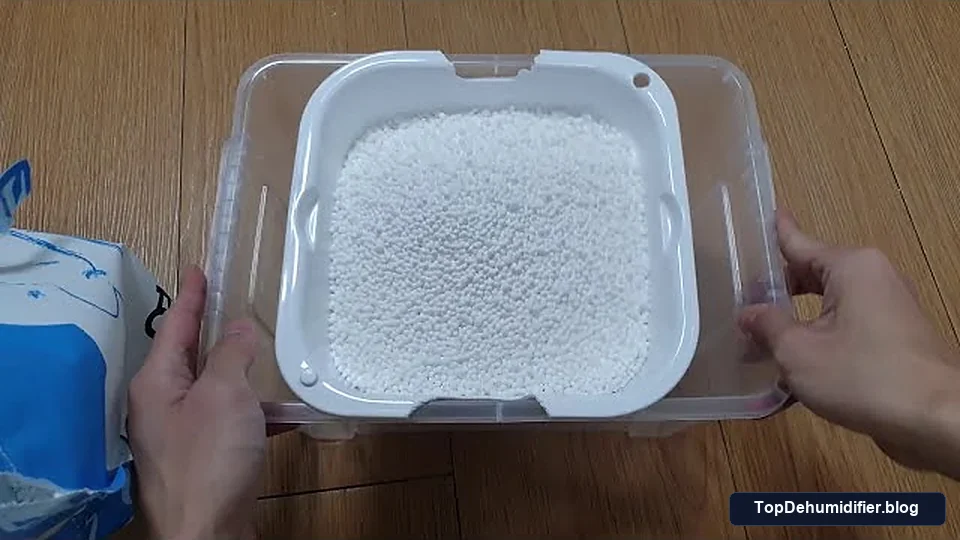
Passive moisture absorbers rely strictly on hygroscopic chemical compounds like calcium chloride to pull water vapor directly from surrounding air. As these solid white pellets absorb moisture, they dissolve and pool into a lower basin.
Electric dehumidifiers utilize a refrigeration cycle very similar to domestic refrigerators. Warm humid air is drawn across cold evaporator coils, condensing airborne moisture into liquid water droplets that gravity feeds into an internal reservoir.
Understanding this fundamental thermodynamic difference explains why passive units suit tiny sealed spaces while electric models handle whole-room moisture loads effectively. Chemical reactions cannot compete with forced mechanical airflow for volume.
Passive absorbers rely on chemical deliquescence, drawing ambient moisture through calcium chloride pellets until a liquid brine forms. This thermodynamic phase change requires zero electrical input but lacks active airflow acceleration.
Compressor units use a refrigerant loop to chill internal coils below the local dew point, forcing rapid moisture condensation. Fans pull large volumes of humid air across these freezing thermal surfaces continuously.
Thermoelectric models utilize the Peltier effect, passing direct current across dissimilar semiconductor junctions to create a thermal gradient. A cold heat sink condenses water vapor while a separate fan exhausts warmth.
- Chemical absorption requires no external electrical power source.
- Mechanical refrigeration actively chills air below its dew point.
- Condensation capacity scales directly with compressor horsepower.
Chemical Desiccant Reaction Rates
Calcium chloride crystals possess a massive chemical affinity for water molecules present in humid ambient atmospheres. This reaction happens continuously until the solid pellets completely liquefy inside their hanging collection bags.
Temperature heavily influences this chemical process, slowing down drastically in colder rooms below freezing. Users must monitor depletion rates closely during seasonal humidity spikes to avoid sudden overflow incidents.
- Pellets dissolve into brine water over several weeks.
- Cold environments slow down chemical absorption speeds.
Refrigeration Cycle Efficiency
Electric dehumidifiers force humid air through tightly packed metallic coils chilled by circulating refrigerant gas. This rapid temperature drop forces water vapor to phase-change from gas into liquid droplets.
Clean condenser coils ensure maximum thermal transfer efficiency during continuous daily operation in damp residential living spaces and subterranean levels.
- Fans pull high volumes of air across cold coils.
- Refrigerant pressure dictates overall water extraction rates.
Performance Benchmarks and Extraction Capacity
Measuring water extraction requires looking at actual pints removed per twenty-four hours of continuous operation. Passive absorbers generally lack official pint ratings because their output is tied entirely to ambient humidity.
Electric units feature certified capacity ratings ranging from thirty pints up to massive fifty-pint commercial configurations. These active machines drop relative humidity levels rapidly across sizable square footage footprints.
Homeowners dealing with severe foundation seepage or active mold growth will find passive crystals completely overwhelmed. Only robust mechanical compressors can deliver the necessary volumetric extraction performance.
Standard hanging chemical bags typically extract less than one pint of water per week under ideal conditions. Their extraction rate drops sharply once relative humidity falls below fifty percent ambient thresholds.
Mid-range residential refrigerant units easily remove thirty pints of moisture daily in standard warm basements. This high volumetric capacity prevents structural dampness and inhibits active mold colonization across large living spaces.
Extraction efficiency depends heavily on ambient temperature and relative humidity ratings. Electric compressors maintain high performance across varied climates, whereas passive chemical reactions slow down drastically in cold weather environments.
- Passive absorbers extract ounces, not gallons, of water.
- Electric units remove pints daily from indoor air.
- High humidity demands continuous mechanical refrigeration cycles.
Evaluating Passive Output Limits
Passive hanging bags typically capture less than one cup of water over several weeks of normal operation. They function purely as localized humidity buffers rather than heavy-duty drying solutions.
Placing a small chemical tray inside a large damp basement yields zero noticeable improvement in overall relative humidity metrics due to vast air volume constraints.
- Output is measured in fluid ounces over weeks.
- Ineffective in large or poorly sealed rooms.
Assessing Electric Extraction Power
Modern compressor dehumidifiers easily pull multiple gallons of moisture from damp basement air every single day. Built-in humidistats let users target precise relative humidity percentages like fifty percent.
Continuous drainage hoses bypass manual bucket emptying routines for seamless, unattended long-term moisture management in vacation homes or wet crawlspaces.
- Removes gallons daily based on ambient conditions.
- Digital humidistats maintain precise target levels.
Installation Logistics and Spatial Footprint
Setting up a passive moisture absorber requires zero technical expertise, tools, or electrical outlets. For compact motorhomes, consult our best moisture absorber for rv options to safely protect tight vehicle interiors.
Electric dehumidifiers demand careful physical placement near grounded electrical outlets with adequate clearance around intake grilles. Their bulky plastic housings take up valuable floor space in cramped hallways or bedrooms.
Mobility also differs drastically between these two distinct moisture control categories. Passive units weigh next to nothing, while electric models feature heavy compressors and casters for rolling across floors.
Passive moisture absorbers feature a zero-clearance footprint, hanging easily inside cramped wardrobes, boat cabins, or small storage lockers. They demand no electrical outlets, extension cords, or specialized wall mounting hardware.
Compressor dehumidifiers require strict vertical clearance and unobstructed airflow grilles to operate safely. Positioning units too close to interior walls restricts intake efficiency and strains the internal mechanical blower motors.
Heavy-duty electric units often demand dedicated circuits to prevent household breaker trips during compressor startup surges. Casters or integrated handles help maneuver these bulky appliances across different rooms safely.
- Passive devices hang discreetly in tight enclosed spaces.
- Electric units need floor clearance and wall outlet access.
- Weight disparity makes passive options far more portable.
Placement Strategies for Passive Units
Maximizing airflow around hanging chemical absorbers speeds up the natural moisture capture process inside enclosed closets. Ensure garments do not press directly against the permeable upper fabric membrane.
Boat cabins and classic car interiors benefit immensely from spill-proof desiccant tubs placed securely on flat surfaces during off-season winter storage periods.
- Hang away from heavy clothing blockages.
- Secure containers to prevent accidental spills.
Optimizing Electric Dehumidifier Layouts
Placing an electric dehumidifier centrally in a damp basement ensures balanced air intake and optimal moisture extraction. Maintain at least twelve inches of clearance around all vents.
Units placed too close to masonry foundation walls restrict necessary airflow and reduce overall compressor cooling efficiency during heavy humidity cycles.
- Keep intake grilles clear of furniture.
- Position centrally for maximum room coverage.
Ongoing Maintenance and Operational Upkeep
Maintenance routines define the long-term user experience of managing indoor humidity challenges over many years. Passive absorbers require virtually zero mechanical upkeep aside from tossing out spent plastic containers.
Electric dehumidifiers demand rigorous weekly cleaning schedules to prevent mold growth inside collection buckets and on delicate refrigeration coils. Neglected air filters quickly choke airflow and strain motors.
Evaluating total labor involvement helps buyers choose systems that align with their personal appetite for routine household chores and equipment upkeep tasks.
Chemical absorbers require no mechanical upkeep other than disposal safety when the lower collection reservoir fills. Users must pour out caustic calcium chloride brine carefully and replace spent hanging pouches periodically.
Compressor systems necessitate regular filter cleaning every two weeks to prevent dust buildup on evaporator coils. Neglecting this basic maintenance reduces airflow volume and significantly degrades overall daily water extraction performance.
Continuous drainage setups require routine inspection of gravity hoses to prevent mineral blockages or kinking. Users utilizing internal condensate pumps must test float switches monthly to avoid unexpected basement flooding events.
- Passive units require simple disposal and replacement.
- Electric models need filter washing and bucket sanitizing.
- Neglect leads to reduced lifespan for mechanical parts.
Managing Passive Consumables
Once calcium chloride crystals dissolve completely, users must safely discard the stagnant brine liquid and insert a fresh refill pouch. This recurring consumable cycle represents the primary task.
Accidental punctures to the upper collection membrane can cause caustic brine leaks onto stored fabrics or leather goods, making proper handling crucial.
- Discard full liquid trays into household drains.
- Replace depleted pouches every few months.
Servicing Electric Mechanical Parts
Washing removable mesh air filters every two weeks maintains proper airflow across freezing evaporator coils. Accumulated dust and pet hair drastically reduce water extraction efficiency over time.
Sanitizing the condensate collection bucket periodically prevents slimy biological growth and unpleasant odors from circulating throughout your finished basement living areas.
- Clean mesh air filters bi-weekly.
- Scrub collection buckets to stop mold.
Energy Consumption and Financial Footprint
Operating costs separate these two technologies into completely different financial categories for budget-conscious homeowners. Passive absorbers draw zero electric current, eliminating monthly utility bill increases entirely.
Electric dehumidifiers consume substantial electrical wattage to run heavy compressors and high-speed fans continuously. Energy bills will reflect noticeable increases during humid summer months of heavy operation.
Balancing upfront savings against recurring consumable purchases or utility expenses requires analyzing long-term usage duration across different seasons and room environments.
Passive absorbers have a zero-watt draw, utilizing stored chemical potential energy instead of grid electricity. This makes them entirely free to run regarding ongoing utility bill operational expenses over time.
Standard compressor dehumidifiers consume substantial running wattage, often ranging from three hundred to seven hundred watts continuously. Operating these heavy-duty appliances daily noticeably increases monthly household electricity consumption expenses.
Selecting Energy Star certified models mitigates running costs through optimized compressor designs and efficient fan motors. Calculating long-term utility impacts helps buyers balance upfront equipment purchases against ongoing operational electricity expenses.
- Passive absorbers use zero electricity.
- Electric compressors increase monthly utility expenses.
- Consumable replacement costs recur with passive units.
Calculating Passive Cost Factors
While passive units avoid electricity costs, purchasing replacement chemical trays or hanging bags year-round adds up steadily in chronically damp environments. They become expensive if deployed incorrectly.
Using chemical absorbers in large rooms wastes money because their limited extraction capacity fails to lower ambient humidity metrics effectively.
- Refill purchases accumulate over time.
- Inefficient deployment drives up expenses.
Analyzing Electric Power Draw
Modern Energy Star certified electric dehumidifiers optimize compressor run times to minimize daily electricity consumption. Selecting the correct pint capacity prevents wasteful over-sized energy usage.
Running an uncertified or aging compressor unit continuously can add significant charges to your seasonal electricity bills compared to efficient modern models.
- Look for Energy Star certified models.
- Match machine capacity to room size.
Safety, Environmental Impact, and Material Durability
Safety considerations differ significantly between static chemical bags and high-voltage motorized refrigeration appliances operating in damp areas. Calcium chloride dust and brine liquid require careful handling.
Electric dehumidifiers involve electrical components near standing water, necessitating built-in safety shutoffs and grounded power plugs to prevent accidental short circuits or electrical shock hazards.
Material durability also favors passive units in harsh environments due to their lack of corrosion-prone metal coils and failure-prone electronic control boards.
Calcium chloride brine represents a chemical hazard if accidentally spilled onto ferrous metals, textiles, or skin. Equipment housings must use robust plastics to resist corrosive salt degradation over extended operational periods.
Modern electric dehumidifiers utilize eco-friendly refrigerants that comply with strict global environmental safety mandates. Internal electrical components undergo rigorous UL testing to prevent thermal runaway and mitigate residential fire risks.
Housing durability depends heavily on impact-resistant polymers designed to withstand humid basement or crawlspace conditions. Regular chassis wipe-downs prevent mold spores from colonizing damp internal plastic surfaces and structural seams.
- Calcium chloride is a skin and eye irritant.
- Electric units require proper grounding near water.
- Passive units feature no electronic circuit boards.
Handling Chemical Safety Risks
Spilling concentrated calcium chloride brine onto bare skin or delicate wood furniture causes irritation or surface damage. Always wash hands thoroughly after replacing spent passive moisture collection pouches.
Keep chemical absorbers safely out of reach of curious young children and household pets who might puncture soft plastic outer membranes.
- Avoid direct skin contact with liquid brine.
- Keep out of reach of children and pets.
Ensuring Electrical Appliance Safety
Never operate an electric unit with a frayed power cord in damp basements. Review our best electric dehumidifier for rv selections for safe, grounded motorhome moisture control.
Automatic overflow shutoff switches prevent water from spilling onto electrical components or subflooring if the collection bucket fills up completely.
- Inspect power cords for wear regularly.
- Verify automatic shutoff functions properly.
Ideal Buyer Profile and Final Selection Guide
Choosing between a passive moisture absorber and an electric unit depends on your space constraints and humidity severity. For heavy-duty extraction, see our Vremi 50 pint moisture man dehumidifier review for capacity insights.
Renters with damp wardrobes, boat owners winterizing cabins, and collectors storing firearms in secure safes should select passive chemical absorbers for targeted, maintenance-free protection.
Homeowners battling wet foundations, damp crawlspaces, or active basement mold must invest in robust moisture extraction. Check out our best dehumidifier selections to protect structural integrity and air quality.
Chemical absorbers suit buyers needing localized humidity control inside unpowered areas like classic cars, gun safes, or small RV closets. They provide silent, passive moisture management without risking battery drain issues.
Whole-home or basement setups demand high-capacity compressor units capable of lowering moisture loads across entire living zones. These machines suit occupants battling persistent condensation, musty odors, or active structural dampness problems.
Buyers must evaluate spatial dimensions, electrical access, and local climate severity before finalizing equipment purchases. Matching moisture loads to appropriate technical specifications ensures long-term structural protection and optimal indoor air quality.
- Select passive absorbers for small enclosed spaces.
- Choose electric dehumidifiers for full room drying.
- Assess humidity severity before purchasing equipment.
When to Buy Side A
Purchase passive moisture absorbers when dealing with isolated, unpowered enclosures suffering from stagnant air and mild musty odors. They provide simple, low-cost preventative care.
Closets, RVs, lockers, and seasonal storage bins represent the ultimate ideal environments where electric cords simply cannot reach.
- Ideal for unpowered closets and lockers.
- Great for seasonal vehicle or boat storage.
When to Buy Side B
Invest in an electric dehumidifier whenever whole-room relative humidity consistently exceeds safe residential thresholds. Protect your home investment from long-term moisture damage.
Active basements, laundry rooms, and newly constructed spaces require heavy-duty mechanical moisture extraction to maintain healthy living conditions year-round.
- Essential for finished basements and laundry rooms.
- Required for heavy whole-room moisture loads.
Frequently Asked Questions
Can a passive absorber replace an electric dehumidifier in a damp basement?
No, passive absorbers lack the volumetric capacity needed for large rooms. You must use an electric dehumidifier to effectively dry basements.
Are the chemicals inside passive moisture absorbers toxic to pets?
Calcium chloride is an irritant that causes discomfort if ingested. Always place units securely out of reach of curious pets and young children.
How often do you need to replace passive moisture absorber refills?
Replacement frequency depends heavily on ambient humidity levels. Most households change spent pouches every one to three months during peak seasons.
Do electric dehumidifiers raise indoor temperatures while running?
Yes, standard compressor units exhaust slightly warm air during operation. This minor thermal output is normal for refrigeration-based appliances indoors.
What relative humidity level should I target with an electric unit?
Most experts recommend maintaining indoor relative humidity between thirty and fifty percent to prevent mold growth and structural damage.