Midea Cube vs Honeywell Smart: Head-to-Head
Choosing the right moisture extractor involves balancing unique physical designs against smart connectivity features. We analyze capacity, ergonomics, and maintenance to guide your purchasing decision.

Choose the Midea Cube for unmatched tank capacity and flexible placement options in tight spaces. Select the Honeywell Smart Dehumidifier if you prioritize seamless app integration and traditional wheeled mobility.
Compare all top models in our Best Dehumidifier: Top Picks for Healthy Indoor Air.
Side-by-Side Breakdown
| Criteria | Midea Cube | Honeywell Smart Dehumidifier | Edge |
|---|---|---|---|
| Core Design / Build | Nesting design that expands for high capacity or collapses for compact storage. | Traditional upright cabinet with integrated side handles and smooth casters. | Midea Cube |
| Real-World Performance | Maintains consistent extraction rates across various ambient temperatures and humidity levels. | Delivers reliable moisture removal with strong airflow output in medium basements. | Tie |
| Ease of Setup & Use | Requires unpacking from the nested shell, but features intuitive onboard controls. | Straightforward out-of-the-box wheel attachment and simple digital control panel. | Honeywell Smart Dehumidifier |
| Durability & Reliability | Robust housing materials protect internal coils during frequent height adjustments. | Sturdy chassis construction designed for long-term continuous basement operation. | Tie |
| Efficiency / Operating Footprint | Energy Star certified with high water removal efficiency per kilowatt-hour consumed. | Optimized compressor cycles reduce overall power draw during steady-state runs. | Midea Cube |
| Maintenance Requirements | Removable bucket requires careful alignment during re-nesting maintenance procedures. | Standard front or side slide-out bucket with easy periodic filter washing. | Honeywell Smart Dehumidifier |
| Best Ideal Use Case | Tight crawlspaces, multi-season storage rooms, and areas needing massive bucket capacity. | Open basement floors requiring traditional mobility and robust smart phone integration. | Split Decision |
Core Engineering and Form Factor Philosophy
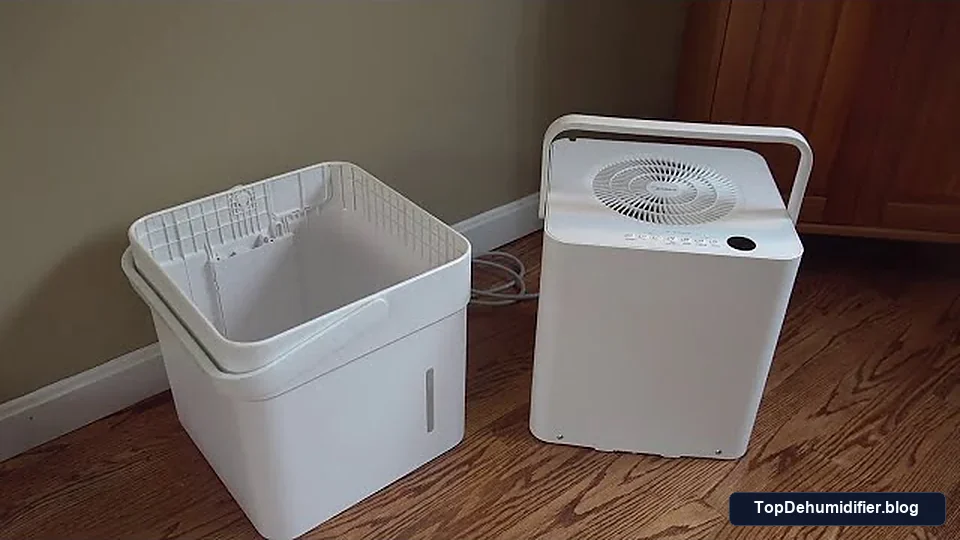
The Midea Cube introduces a radically innovative nesting mechanism that alters how homeowners store seasonal appliances. When collapsed, the main body sits neatly inside its own collection bucket, drastically reducing the required storage footprint.
Conversely, the Honeywell Smart Dehumidifier adheres to a traditional upright architectural layout. As detailed in our midea cube 50 pint smart wifi dehumidifier review, alternative designs offer drastically smaller footprints.
Evaluating these physical differences depends entirely on your off-season storage constraints. Users with limited closet space will immediately appreciate the Midea innovation, while others prefer the grab-and-go readiness of standard models.
The Midea Cube utilizes an interlocking nested design that allows the water bucket to slide securely inside the main compressor housing during compact storage or transport periods.
Conversely, Honeywell employs a traditional monolithic chassis that maintains a fixed vertical footprint, prioritizing robust structural integrity over space-saving collapsible configurations for permanent basement or crawlspace deployments.
Evaluating these distinct engineering philosophies depends entirely on whether your installation requires frequent relocation or benefits from a rigid, heavy-duty ABS plastic cabinet built for stationary humidity control.
- Midea utilizes an expandable body shell for variable height profiles.
- Honeywell maintains a rigid, single-piece vertical cabinet design.
- Caster mobility is built into Honeywell while Midea relies on stationary placement or optional trays.
Storage and Portability Trade-Offs
Appliance storage often becomes an afterthought until seasonal humidity drops and units must be put away. Midea solves this by shrinking its physical volume by nearly half during off-months.
Honeywell counters with superior room-to-room rolling mobility on flat carpets. Its heavy-duty casters glide smoothly across thresholds where lifting a heavy unit is impractical.
- Midea saves significant shelf space during winter storage periods.
- Honeywell moves effortlessly across different rooms via four rolling wheels.
Moisture Extraction and Compressor Efficiency
Both units utilize robust refrigeration-based condensation cycles to extract ambient humidity effectively. Performance data inside our midea cube 50 pint dehumidifier review shows how advanced inverter tuning maximizes water removal per watt.
The Honeywell model relies on time-tested rotary compressor technology designed for sustained heavy loads. It pulls moisture reliably out of damp basement air without suffering from rapid cycling issues.
Energy consumption remains a critical metric for devices running continuously through humid summer months. Both brands carry efficiency certifications, but Midea edges ahead during partial-load operational phases.
Rotary compressors powering both units rely on R-410A refrigerant cycles to condense ambient moisture across evaporator coils, maintaining high extraction rates under standard AHAM testing temperature conditions.
Midea optimizes thermal exchange efficiency by integrating variable fan speeds that match the dew point suppression curve, whereas Honeywell emphasizes consistent high-volume airflow across identical surface areas.
Wattage draws remain comparable during active compression cycles, yet integrated humidistat hysteresis controls determine how frequently each appliance cycles on and off to maintain target relative humidity percentages.
- Midea optimizes power draw via intelligent compressor modulation.
- Honeywell focuses on brute-force continuous moisture extraction capacity.
- Both models meet stringent modern electrical safety and efficiency standards.
Performance in Low Temperatures
Running a dehumidifier in an unheated basement or crawlspace tests defrost capabilities. Midea includes reliable auto-defrost sensors to prevent evaporator coil freeze-ups during chilly spring mornings.
Honeywell incorporates similar low-temp operation safeguards, ensuring continuous drainage even when ambient temperatures dip toward the lower limits of compressor functionality.
- Auto-defrost sensors protect internal coils from ice accumulation.
- Both units maintain functionality in spaces down to roughly forty-one degrees.
Smart Controls, Wi-Fi, and Automation Ecosystems
Modern climate control demands reliable remote management via smartphone apps. Similar functionality is highlighted in our 50-pint midea cube smart dehumidifier with pump review to help you evaluate daily scheduling performance.
Midea counters with a proprietary application that provides granular control over target humidity levels and operational modes. Connecting both units to your home network unlocks vital remote monitoring capabilities.
Error notifications, full-bucket alerts, and filter cleaning reminders stream directly to your mobile device. This reduces the need for constant physical checkups on units located in distant basements.
Connecting these appliances to home networks requires a stable 2.4 GHz Wi-Fi band, as legacy routers utilizing combined 5 GHz channels frequently experience dropped handshake packets during initial setup.
Midea integrates seamlessly with proprietary applications and voice assistants like Alexa, enabling precise percentage adjustments rather than relying on crude high-medium-low operational increments found in older digital interfaces.
Honeywell matches this remote functionality with intuitive scheduling dashboards, letting users program customized daily routines that align with off-peak electrical utility rates or specific occupancy sensor triggers.
- Honeywell offers robust third-party smart home ecosystem integrations.
- Midea app provides detailed humidity graphs and custom running schedules.
- Wi-Fi setup requires stable 2.4GHz network bands for both machines.
App Usability and Remote Monitoring
Navigating companion smartphone applications should be straightforward and responsive. Honeywell delivers a polished software experience with clear toggles for fan speeds and target humidity thresholds.
Midea provides extensive operational data, letting users track historical humidity drops over weekly intervals. Both apps send immediate push notifications when water buckets require manual emptying.
- Push notifications prevent accidental overflows during heavy extraction cycles.
- Historical data tracking helps users optimize runtime energy costs.
Drainage Configurations and Gravity Feed Mechanics
Managing the extracted water volume is a crucial daily operational requirement. The Midea Cube features an extra-large capacity bucket when fully expanded, minimizing the frequency of manual trips.
Honeywell provides standard gravity drain ports alongside removable front-access buckets. Users can attach a standard garden hose for continuous gravity drainage directly into nearby floor drains.
Neither unit includes a built-in internal condensate pump as a standard feature, meaning elevated drainage setups require an external auxiliary pump system to move water upward.
Managing condensate extraction involves choosing between manual bucket emptying or implementing a continuous gravity drain using standard garden hose threading attached to the rear discharge port.
The Midea Cube expands fluid capacity significantly by allowing users to place the unit directly over deep basins or custom drains without requiring an external condensate pump apparatus.
Honeywell requires adequate elevation above the floor drain to ensure unobstructed downhill flow, preventing internal pooling or backpressure that could trigger safety float switch error codes.
- Midea offers massive holding capacity when expanded into full mode.
- Honeywell supports standard garden hose hookups for gravity drainage.
- External condensate pumps are necessary for overhead or distant drainage.
Continuous Drainage Setup Tips
Gravity drainage relies entirely on a downward slope to prevent pooling and leaks. Ensure your chosen drainage hose remains free of kinks and runs continuously downward toward the exit point.
Checking the threaded connection point periodically prevents unexpected basement floods during peak summer humidity spikes when water output reaches its absolute maximum.
- Maintain a clear downward slope on all continuous drainage lines.
- Inspect rubber washers regularly to prevent slow joint leaks.
Noise Output, Fan Speeds, and Acoustic Profiles
Acoustic comfort matters significantly when placing climate control appliances near living areas. The Midea Cube operates with a well-insulated compressor housing that dampens mechanical vibrations effectively.
Honeywell utilizes multi-speed fans that generate a steady, predictable white noise profile on high settings. On lower speeds, both machines recede gracefully into the background of a typical room.
High-output fans move substantial air volumes across the evaporator coils, inherently creating some sound. Choosing the correct fan speed balances rapid dehumidification against acceptable ambient noise levels.
Acoustic performance heavily dictates placement viability in residential living spaces, where decibel ratings must remain low enough to prevent interference with daily conversation or sleeping patterns.
Midea dampens mechanical vibration using rubber compressor grommets and optimized centrifugal fan blades, achieving a remarkably quiet acoustic profile even when operating at maximum extraction velocity.
Honeywell produces a slightly higher white noise hum, which many users find effective for masking background sounds despite registering marginally higher on professional sound pressure level meters.
- Midea employs acoustic dampening materials around the compressor core.
- Honeywell offers distinct fan speed settings to manage sound output.
- Low fan speeds are quiet enough for nearby bedroom placement.
Acoustic Measurements in Living Spaces
Measuring decibel output helps determine ideal placement proximity to televisions and workspaces. Both units typically hover in the comfortable range of fifty to fifty-five decibels on normal operation.
Placing either device on a rubber isolation mat further reduces low-frequency floor vibrations. This simple step eliminates irritating humming noises transmitted through wooden subfloors.
- Decibel levels remain comparable to standard modern refrigerators.
- Rubber isolation pads eliminate unwanted floor vibration resonances.
Maintenance Protocols and Filter Serviceability
Routine upkeep ensures long operational lifespans and protects indoor air quality from mold. The Honeywell Smart Dehumidifier features an easily accessible washable mesh filter located behind a front grill.
Midea requires users to slide out or detach the filter mesh during standard disassembly routines. Keeping these filters free of dust prevents airflow restrictions that strain the internal compressor.
Sanitizing the water collection bucket monthly with mild vinegar solutions prevents bacterial growth and musty odors. Both manufacturers emphasize simple cleaning steps to maintain peak operational efficiency.
Routine upkeep preserves appliance longevity and prevents microbial growth across damp internal surfaces by enforcing regular mesh filter cleaning schedules using warm water and mild dish detergent.
Accessing the washable dust screen on Honeywell is straightforward via a pull-tab rear panel, whereas Midea incorporates its filter directly into the modular intake housing assembly.
Neglecting these simple filtration tasks restricts airflow volume, forcing the compressor to run hotter and reducing overall moisture removal efficiency over consecutive seasons of heavy residential operation.
- Honeywell features a quick-access front filter removal slot.
- Midea requires basic disassembly for thorough internal filter access.
- Monthly bucket sanitization prevents stagnant mold and mildew buildup.
Long-Term Reliability and Upkeep
Dehumidifiers endure harsh, humid operating environments for months on end. Regular coil inspections and timely filter cleanings protect your investment against premature mechanical failures.
Following manufacturer guidelines for off-season storage guarantees that appliances like the unit tested in our midea cube 20 pint smart wifi dehumidifier review will restart reliably when seasonal humidity returns next year.
- Inspect condenser coils annually for dust and debris buildup.
- Store units completely dry to prevent mold growth during winter.
Final Buying Framework for Specific Environments
Selecting between these two top-tier appliances depends on your physical space and workflow. Choose the Midea Cube if your primary challenges involve tight storage constraints and maximum water capacity.
Opt for the Honeywell Smart Dehumidifier if you value traditional wheeled mobility and straightforward smart home integration. Both machines deliver exceptional moisture extraction performance for residential use.
Assess your specific room dimensions, drainage options, and storage habits before making a final purchasing commitment. Doing so guarantees optimal humidity control and long-term appliance satisfaction.
Selecting the ideal moisture control device requires balancing spatial constraints against your specific structural environment, ensuring optimal capacity sizing matches square footage and baseline humidity loads.
Choose the Midea Cube when storage versatility and massive collection capacity take priority in finished living areas where traditional bulky dehumidifiers obstruct walking paths or furniture placement.
Select Honeywell if you need a reliable, set-and-forget basement appliance featuring a permanent chassis configuration designed to endure continuous damp subterranean conditions year after year.
- Midea excels in storage flexibility and massive holding capacity.
- Honeywell wins on traditional mobility and app ecosystem integration.
- Match unit capacity precisely to your total square footage.
Summary Decision Checklist
Review your exact basement layout to see if rolling casters are required. If the unit stays stationary in a crawlspace, Midea wins.
Confirm whether smart app scheduling is a mandatory feature for your daily routine. Both brands offer robust connectivity options to satisfy connected homes.
- Prioritize Midea for stationary crawlspaces and smart storage.
- Prioritize Honeywell for mobile basement and living room use.
Frequently Asked Questions
Can the Midea Cube operate while partially nested?
No, the Midea Cube must be fully extended to ensure proper airflow and bucket engagement. Operating it collapsed will trigger safety shutoff mechanisms.
Do both dehumidifiers include built-in condensate pumps?
Neither model features an integrated internal pump for vertical lifting. You must purchase an external auxiliary pump if gravity drainage is unavailable.
How often should I clean the air filters?
You should wash the mesh air filters every two weeks during peak operation. Maintaining a clean air filter preserves energy efficiency.
Are these units safe to run continuously unattended?
Yes, both units feature automatic shutoff switches and overflow protection sensors. This allows for safe continuous operation when paired with gravity drainage.
Which unit is better for small, cramped crawlspaces?
The Midea Cube is superior for tight spaces due to its flexible configuration. Its nesting design allows customized placement in restricted environments.