Cool Mist vs Ultrasonic Humidifiers: Technical Equipment Comparison
Choosing the correct indoor moisture delivery system requires evaluating mechanical evaporation versus high-frequency piezoelectric nebulization. This guide analyzes engineering trade-offs for residential spaces.

Select cool mist evaporative systems for natural humidity self-regulation and zero mineral dust, or choose ultrasonic nebulizers when absolute whisper-quiet operation and compact footprints are mandatory.
Compare all top models in our Best Dehumidifier: Top Picks for Healthy Indoor Air.
Side-by-Side Breakdown
| Criteria | Humidifier Cool Mist | Ultrasonic | Edge |
|---|---|---|---|
| Core Design / Build | Wick filter with integrated evaporation fan | Piezoelectric ceramic transducer disc | Ultrasonic |
| Real-World Performance | Self-regulating output preventing over-saturation | Aggressive mist generation with rapid saturation | Cool Mist |
| Ease of Setup & Use | Simple tank mounting and filter alignment | Plug-and-play operation with directional nozzles | Ultrasonic |
| Durability & Reliability | Fewer electronic failure points, mechanical focus | Transducer scaling requires diligent water quality care | Cool Mist |
| Efficiency / Operating Footprint | Higher wattage due to continuous fan motor draw | Extremely low electrical consumption per cubic foot | Ultrasonic |
| Maintenance Requirements | Frequent wick filter replacements to prevent mold | Regular descaling of mineral buildup on transducer | Tie |
| Best Ideal Use Case | Large family bedrooms needing safe natural limits | Office desks and nurseries requiring silent mist | Ultrasonic |
Core Operational Mechanics and Engineering Design
Cool mist evaporative humidifiers rely on a saturated wick filter combined with a high-capacity electric fan. Ambient room air draws directly through the damp material, causing natural evaporation that introduces clean vapor into your indoor environment.
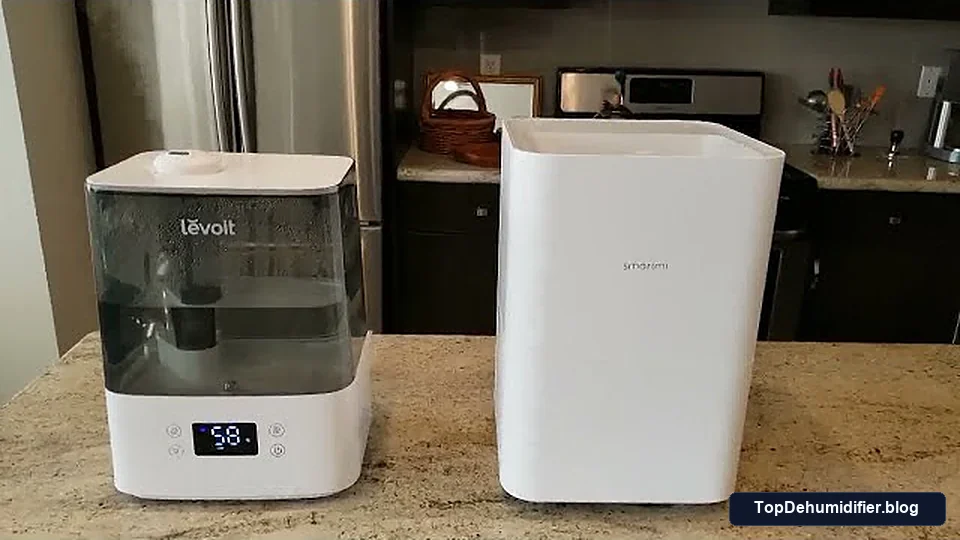
Ultrasonic units utilize a rapidly vibrating ceramic diaphragm operating at ultrasonic frequencies. This mechanical action breaks liquid water into microscopic droplets, propelling a visible cool fog directly into the surrounding space without using internal fans.
Understanding these fundamental engineering differences helps technicians determine long-term reliability. Evaporative designs prioritize structural simplicity, whereas ultrasonic models depend heavily on precision solid-state electronics to maintain consistent droplet suspension.
- Evaporative systems use mechanical airflow and absorbent cellulose wicks.
- Ultrasonic devices employ high-frequency piezoelectric transducers for atomization.
- Cool mist models inherently resist mineral projection through natural evaporation.
Anatomy of Evaporative Delivery
The primary structural component in evaporative units is the replaceable paper or synthetic wick filter. Water from the reservoir wicks upward against gravity, maximizing surface area for optimal air-water contact.
A motorized fan pulls dry room air through the wet matrix. As air passes through, moisture evaporates completely into the gas phase, similar to capacity demands found in a basement dehumidifier review.
- Absorbent wicks trap heavy minerals inside the physical matrix.
- Internal fan assemblies pull room air across wet surfaces.
Anatomy of Ultrasonic Atomization
Ultrasonic humidifiers generate fine mists by oscillating a metal disc at ultrasonic speeds. This rapid movement creates microscopic cavitation bubbles that eject minute water droplets into the air path.
Because no natural evaporation barrier exists, any mineral content dissolved in the supply water travels directly out of the discharge nozzle and settles on nearby furniture surfaces as white dust.
- Piezoelectric discs vibrate thousands of times per second.
- Direct atomization propels liquid droplets directly into the room.
Moisture Output, Droplet Size, and Evaporation Rates
Humidity output dynamics dictate how uniformly moisture disperses throughout a designated residential zone. Evaporative cool mist units deliver a self-regulating output that naturally decreases as relative humidity approaches optimal levels.
Ultrasonic humidifiers pump out a constant volume of visible mist regardless of current room humidity. This unmanaged output can easily cause over-saturation and condensation on nearby windowsills if external humidistats are absent.
Droplet size also impacts indoor air quality measurements significantly. Evaporative systems release purely invisible vapor, whereas ultrasonic machines create liquid aerosols that can carry airborne impurities if unpurified water sources are used.
- Evaporative units self-regulate output based on ambient room moisture.
- Ultrasonic generators pump continuous mist regardless of saturation levels.
- Particle size dictates whether minerals remain trapped or become airborne.
Natural Evaporative Saturation Limits
Physics dictates that dry air absorbs moisture rapidly, while humid air resists further evaporation. Cool mist evaporative systems exploit this natural thermodynamic principle to prevent accidental indoor over-humidification.
When room relative humidity reaches targeted comfort thresholds, the rate of evaporation slows down naturally. This inherent safety feature protects drywall and flooring from moisture damage without requiring complex digital sensors.
- Thermodynamic limits prevent accidental over-saturation of living spaces.
- Evaporation rates scale inversely with existing ambient room humidity.
Forced Ultrasonic Dispersion Dynamics
Ultrasonic transducers force water into the air mechanically, bypassing standard thermodynamic evaporation limits. Review our winter home humidity guide to prevent excessive moisture accumulation indoors.
Operators must pair ultrasonic equipment with external humidistats or utilize integrated digital controls to cycle power safely. Without automated shutoff mechanisms, condensation pools can accumulate quickly on hard surfaces.
- Mechanical dispersion ignores ambient saturation thresholds completely.
- External humidistats are required to prevent excessive moisture accumulation.
Energy Efficiency and Electrical Operating Footprint
Electrical power consumption varies significantly between these two popular residential humidifier categories. Cool mist evaporative units require continuous power for both the electronic control board and the internal multi-speed blower fan.
Ultrasonic devices consume remarkably less electrical power during standard operation. The primary energy draw stems from driving the piezoelectric transducer, making these units exceptionally friendly to overall household electricity budgets.
Facility managers evaluating large-scale deployment must weigh electrical savings against replacement filter costs. While ultrasonic units save on wattage, evaporative systems avoid specialized water filtration expenses.
- Evaporative blowers draw continuous electrical current for airflow.
- Ultrasonic transducers operate at exceptionally low wattages.
- Total operational cost includes both electricity and consumable filter replacements.
Blower Power Demands in Cool Mist
Electric fan motors inside cool mist humidifiers consume steady wattage to overcome wick resistance. Higher fan speeds demand more electrical energy to maintain adequate cubic feet per minute airflow ratings.
Selecting energy-efficient brushless motors helps mitigate this ongoing electrical overhead. However, the physical presence of a fan means baseline power usage will always exceed piezoelectric systems.
- Internal blower fans require continuous electrical input during cycles.
- Motor efficiency directly impacts overall operational power draw.
Piezoelectric Efficiency in Ultrasonic Units
Ultrasonic technology achieves high moisture output using minimal electrical wattage. The ceramic disc converts electrical signals directly into mechanical vibrations with minimal thermal energy waste.
This high electromechanical conversion efficiency makes ultrasonic machines the preferred choice for low-power environments, including office cubicles, RVs, and small nurseries.
- Direct electromechanical conversion minimizes wasted electrical energy.
- Low wattage requirements suit constrained power delivery setups.
Acoustic Profiles and Operating Noise Levels
Acoustic performance remains a critical selection factor for bedrooms, home offices, and quiet living spaces. Review our best dehumidifier for bedroom options to identify ultra-quiet models for sleeping areas.
Ultrasonic humidifiers operate at near-silent acoustic levels because they lack moving fan blades. Users typically hear only occasional gurgling sounds as water feeds from the storage tank into the base reservoir.
Comparing decibel outputs reveals a stark contrast in everyday usability. Light sleepers generally prefer ultrasonic machines, while users who tolerate background white noise easily adapt to evaporative fans.
- Evaporative fans produce steady white noise during operation.
- Ultrasonic transducers eliminate mechanical noise sources entirely.
- Water reservoir gurgling occurs intermittently across both equipment types.
Fan Acoustics in Evaporative Systems
The acoustic signature of a cool mist humidifier is defined by aerodynamic fan noise. Higher speed settings create noticeable airflow turbulence that can disrupt sensitive individuals during nighttime sleeping hours.
Modern engineering incorporates balanced blower wheels and acoustic baffling to reduce motor hum. Nevertheless, mechanical air movement inherently produces higher decibel readings than piezoelectric atomization.
- Airflow turbulence creates steady low-frequency background hum.
- Acoustic baffling helps dampen internal motor vibrations.
Silent Operation in Ultrasonic Devices
Ultrasonic humidifiers remove mechanical blowers from the design equation, achieving virtually silent operation. The only active sound is the high-frequency oscillation of water against the ceramic disc, which falls outside human hearing ranges.
This near-total silence makes ultrasonic models ideal for infant nurseries and recording studios. Operators experience uninterrupted quiet while maintaining precise indoor relative humidity levels.
- Absence of moving fan blades eliminates mechanical noise.
- Transducer frequencies operate beyond normal human hearing thresholds.
Maintenance Protocols and Mineral Dust Mitigation
Proper equipment hygiene prevents microbial growth and ensures long-term operational reliability. Cool mist evaporative units require regular wick filter swaps to prevent mold accumulation and mineral crusting.
Ultrasonic devices demand frequent chemical descaling of the transducer disc to remove calcium scale. Using hard tap water in ultrasonic units quickly generates stubborn white dust coatings across indoor furnishings.
Establishing rigorous maintenance routines protects indoor air quality and extends equipment lifespan. Neglecting routine cleaning schedules invites bacterial contamination regardless of the specific humidifier technology selected.
- Evaporative wicks trap minerals and require periodic replacement.
- Ultrasonic transducers need frequent descaling with vinegar solutions.
- Hard water usage accelerates mineral buildup on internal components.
Managing Wick Hygiene and Replacement
Cellulose wick filters absorb dissolved minerals as water evaporates into the air stream. Over time, these mineral deposits harden, restricting water absorption and forcing premature filter replacement cycles.
Operators must inspect wicks weekly for discoloration or microbial odors. Replacing saturated filters ensures optimal moisture output while you consult our best dehumidifier guide for comprehensive health standards.
- Mineral crystallization restricts fluid movement through paper wicks.
- Regular visual inspections prevent mold and bacterial colonization.
Mitigating White Dust in Ultrasonic Systems
Because ultrasonic units atomize all suspended minerals, tap water usage creates powdery calcium residue on room surfaces. Technicians strongly recommend using distilled or demineralized water cartridges to eliminate this issue.
Routine descaling with mild acid solutions keeps the piezoelectric disc operating efficiently. Failing to remove scale deposits causes erratic mist production and eventual hardware failure.
- Distilled water prevents unwanted mineral dust distribution.
- Acid cleaning removes calcium scale from piezoelectric surfaces.
Navigating Technical Support and Troubleshooting Resources
Accessing reliable technical documentation ensures proper equipment setup and long-term troubleshooting success. Manufacturers typically provide comprehensive online knowledge bases and downloadable operational manuals for user assistance.
When equipment fails to produce adequate mist, users often search centralized help portals to diagnose common errors. Reviewing structured troubleshooting guides helps resolve power delivery issues and sensor calibration faults quickly.
Navigating online support libraries allows technicians to identify replacement part numbers and maintenance schedules. Proper resource utilization minimizes equipment downtime and optimizes residential humidity control performance.
- Online help portals offer rapid troubleshooting steps for common errors.
- Manufacturers provide downloadable manuals covering wiring and maintenance.
- Accessing digital resource libraries reduces equipment repair downtime.
Utilizing Digital Help Portals
Modern equipment owners frequently browse digital help portals to resolve operational anomalies. These searchable knowledge bases cover error codes, cleaning instructions, and warranty claim procedures efficiently.
Browsing structured self-service topics allows users to find immediate answers without waiting for customer service representatives. Clear guidance ensures correct maintenance procedures are followed consistently.
- Searchable knowledge bases provide instant access to error codes.
- Self-service guides outline step-by-step cleaning protocols.
Advanced Technical Assistance Channels
When standard help articles prove insufficient, users require direct escalation channels for complex mechanical faults. Reaching out to dedicated support teams ensures accurate diagnosis of stubborn electronic issues.
Professional customer support agents guide technicians through multimeter testing and component replacement. Utilizing these advanced channels guarantees safe equipment operation and regulatory compliance.
- Direct escalation channels resolve complex mechanical failures.
- Support agents provide expert guidance on component replacements.
Professional Equipment Integration and Partner Management
Commercial and residential HVAC integration requires coordinated oversight between equipment manufacturers and field technicians. Partner management frameworks ensure that installation contractors receive timely product updates and technical specifications.
Managing vendor partnerships guarantees a steady supply of high-grade replacement wicks, transducers, and descaling solutions. Certified technicians rely on structured supply chains to maintain uninterrupted indoor air quality standards.
Successful equipment deployment depends on clear communication channels across the entire distribution network. Engaging with dedicated partner managers streamlines warranty processing and bulk equipment procurement for large projects.
- Partner management aligns manufacturers with field installation contractors.
- Robust supply chains ensure steady access to replacement consumables.
- Structured communication channels streamline warranty and procurement tasks.
The Role of Technical Partner Managers
A dedicated partner manager acts as the primary liaison between equipment manufacturers and supply distributors. They coordinate product training, warranty policies, and inventory forecasting for technical equipment.
By maintaining strong supplier relationships, partner managers ensure that field technicians receive up-to-date installation guides and priority access to replacement parts during high-demand seasons.
- Partner managers coordinate product training and inventory levels.
- Liaison roles ensure rapid access to critical replacement parts.
Streamlining Supply Chain Logistics
Efficient logistics management prevents inventory bottlenecks for specialized humidifier consumables. Contractors rely on predictable delivery schedules to service residential and commercial equipment contracts on time.
Coordinated supply chains reduce overhead costs and eliminate project delays. Establishing reliable partnerships guarantees long-term success in indoor climate management operations.
- Logistics coordination prevents supply bottlenecks for replacement parts.
- Reliable distribution networks support timely residential service visits.
Frequently Asked Questions
Which humidifier type is better for preventing mold growth?
Cool mist evaporative units are generally safer because their natural humidity limits prevent over-saturation. Utilizing self-regulating evaporation minimizes airborne moisture accumulation.
Why do ultrasonic humidifiers produce white dust?
Ultrasonic transducers atomize dissolved minerals directly into the air stream. Using distilled water eliminates this powdery calcium residue completely.
Do ultrasonic models require replacement filters?
Ultrasonic devices typically do not use absorbent wick filters. Regular descaling cleaning replaces filter swapping as the main maintenance task.
Are cool mist units too loud for bedroom use?
Evaporative models produce a steady low-frequency fan hum. Most users find this sound acts as pleasant background white noise for sleeping.
Which technology consumes less electrical power?
Ultrasonic humidifiers operate at exceptionally low wattages. Their piezoelectric atomization requires minimal electrical energy compared to motor-driven fans.