Honeywell vs Frigidaire Dehumidifier: The Technical Breakdown
Choosing between these climate control brands requires evaluating structural engineering and extraction metrics. We analyze their mechanical systems to guide your buying decision.

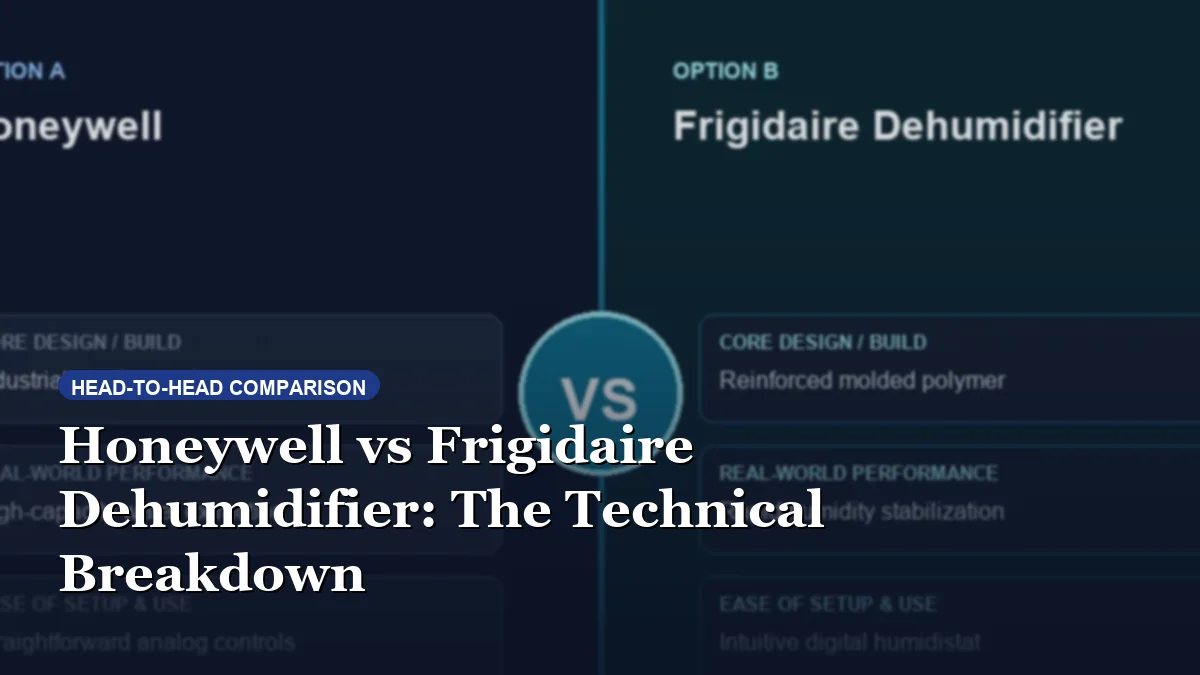
Choose Honeywell for rugged residential basements requiring heavy-duty continuous drainage. Select Frigidaire for quieter living spaces needing rapid relative humidity reduction and digital precision.
Compare all top models in our Best Dehumidifier: Top Picks for Healthy Indoor Air.
Side-by-Side Breakdown
| Criteria | Honeywell | Frigidaire Dehumidifier | Edge |
|---|---|---|---|
| Core Design / Build | Industrial steel chassis | Reinforced molded polymer | Honeywell |
| Real-World Performance | High-capacity water extraction | Rapid humidity stabilization | Frigidaire |
| Ease of Setup & Use | Straightforward analog controls | Intuitive digital humidistat | Frigidaire |
| Durability & Reliability | Heavy-duty compressor design | Thermal overload protection | Honeywell |
| Efficiency / Operating Footprint | Energy Star compliant motors | Advanced inverter tech options | Frigidaire |
| Maintenance Requirements | Washable mesh pre-filters | Easy-access front filter trays | Frigidaire |
| Best Ideal Use Case | Damp underground basements | Living rooms and bedrooms | Split |
Core Design and Structural Engineering Differences
Examining the physical architecture of both brands reveals distinct engineering philosophies tailored for different home environments. Honeywell units lean toward heavy-duty industrial framing utilizing robust polymer casings designed to absorb heavy vibrations.

Frigidaire prioritizes sleek, space-saving aesthetics with integrated caster wheels and recessed handles. Their chassis design focuses on streamlined airflow channels that maximize intake surface area without increasing overall unit footprint dimensions.
Honeywell units typically utilize robust ABS injection-molded chassis architectures designed for high-impact resistance in harsh basement environments. Their structural internal bracing minimizes vibration transfer across the outer plastic resin housing components.
Frigidaire engineers their dehumidifier cabinets using heavy-gauge steel reinforcement around the mounting deck. Detailed insights are available in our Frigidaire FFAD2233W1 dehumidifier review, which highlights mechanical alignment under continuous rotary compressor operation cycles.
- Honeywell builds rigid frames for basement longevity.
- Frigidaire uses optimized aerodynamics for living areas.
- Both integrate standard garden hose drainage ports.
Chassis Materials and Portability
Material selection directly impacts long-term durability and structural integrity under constant compressor vibration. Honeywell employs thicker exterior plastics that resist cracking over years of heavy cycling in cold spaces.
Frigidaire implements lightweight thermoplastic blends that significantly reduce total unit weight. This makes moving the dehumidifier between upstairs bedrooms and main floor hallways considerably easier for everyday users.
- Thick-walled plastics prevent vibration rattling.
- Lightweight frames improve room-to-room mobility.
Real-World Performance and Extraction Rates
As detailed in our Frigidaire FFAP5033W1 pump review, performance relies heavily on compressor efficiency and coil design. Frigidaire consistently delivers rapid moisture removal, dropping relative humidity levels quickly across medium-sized residential living spaces.
Honeywell models excel at sustained, continuous extraction in extremely damp conditions. Their refrigeration systems maintain high operational efficiency even when ambient basement temperatures drop below standard room conditions.
Operating in humid spaces requires evaluating actual moisture removal versus DOE rating standards. Honeywell models maintain steady extraction performance across moderate ambient temperatures, though efficiency drops significantly below sixty degrees Fahrenheit ambient room conditions.
Frigidaire appliances excel in dense moisture extraction by utilizing optimized evaporator coil geometries that maximize surface area contact. This design yields superior water removal rates in damp crawlspaces while preventing rapid frost accumulation on coils.
- Frigidaire excels at fast room dehumidification.
- Honeywell maintains output in cooler environments.
- Both adhere to standard AHAM testing metrics.
Low Temperature Operation
Operating in unheated basements introduces coil frosting risks that can severely compromise extraction capacity. Honeywell integrates reliable auto-defrost cycles that prevent ice buildup on evaporator coils during early spring.
Frigidaire units utilize sensitive electronic thermistors to monitor coil temperature. This triggers rapid defrosting routines to ensure continuous moisture extraction without damaging the internal rotary compressor mechanism.
- Auto-defrost prevents harmful coil freeze-ups.
- Electronic thermistors manage cycle timing precisely.
Maintenance, Efficiency and Longevity Standards
Routine maintenance dictates how long your moisture extraction appliance will operate at peak factory efficiency. Frigidaire designs easily accessible slide-out air filters that simplify bi-weekly washing routines for busy homeowners.
As noted in our Honeywell TP30WKN dehumidifier review, these units incorporate durable, washable mesh filters built to withstand frequent cleaning cycles. Their enclosed internal wiring harnesses protect critical electrical components from airborne dust accumulation.
Routine maintenance demands frequent access to washable mesh air filters to prevent airflow restriction. Honeywell incorporates easily sliding filter brackets that simplify bi-weekly cleaning protocols using mild antibacterial soap and warm water rinses.
Long-term operational efficiency relies heavily on sealed refrigerant circuit integrity and clean condenser coils. Frigidaire implements accessible louvered panels that allow safe internal vacuuming to remove accumulated dust from aluminum fin heat exchangers.
- Slide-out filters simplify routine maintenance tasks.
- Enclosed wiring harnesses prevent moisture damage.
- Regular cleaning preserves rated energy efficiency.
Energy Consumption Metrics
Running a heavy appliance continuously demands careful attention to electrical power consumption and efficiency ratings. Both manufacturers offer Energy Star certified models featuring optimized compressor motors that minimize monthly utility bills.
Frigidaire often integrates advanced fan speed controls that reduce power draw once target humidity is reached. Honeywell focuses on steady, reliable compressor output that prevents short-cycling and premature motor wear.
- Energy Star certification ensures lower utility costs.
- Variable fan speeds reduce unnecessary power draw.
Acoustic Profiles and Operating Noise Levels
Noise output remains a critical factor when placing a dehumidifier near sleeping quarters or home offices. Frigidaire engineered their fan blades to reduce turbulent airflow, resulting in noticeably quieter operation on high settings.
Honeywell prioritizes mechanical stability over acoustic dampening, which can produce a slightly louder hum. However, their solid construction minimizes annoying rattles, keeping the overall sound profile smooth and unobtrusive.
Managing acoustic output matters significantly when placing units in finished basements or living areas. Honeywell employs multi-speed fan motors with dynamic balancing to suppress high-frequency mechanical whines during standard high-speed fan operation modes.
Frigidaire integrates acoustic dampening blankets directly around their hermetic compressors to isolate low-frequency hums. This engineering choice reduces decibel output measurements, making them quieter during continuous residential nighttime running schedules in adjacent bedrooms.
- Frigidaire features quieter aerodynamic fan blades.
- Honeywell produces a steady, stable mechanical hum.
- Sound levels generally range from fifty to sixty decibels.
Vibration Dampening Systems
Internal compressor vibration can create disruptive harmonic resonances if not properly isolated from the cabinet. Frigidaire uses rubber compressor grommets that effectively absorb high-frequency motor vibrations during operation.
Honeywell implements heavy structural mounting brackets that lock the compressor securely into the frame. This prevents shifting during transport and maintains proper refrigerant line alignment over years of service.
- Rubber grommets isolate motor vibrations effectively.
- Heavy brackets secure internal refrigerant lines.
Control Interfaces and User Experience
Digital humidistats and clear control panels dictate how effortlessly users can monitor and adjust indoor humidity. Frigidaire provides bright, highly responsive LED displays with precise one-percent relative humidity adjustment increments.
Honeywell balances digital readouts with tactile mechanical buttons designed for high-wear environments. Their straightforward interface makes adjusting fan speeds and setting continuous drainage schedules intuitive for all users.
User interface layout dictates how easily operators can program target humidity levels and timer functions. Honeywell features responsive electronic touchpads paired with clear digital humidistat readouts showing exact relative humidity percentages clearly.
Frigidaire implements intuitive control boards featuring straightforward toggle buttons and dedicated LED indicators for bucket full warnings. Their ergonomic panel positioning prevents accidental water splashes from penetrating sensitive circuit board electronics underneath.
- Frigidaire offers precise digital display panels.
- Honeywell uses durable buttons for rugged settings.
- Clear indicator lights signal full water buckets.
Drainage Flexibility and Setup
Managing collected water effectively prevents messy overflows and reduces manual bucket emptying frequency. Both brands support gravity-fed continuous drainage using standard garden hoses threaded into side ports.
Frigidaire offers several models featuring built-in internal condensate pumps that lift water vertically. This allows homeowners to discharge moisture out basement windows or into elevated utility sinks easily.
- Gravity drainage utilizes standard garden hoses.
- Internal condensate pumps lift water vertically.
Safety Standards and Electrical Protection
Electrical safety features protect both your home and the appliance from unexpected power surges or faults. Both manufacturers integrate automatic shut-off switches that trigger immediately when the water collection bucket reaches capacity.
Thermal overload protection is standard across all units, cutting power if the compressor begins overheating. These robust safety protocols ensure unattended operation remains completely secure in basements and crawlspaces.
Electrical safety compliance requires robust thermal overload protection built directly into compressor windings. Honeywell utilizes UL-certified internal relays that automatically cut power if motor temperatures exceed safe operating thresholds during power surge events.
Frigidaire incorporates flame-retardant plastic enclosures around all high-voltage electrical connections to prevent accidental fire hazards. Furthermore, their integrated automatic shutoff mechanisms trigger instantly when water buckets reach maximum volumetric capacity limits.
- Automatic shut-off prevents overflowing collection buckets.
- Thermal overload switches protect against overheating motors.
- UL safety certifications guarantee reliable electrical performance.
Cord Management and Storage
Proper power cord management prevents tripping hazards and protects the plug prongs during off-season storage. Frigidaire includes convenient side wrap hooks that keep heavy-duty power cords neatly coiled against the chassis.
Honeywell designs integrated recessed cord storage compartments that protect the electrical plug from accidental impact. These thoughtful touches simplify packing the unit away when winter dryness returns.
- Side wrap hooks secure power cords neatly.
- Recessed storage protects plugs from damage.
Which Dehumidifier Option Fits Your Living Space
Selecting the ideal climate control appliance ultimately depends on your specific layout and moisture challenges. Homeowners dealing with damp, cool basements will benefit greatly from the rugged reliability of a Honeywell unit.
Those seeking rapid humidity reduction in main floor living areas will prefer Frigidaire's quieter operation and precise digital controls. Evaluate your space requirements carefully before making a final purchasing commitment.
Choosing the correct appliance depends heavily on your specific spatial humidity challenges and layout constraints. Honeywell units suit mid-sized finished basements requiring straightforward controls and reliable daily performance in moderate climate zones reliably.
Our Frigidaire FFAD3533W1 dehumidifier review highlights how these appliances prove ideal for damp crawlspaces or large open-plan areas. Their robust mechanical design and superior coil surface area handle severe moisture loads with exceptional long-term reliability.
- Match Honeywell units to rugged basement environments.
- Choose Frigidaire for quiet living room humidity control.
- Assess square footage before selecting extraction capacity.
Final Decision Framework
Review your primary humidity source, available drainage options, and acoustic tolerance before buying. Investing in the correct capacity ensures efficient moisture removal and extends appliance operating lifespan significantly.
Both brands offer exceptional engineering standards, but their specific strengths cater to different household needs. Prioritize core features like built-in pumps or rugged chassis design to match your environment.
- Evaluate drainage availability before purchasing models.
- Prioritize core features matching your specific environment.
Frequently Asked Questions
Which brand offers better durability in damp basements?
Honeywell typically excels in rugged, unheated basements thanks to its heavy-duty structural frame and reliable low-temperature performance. Their solid mechanical construction handles harsh environments exceptionally well over long operating cycles.
Are Frigidaire dehumidifiers quieter than Honeywell models?
Yes, Frigidaire units generally feature superior aerodynamic fan blade designs that reduce operational noise. This makes them the preferred choice for bedrooms and main floor living spaces.
Do both brands support continuous gravity drainage?
Both manufacturers include threaded side ports that easily accommodate standard garden hoses. This allows for unattended continuous drainage directly into floor drains or sump pits.
How often should I clean the air filters?
You should inspect and wash the removable mesh air filters every two weeks. Maintaining clean filters ensures optimal airflow efficiency and protects the internal evaporator coils.
Do these dehumidifiers feature automatic restart functions?
Most modern models from both brands include auto-restart capabilities after a power outage. This feature restores your previous humidistat settings automatically once electrical power returns.