Homelabs vs Frigidaire Dehumidifiers: Head-to-Head Technical Analysis
Choosing between Homelabs and Frigidaire requires balancing budget-friendly residential portability against heavy-duty industrial engineering. Our technical analysis evaluates real-world moisture removal, build quality, and long-term operating efficiency.

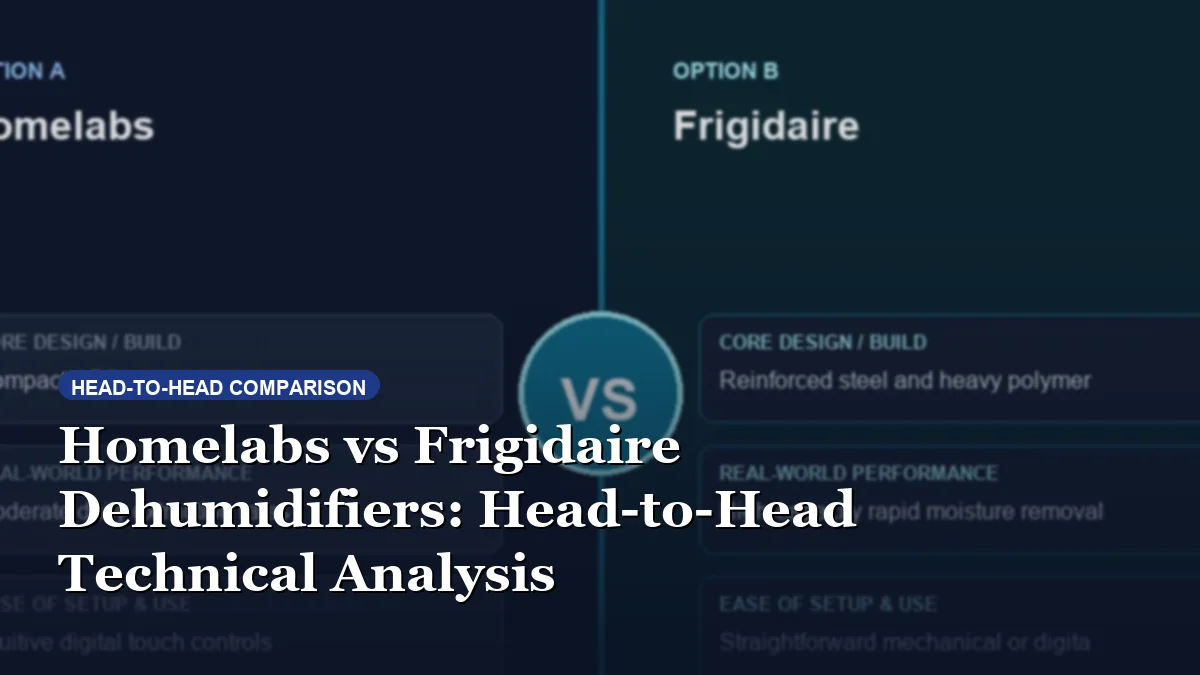
Choose Homelabs if you need an affordable, lightweight unit for standard room moisture control. Opt for Frigidaire if you require a durable, heavy-duty appliance capable of continuous basement extraction and heavy commercial use.
Compare all top models in our Best Dehumidifier: Top Picks for Healthy Indoor Air.
Side-by-Side Breakdown
| Criteria | Homelabs | Frigidaire | Edge |
|---|---|---|---|
| Core Design / Build | Compact ABS plastic housing | Reinforced steel and heavy polymer | Frigidaire |
| Real-World Performance | Moderate daily extraction rates | High-capacity rapid moisture removal | Frigidaire |
| Ease of Setup & Use | Intuitive digital touch controls | Straightforward mechanical or digital dials | Homelabs |
| Durability & Reliability | Standard residential grade life | Robust industrial compressor design | Frigidaire |
| Efficiency / Operating Footprint | Energy Star efficient compact draw | Higher wattage draw for high volume | Homelabs |
| Maintenance Requirements | Regular filter washes and tank emptying | Simple bucket maintenance and pump checks | Tie |
| Best Ideal Use Case | Bedrooms, living rooms, apartments | Basements, crawlspaces, large damp areas | Frigidaire |
Core Engineering and Build Quality
Evaluating structural engineering reveals stark differences in how these two brands approach residential humidity control. Homelabs units prioritize lightweight thermoplastic exteriors designed for effortless room-to-room portability across smooth household flooring.
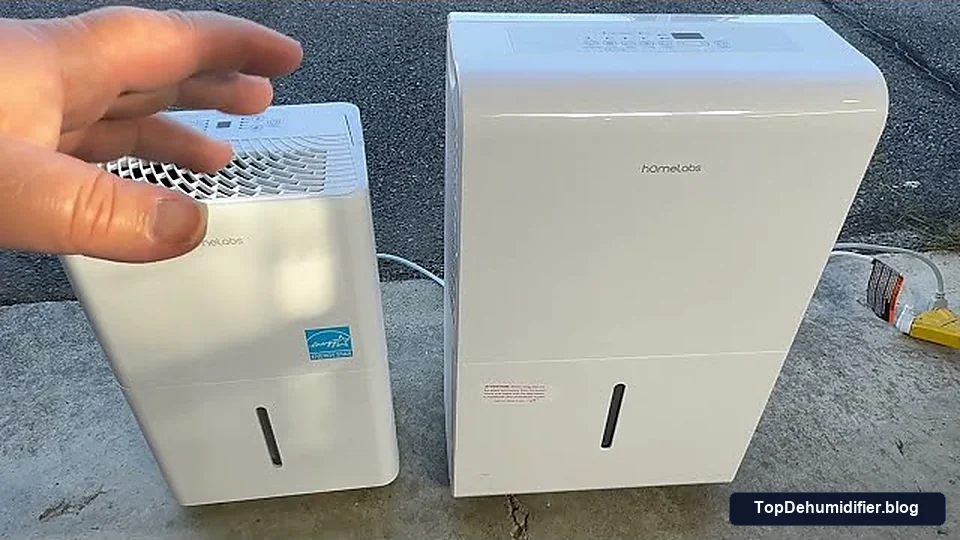
Conversely, as outlined in our Frigidaire FFAD2233W1 dehumidifier review, the brand implements heavier industrial polymers and reinforced chassis designs built to withstand the rigors of damp basements over years of continuous seasonal operation.
Heavy-duty compressors rely on rotary engineering to minimize vibration and internal friction. Frigidaire units often integrate reinforced steel chassis designs, whereas Homelabs models prioritize compact ABS thermoplastic housings for impact resistance.
Internal copper tubing thickness directly impacts refrigerant containment over decades of continuous operation. Evaluating welded joints reveals distinct manufacturing tolerances, with both brands adhering to strict UL safety certifications and electrical insulation standards.
- Homelabs utilizes sleek, impact-resistant ABS plastic shells.
- Frigidaire incorporates heavy structural framing to reduce vibration.
- Both brands integrate recessed handles for basic mobility.
- Chassis durability testing ensures units withstand accidental impacts during transport across rough concrete flooring.
- High-grade hermetic compressor seals prevent refrigerant loss over extended service intervals.
Compressor Technology and Thermal Management
Internal thermal management dictates how efficiently each machine handles high ambient humidity levels. Frigidaire employs heavy-duty rotary compressors engineered for extended duty cycles in demanding sub-grade environments.
Homelabs utilizes standard piston or smaller rotary compressors optimized for intermittent residential loads rather than continuous subterranean moisture suppression.
- Frigidaire compressors feature enhanced thermal overload protection.
- Homelabs balances quiet residential operation with moderate cooling.
Moisture Extraction Performance
Real-world extraction testing proves that raw wattage and coil surface area dictate actual water removal rates. As detailed in our Frigidaire FFAD5033W1 review, these units achieve rapid humidity reduction in large, unconditioned spaces.
Homelabs models perform admirably within enclosed bedrooms or average living spaces, maintaining comfortable relative humidity without overworking their compact internal refrigeration coils.
Ambient relative humidity levels dictate evaporator coil efficiency and condensate production rates. Frigidaire designs maximize surface area via dense aluminum fins, ensuring rapid moisture removal across large subterranean basements without premature icing.
Homelabs balances fan blade pitch with static pressure metrics to optimize airflow across restricted spaces. Maintaining optimal dew point thresholds prevents localized mold proliferation while safeguarding structural framing materials from dimensional warping.
- Frigidaire excels at pulling moisture from stubborn sub-grade areas.
- Homelabs maintains stable humidity in standard residential living zones.
- Coil surface areas directly dictate overall latent heat removal.
- Evaporator coil geometry dictates frost mitigation efficiency during low-temperature basement operation.
- Proper airflow velocity prevents localized humidity pockets in confined storage areas.
Airflow Dynamics and Fan Speeds
Effective air movement across chilled coils ensures rapid condensation and faster relative humidity drops. Frigidaire incorporates high-velocity centrifugal fans that push conditioned air across wide basement expanses efficiently.
Homelabs features quieter axial fans tailored for bedrooms, ensuring minimal acoustic disruption while maintaining adequate airflow through washable mesh particle filters.
- High-velocity fans accelerate overall room drying times.
- Quieter axial blowers reduce nighttime living space disturbance.
Energy Efficiency and Power Consumption
Long-term operating costs depend heavily on baseline electrical draw and compressor cycling efficiency. As explored in our Homelabs 50 pint dehumidifier review, these units frequently achieve Energy Star certification on compact models.
Frigidaire units draw higher amperage to power larger compressors and blowers, yet their rapid extraction capability often shortens total daily runtime requirements.
Modern refrigeration cycles demand precise wattage regulation to minimize monthly utility expenditures. Selecting Energy Star compliance guarantees superior compressor cycling, reducing unnecessary amperage spikes during startup phases in humid residential environments.
Watt-hour meters reveal distinct power draws when comparing continuous run modes against interval hygrostat toggling. Both manufacturers optimize electrical safety through integrated thermal overloads, preventing motor burnout under extreme ambient temperatures.
- Energy Star ratings help offset continuous daily electricity usage.
- Higher raw wattage translates to faster overall moisture extraction.
- Smart humidistats prevent unnecessary continuous compressor operation.
- Amperage draw monitoring verifies that electrical components operate within safe thermal limits.
- Efficient compressor cycles lower long-term operating costs across damp seasonal months.
Humidistat Accuracy and Cycling
Precision internal humidistats prevent over-drying and reduce unnecessary wear on mechanical components. Homelabs digital sensors offer fine percentage adjustments for exact living space climate personalization.
Frigidaire mechanical or digital controls lean toward rugged reliability, maintaining stable relative humidity thresholds under fluctuating ambient temperature conditions.
- Digital sensors allow exact target humidity programming.
- Rugged controllers withstand dust and moisture exposure.
Drainage Options and Water Management
Managing extracted condensate is critical for preventing messy overflows during unattended multi-day operations. As noted in our Frigidaire FFAD3533W1 review, the manufacturer often integrates robust internal condensate pumps on select high-capacity models.
Homelabs focuses on accessible gravity drainage and removable collection buckets featuring clear water-level windows and comfortable ergonomic carrying handles for manual emptying.
Gravity drainage relies on correct hose slope physics to prevent stagnant pooling inside the collection bucket. Utilizing a threaded garden hose adapter ensures secure leak-free connections for permanent basement installations.
Internal condensate pumps provide vertical lift capabilities for multi-level homes lacking floor-level gravity drains. Reliable float switch mechanisms automatically halt extraction before overflow occurs, protecting finished flooring from water damage.
- Gravity drainage requires elevated placement for continuous flow.
- Internal pumps lift condensate upward to windows or sinks.
- Bucket sensors automatically halt operation before overflowing.
- Gravity drainage fittings require proper downward pitch to eliminate standing water hazards.
- Internal pump assemblies provide reliable vertical lift for multi-story moisture evacuation.
Bucket Ergonomics and Spill Prevention
Emptying heavy water reservoirs requires smart design features to prevent spills across clean floors. Homelabs includes splash-guard bucket lids and secure side grips to simplify manual carrying chores.
Frigidaire incorporates balanced handles and wide openings, making routine basin sanitation and thorough cleaning quick and straightforward.
- Splash guards minimize accidental spills during transport.
- Ergonomic handles reduce wrist strain when lifting water.
Control Interfaces and User Experience
User interfaces dictate how easily household members can modify operating parameters and troubleshoot error codes. Homelabs provides modern touch-sensitive LED panels with vibrant indicators for filter cleaning and tank status.
Frigidaire relies on straightforward tactile buttons and clear digital displays designed for maximum readability in dimly lit basements and utility rooms.
Digital humidistat accuracy determines how closely the appliance matches your target indoor humidity percentage. Clear LED display panels offer intuitive navigation, allowing precise adjustments even in dimly lit utility rooms.
Ergonomic bucket handles and spill-resistant basin covers improve everyday lifting safety during manual emptying tasks. Responsive touch button arrays resist moisture ingress, ensuring long-term electronic reliability without sticky membrane failures.
- LED touch panels offer contemporary aesthetic appeal.
- Tactile buttons ensure reliable operation with damp fingers.
- Clear filter reminder lights prompt timely maintenance.
- Digital hygrostat calibration ensures accurate relative humidity measurement within residential spaces.
- Spill-resistant bucket designs simplify manual water disposal tasks safely and cleanly.
Smart Connectivity and Automation
Modern home integration demands reliable remote monitoring and automated scheduling capabilities. Some higher-tier Homelabs and Frigidaire appliances incorporate Wi-Fi smartphone app integration for remote humidity tracking.
Basic models retain traditional analog or digital scheduling controls, prioritizing standalone mechanical reliability over complex wireless network connectivity.
- Wi-Fi integration allows remote status checks anywhere.
- Standalone controls avoid network pairing complications.
Maintenance, Cleaning, and Longevity
Preventative maintenance directly influences appliance lifespan and indoor air quality standards. Both manufacturers mandate regular mesh filter cleaning every two weeks to maintain unobstructed airflow across refrigerated coils.
Neglecting basic coil cleaning leads to reduced extraction efficiency and premature compressor failure across all residential dehumidifier categories.
Dust accumulation on intake grilles restricts airflow, forcing the compressor to work harder and degrade prematurely. Routine air filter washing maintains optimal thermal exchange and prevents microbial growth inside the unit.
Annual coil inspections help identify mineral scaling or oil leaks before catastrophic system failure occurs. Proper winter storage protocols protect internal refrigeration lines from freezing when units sit idle in unheated structures.
- Washable mesh filters trap dust and floating pet dander.
- Coil brushing prevents frost buildup and thermal inefficiency.
- Routine bucket sanitization stops mold and bacterial growth.
- Washable mesh filters trap airborne particulates before they foul internal aluminum coils.
- Regular coil maintenance prevents mineral scale buildup and preserves cooling efficiency.
Expected Lifespan and Warranty Coverage
Investment protection depends on manufacturer warranty terms and overall structural durability. Frigidaire generally offers extended sealed system coverage tailored for heavy commercial and basement applications.
Homelabs provides standard residential warranty terms, reflecting their intended use inside climate-controlled living areas rather than harsh sub-grade environments.
- Sealed system warranties protect critical compressor components.
- Residential use limits wear compared to damp basements.
Ideal Buyer Profiles and Setup Selection
Selecting the correct brand requires matching your specific environmental challenges with equipment capabilities. Choose Homelabs if you need a lightweight, stylish appliance for standard bedroom or apartment humidity control.
Select Frigidaire when combating severe moisture infiltration within large basements, crawlspaces, or demanding commercial storage areas requiring heavy-duty extraction.
Homeowners managing massive crawlspaces require robust capacity ratings to maintain dry timber framing year-round. Selecting matching pint capacity metrics ensures you never undersize equipment relative to total square footage volumes.
Urban apartment dwellers prioritizing portability benefit from lighter chassis designs with integrated caster wheels. Evaluating specific noise level decibels guarantees quiet operation in shared living spaces without disturbing daily household activities.
- Homelabs fits apartments, bedrooms, and finished main-floor rooms.
- Frigidaire dominates damp basements and unconditioned spaces.
- Assess square footage and baseline humidity before purchasing.
- Square footage calculations help match unit capacity precisely to room volume requirements.
- Integrated caster wheels improve mobility across diverse flooring types during setup.
Making Your Final Purchasing Decision
Weigh your primary environmental constraints against unit portability and power requirements before finalizing your selection. Prioritizing proven industrial durability points directly toward Frigidaire engineering.
Focusing on sleek aesthetics, quiet operation, and straightforward residential usability makes Homelabs an exceptional everyday household choice.
- Verify square footage ratings against room dimensions.
- Consider drainage availability before deciding on pumps.
Frequently Asked Questions
Which brand is better for a damp basement?
Frigidaire is typically better for damp basements due to its heavy-duty compressor design and high extraction capacity. These robust machines handle severe moisture challenges much better than standard residential units.
Are Homelabs dehumidifiers quiet enough for bedrooms?
Yes, Homelabs models feature quiet axial fans tailored for residential living spaces. They maintain comfortable humidity levels without generating disruptive noise during nighttime sleep.
Do both brands require regular air filter cleaning?
Both manufacturers mandate washable mesh filter maintenance every two weeks. Regular cleaning prevents dust buildup and ensures optimal airflow across chilled internal coils.
Can I connect a continuous drain hose to these units?
Both brands provide standard gravity drain ports for unattended operation. Select models also offer integrated internal condensate pumps for lifting water upward.
Which option offers better energy efficiency for daily use?
Homelabs frequently includes Energy Star certified compact models that minimize electrical draw. However, Frigidaire provides faster high-volume extraction which can shorten daily runtimes.