Dehumidifier vs Humidifier For Mold: Technical Verdict
Controlling indoor relative humidity requires precision equipment to prevent fungal growth. Understanding the exact mechanical differences determines whether you protect your home or unintentionally encourage toxic mold colonies.

Choose a dehumidifier to actively extract moisture and suppress harmful mold spores below safe thresholds. Avoid using standard humidifiers in damp spaces, as adding moisture drastically accelerates fungal proliferation.
Compare all top models in our Best Dehumidifier: Top Picks for Healthy Indoor Air.
Side-by-Side Breakdown
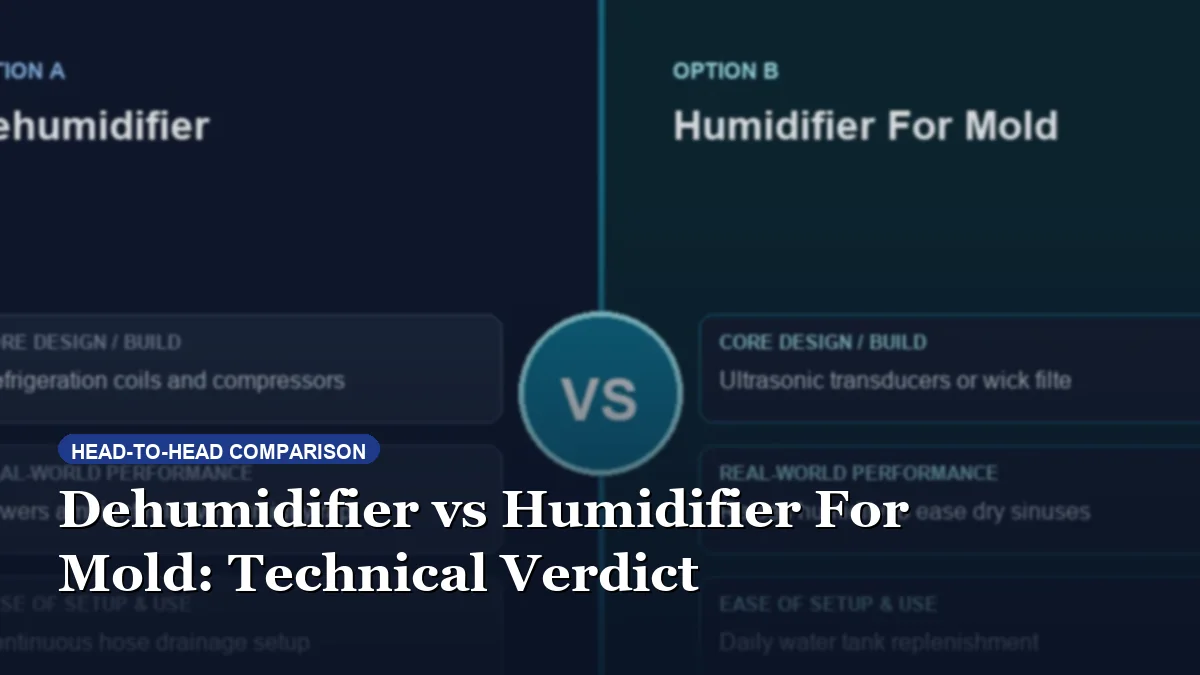
| Criteria | Dehumidifier | Humidifier For Mold | Edge |
|---|---|---|---|
| Core Design / Build | Refrigeration coils and compressors | Ultrasonic transducers or wick filters | Dehumidifier |
| Real-World Performance | Lowers ambient relative humidity rapidly | Raises humidity to ease dry sinuses | Dehumidifier |
| Ease of Setup & Use | Continuous hose drainage setup | Daily water tank replenishment | Dehumidifier |
| Durability & Reliability | Heavy compressor assemblies | Light plastic water reservoirs | Dehumidifier |
| Efficiency / Operating Footprint | Higher wattage compressor draw | Low wattage electrical consumption | Humidifier |
| Maintenance Requirements | Coil cleaning and bucket hygiene | Deep descaling to prevent bacteria | Dehumidifier |
| Best Ideal Use Case | Basements, bathrooms, and damp rooms | Arid climates during winter heating | Dehumidifier |
Understanding Core Atmospheric Physics and Moisture Control Mechanics
Managing indoor air quality demands strict adherence to psychrometric principles and relative humidity thresholds. When moisture levels exceed safe residential boundaries, building materials degrade rapidly under persistent fungal attack.
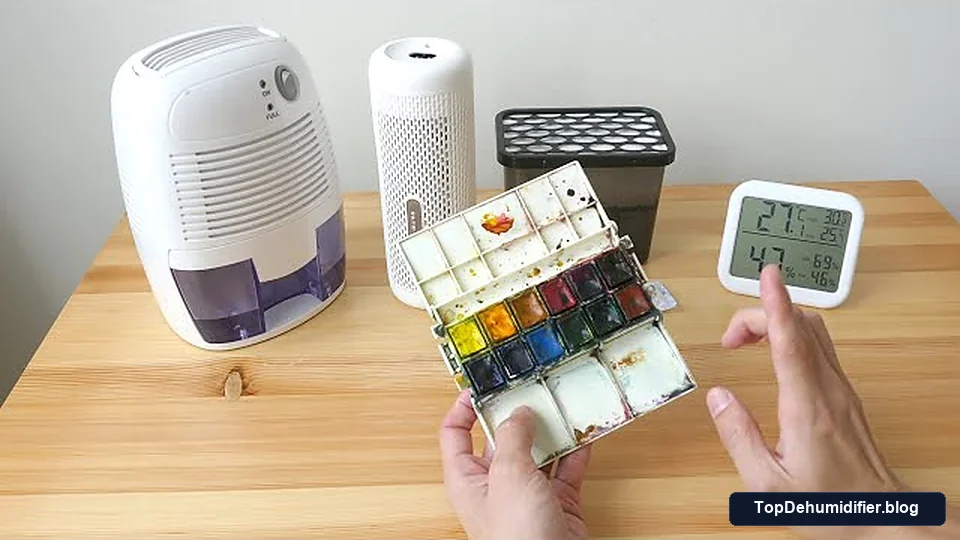
A dehumidifier pulls ambient air across refrigerated metal coils to condense airborne water vapor. Consulting our best dehumidifier for mold and mildew guide helps maintain relative humidity well below critical fungal growth triggers.
Conversely, humidifiers inject water vapor into dry environments using thermal evaporation or high-frequency ultrasonic vibration. Introducing moisture where fungal spores already exist creates an immediate biological hazard for occupants.
- Relative humidity must stay below fifty percent to inhibit mold spore germination.
- Dehumidifiers utilize refrigeration cycles to condense and collect airborne moisture effectively.
- Humidifiers actively increase atmospheric moisture to combat winter dryness and irritation.
Psychrometric Thresholds in Residential Buildings
Residential structures harbor dormant mold spores on drywall, timber, and insulation surfaces. These microscopic organisms remain inactive until ambient relative humidity crosses the sixty percent threshold for extended periods.
Deploying a dehumidifier alters the dew point directly adjacent to cold exterior walls. This physical intervention stops condensation from forming on structural thermal bridges throughout your home.
- Dew point manipulation prevents structural condensation on cold surfaces.
- Sustained high humidity activates dormant mold colonies within forty-eight hours.
Analyzing Dehumidification Engineering for Spore Prevention
Engineered dehumidification systems rely on compressor-based refrigeration or desiccant wheels to extract moisture. These robust appliances are specifically calibrated to lower indoor humidity and safeguard structural integrity.
High-capacity units utilize heavy-duty rotary compressors and copper tubing to maximize thermal exchange efficiency. Regular extraction prevents musty odors and structural rot across damp subterranean environments.
Selecting the correct pint capacity ensures your equipment manages total square footage effectively. Following our dehumidifier relative humidity setting guide prevents undersized units from running continuously without lowering moisture levels.
- Compressor models excel in warm, humid basements and main living areas.
- Desiccant dehumidifiers perform better in unheated crawlspaces with low temperatures.
- Proper sizing prevents motor burnout and ensures consistent humidity control.
Refrigeration Cycle Dynamics
The refrigeration cycle inside a standard dehumidifier forces warm air across a freezing evaporator coil. Moisture instantly condenses into droplets and drips downward into an internal collection bucket.
Reheated dry air then discharges back into the room via an integrated exhaust fan. This continuous loop systematically reduces the overall moisture load of the indoor environment.
- Evaporator coils rapidly condense airborne vapor into liquid water.
- Condenser coils slightly warm the exhaust air before room release.
Evaluating Humidifier Dynamics and the Fungal Risk Paradox
Humidifiers serve an entirely different purpose by introducing moisture to relieve dry nasal passages. Operating these devices in damp or poorly ventilated rooms invites severe mold infestations.
Ultrasonic transducers atomize standing water into a fine mist that disperses throughout the room. If this moisture settles on organic surfaces, it fuels rapid mold and bacteria colony expansion.
Understanding this mechanical paradox is essential for maintaining a healthy indoor ecosystem. Never treat dampness or mold symptoms by adding more moisture via a humidifier.
- Ultrasonic and evaporative humidifiers raise indoor relative humidity levels.
- Excessive misting creates localized wet spots on carpets and drywall.
- Incorrect humidifier usage accelerates toxic black mold proliferation indoors.
The Danger of Misapplied Moisture Devices
Consumers occasionally mistake humidification symptoms for dryness when dealing with stagnant air. Running a humidifier in a moisture-compromised room creates a catastrophic environment for mold spores.
Biological contaminants thrive when water activity parameters exceed normal indoor safety guidelines. Always measure relative humidity with a hygrometer before operating any climate control device.
- Hygrometers provide accurate baseline readings before equipment deployment.
- Misapplied moisture drastically increases indoor allergen and spore counts.
Structural Materials, Condenser Coils, and Evaporator Assemblies
The physical construction of a dehumidifier dictates its longevity in harsh residential environments. Exploring our best dehumidifier for bedroom recommendations highlights corrosion-resistant aluminum fins and copper piping built to withstand constant water exposure.
Drainage trays and internal reservoirs are molded from high-impact plastics that resist cracking. These durable materials ensure reliable operation during heavy seasonal moisture loads in basements.
In contrast, humidifiers feature delicate plastic water tanks prone to mineral scale buildup. Neglecting routine cleaning turns the humidifier reservoir into a breeding ground for harmful microbes.
- Copper and aluminum coil assemblies maximize thermal transfer efficiency.
- High-impact plastic reservoirs resist degradation from continuous water contact.
- Robust mechanical build quality ensures extended appliance operational lifespans.
Material Durability and Corrosion Resistance
Moisture extraction equipment operates in aggressive environments characterized by high humidity levels. Selecting units with coated coils prevents galvanic corrosion and refrigerant leaks over time.
Quality drainage fittings and reinforced hoses prevent accidental leaks during continuous gravity-fed operation. Proper material selection minimizes maintenance headaches for homeowners seeking reliable performance.
- Coated coils resist corrosion in aggressive subterranean environments.
- Reinforced fittings prevent catastrophic water leaks during continuous use.
Electrical Load Profiles, Energy Efficiency, and Operational Safety
Dehumidifiers draw significant electrical current due to their heavy-duty compressors and fan motors. Monitoring your home circuit capacity ensures safe, continuous operation without tripping household breakers.
Modern energy-efficient models incorporate variable-speed compressors to optimize power consumption throughout the day. This engineering reduces electrical waste while maintaining strict relative humidity targets.
Humidifiers typically consume far less electricity because they lack refrigeration compressors. However, their lower electrical footprint does not offset the severe mold risks associated with inappropriate placement.
- Compressor-based dehumidifiers require dedicated electrical circuit consideration.
- Variable-speed technology significantly lowers daily operational power consumption.
- Humidifiers draw minimal wattage due to simple ultrasonic or evaporative designs.
Safety Standards and Electrical Compliance
Electrical safety standards mandate auto-shutoff features when water collection buckets reach maximum capacity. This prevents dangerous electrical shorts near standing water inside the appliance housing.
Placing heavy appliances in damp spaces requires grounded plugs and circuit interrupters. Adhering to manufacturer guidelines protects your household from electrical hazards and equipment failure.
- Auto-shutoff mechanisms prevent water overflow and electrical shorts.
- Grounded connections ensure safety in damp subterranean home zones.
Maintenance Protocols, Drainage Systems, and Microbial Hygiene
Maintaining a dehumidifier requires periodic cleaning of air filters and condensate collection buckets. Reviewing our best dehumidifier for basement options helps prevent microbial growth from contaminating extraction airflow.
Gravity drainage setups eliminate the need for manual bucket emptying during peak seasons. Utilizing integrated condensate pumps allows water to discharge upward and outward effectively.
Humidifiers demand even more rigorous daily sanitation to prevent bacterial dissemination. Neglected water tanks quickly distribute harmful pathogens throughout living spaces via aerosolized mists.
- Washable mesh filters trap airborne dust and debris effectively.
- Continuous gravity drainage hoses reduce daily manual maintenance tasks.
- Condensate pumps facilitate vertical water removal in finished basements.
Preventing Internal Mold Growth in Equipment
Even dehumidifiers can harbor mold if internal drip trays remain uncleaned for weeks. Regular inspection of internal components ensures your appliance does not become a secondary spore source.
Sanitizing reservoirs with mild antimicrobial solutions prevents slime buildup and foul odors. Proper maintenance preserves air purity across your entire residential living space.
- Internal drip trays require routine antimicrobial inspection.
- Sanitizing reservoirs prevents foul odors and microbial contamination.
Ergonomics, Noise Ratings, and Residential Placement Strategies
Appliance placement directly influences both noise propagation and moisture extraction efficiency. Positioning a dehumidifier centrally in open living areas maximizes airflow and humidity reduction.
Decibel ratings vary widely based on compressor size and internal fan engineering. Selecting units with quiet operation modes ensures undisturbed sleep in residential bedrooms.
Ergonomic handle placement and smooth-rolling casters simplify moving heavy units between rooms. Thoughtful design features improve daily usability for homeowners managing seasonal humidity challenges.
- Central room placement optimizes overall airflow and moisture extraction.
- Low decibel ratings prevent disturbance in quiet residential bedrooms.
- Integrated casters and handles ease transportation across flooring surfaces.
Optimizing Placement for Maximum Extraction
Restricting airflow around air intakes severely degrades dehumidifier performance and efficiency. Maintain adequate clearance from walls and furniture to ensure unobstructed mechanical operation.
Basements and crawlspaces benefit from units placed near primary moisture sources. Strategic positioning protects vulnerable building materials from prolonged dampness and decay.
- Maintain proper clearance around air intake grilles.
- Position units near primary moisture sources in basements.
Frequently Asked Questions
Can a humidifier cause mold growth in my house?
Yes, running a humidifier in damp or poorly ventilated rooms increases relative humidity beyond safe levels. This excess moisture creates an ideal environment for mold spore proliferation and structural decay.
What is the ideal humidity level to prevent mold?
Maintaining indoor relative humidity between thirty and fifty percent effectively inhibits mold germination. Using a reliable hygrometer ensures your dehumidifier maintains this safe structural threshold consistently.
Should I use a humidifier if my basement smells musty?
Never use a humidifier in a musty basement because mustiness indicates existing excess moisture. You must install a powerful dehumidifier to extract water vapor and stop fungal growth.
How does a dehumidifier stop mold from spreading?
Dehumidifiers extract airborne moisture by condensing water vapor onto cold refrigeration coils. This mechanical drying process removes the hydration that mold colonies require to survive and multiply.
Can I run a dehumidifier and humidifier at the same time?
Running both devices simultaneously wastes electricity and creates conflicting atmospheric conditions. You should select the single appliance that matches your climate control needs based on local humidity.