Dehumidifier vs Humidifier Difference: Core Technical Guide
Understanding moisture control requires analyzing how mechanical systems either extract or add atmospheric vapor to maintain healthy indoor relative humidity levels.

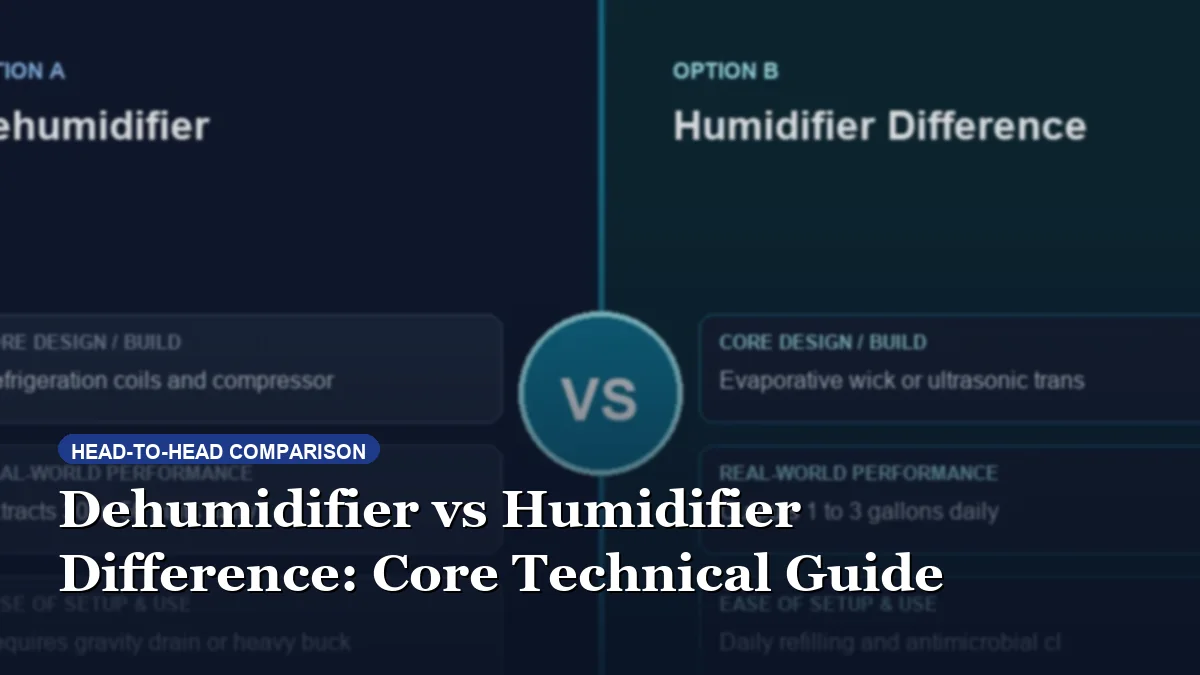
Choose a dehumidifier to suppress mold growth in damp basements, or deploy a humidifier to relieve winter respiratory irritation caused by overly dry air.
Compare all top models in our Best Dehumidifier: Top Picks for Healthy Indoor Air.
Side-by-Side Breakdown
| Criteria | Dehumidifier | Humidifier Difference | Edge |
|---|---|---|---|
| Core Design / Build | Refrigeration coils and compressor | Evaporative wick or ultrasonic transducer | Depends on goal |
| Real-World Performance | Extracts 30 to 50 pints daily | Outputs 1 to 3 gallons daily | Depends on goal |
| Ease of Setup & Use | Requires gravity drain or heavy bucket | Daily refilling and antimicrobial cleaning | Tie |
| Durability & Reliability | Long-lasting compressor mechanics | Wick filters prone to mineral buildup | Dehumidifier |
| Efficiency / Operating Footprint | Consumes 300 to 700 watts | Uses 30 to 300 watts depending on type | Humidifier |
| Maintenance Requirements | Coil cleaning and bucket sanitization | Frequent filter replacement and tank washing | Tie |
| Best Ideal Use Case | Basements and crawlspaces above 50% RH | Bedrooms during cold heating seasons | Depends on goal |
Understanding Atmospheric Moisture Control Dynamics
Managing indoor relative humidity requires a firm grasp of psychrometric principles and how moisture interacts with building materials. Air holds varying amounts of water vapor depending strictly on ambient temperature conditions.
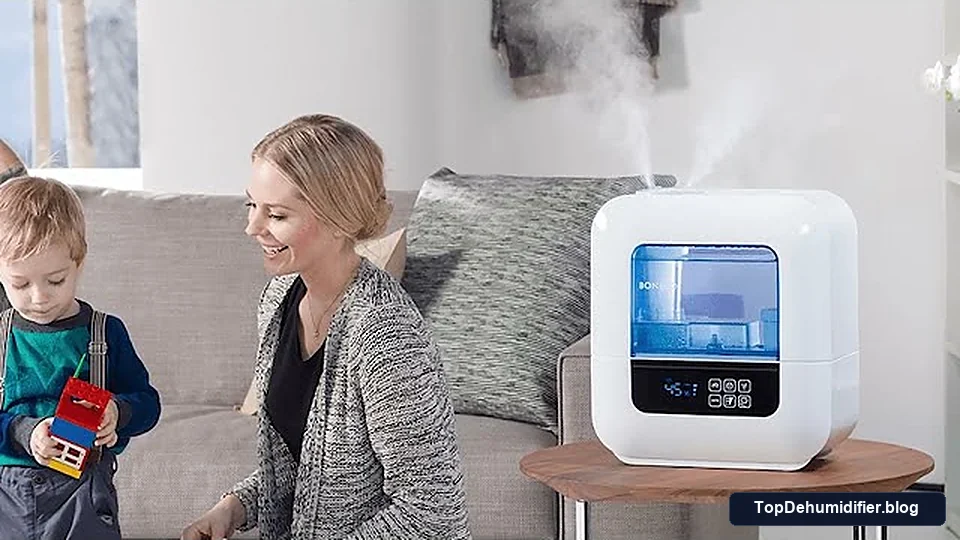
When indoor relative humidity climbs above sixty percent, structural materials absorb excess moisture. This creates ideal environments for mold colonization and dust mite proliferation throughout living spaces.
Conversely, relative humidity dipping below thirty percent dries out mucous membranes and damages wooden furniture. Balancing these opposing environmental forces demands specialized mechanical interventions tailored to exact structural needs.
Managing indoor climate requires precise tracking of relative humidity levels within residential spaces. Absolute moisture content fluctuates based on ambient temperature shifts, directly influencing structural material integrity and human thermal comfort across different seasons.
Dehumidifiers actively extract airborne vapor by passing warm, moist air across a refrigerated evaporator coil. This rapid thermal drop forces water vapor to condense into liquid, which drains safely into an internal bucket or via gravity hose.
Selecting units highlighted in our best dehumidifier guide ensures efficient moisture removal, whereas alternative appliances elevate indoor humidity via ultrasonic vibration to counter dry winter heating systems.
- Relative humidity measures water vapor capacity relative to current air temperature.
- Excessive moisture compromises drywall, insulation, and structural framing members.
- Dry air shrinks hardwood flooring and increases airborne virus transmission rates.
The Physics of Vapor Pressure
Vapor pressure differentials drive moisture movement through building envelopes from high-concentration areas to low-concentration zones. Dehumidifiers lower this pressure by condensing suspended water vapor directly onto cold metal coils.
Humidifiers reverse this process by introducing heated or atomized water molecules into dry air streams to elevate vapor pressure across living spaces.
- Vapor pressure gradients dictate moisture flow across walls.
- Thermal expansion alters indoor humidity equilibrium constantly.
Core Mechanical Design and Engineering Principles
Dehumidifiers operate via a closed refrigeration cycle resembling household air conditioners. Warm humid air is drawn across a refrigerated evaporator coil, causing moisture to condense rapidly into a collection bucket.
Humidifiers utilize completely different engineering methodologies based on evaporative wicks, ultrasonic high-frequency vibrating diaphragms, or heating elements that boil water into sterile steam vapor.
Compressor-based dehumidifiers rely on heavy rotary pumps and copper tubing networks. Portable humidifiers prioritize lightweight plastic reservoirs and removable components for simplified daily water replenishment tasks.
Refrigerative dehumidifiers rely on closed-loop vapor-compression refrigeration systems housing specialized compressors, condensers, and expansion valves. These components work synchronously to maintain optimal surface temperatures for efficient moisture condensation without freezing the aluminum coil fins.
Desiccant dehumidifiers utilize silica gel or similar porous rotors to adsorb moisture chemically from cold ambient spaces. This engineering approach makes them uniquely effective in unheated basements and crawlspaces where standard compressor units lose efficiency entirely.
Humidifiers engineer moisture addition through evaporative wicks or high-frequency piezoelectric transducers. Selecting the appropriate mechanism depends on water hardness, mineral dust prevention, and required cubic footage coverage to maintain balanced residential atmospheric conditions.
- Dehumidifiers employ compressors, condensers, and expansion valves.
- Evaporative humidifiers use fan-forced air passing through saturated wicks.
- Ultrasonic units generate microscopic water droplets via ceramic discs.
Refrigeration vs Atomization
Refrigeration mechanics demand precise refrigerant charge levels and clean airflow pathways to maintain optimal dew point suppression. Restricted airflow reduces overall moisture extraction efficiency significantly.
Atomization systems require regular descaling to prevent calcium and magnesium ions from dispersing as white dust across surrounding living area surfaces.
- Coil temperature determines condensation yield.
- Transducer cleanliness ensures consistent mist output.
Real-World Performance Metrics and Capacity Ratings
Manufacturers rate dehumidifiers by the total pints of water extracted over a twenty-four-hour period under standardized laboratory test conditions. Real-world performance varies based on actual room temperature and starting humidity.
Humidifiers use daily gallon output ratings to indicate moisture delivery capacity for specific square footage ranges. Undersized units run continuously without achieving target humidity thresholds.
Matching appliance capacity to room volume ensures energy-efficient operation and prevents premature mechanical wear caused by constant cycling under heavy operational loads.
Dehumidification capacity is officially rated in pints of water removed per twenty-four hours under standard test conditions. Modern Department of Energy standards mandate realistic testing metrics to reflect true operating efficiency in humid domestic environments.
Ambient room temperature and baseline humidity levels drastically alter actual extraction rates compared to laboratory ratings. Undersized units run continuously without achieving target dew point suppression, leading to premature mechanical wear and elevated utility bills.
Humidifier output is measured in gallons per day based on continuous evaporation or atomization rates. Matching this output to your specific HVAC layout ensures proper moisture distribution without causing localized condensation on cold exterior windows.
- Pint capacity ratings reflect continuous twenty-four-hour extraction tests.
- Square footage coverage guidelines dictate appropriate unit selection.
- Ambient temperature fluctuations directly alter moisture removal rates.
Interpreting AHAM Standards
Association of Home Appliance Manufacturers standards test dehumidifiers at specific temperature and humidity baselines. These standardized metrics allow consumers to compare competing extraction rates reliably.
Field performance often differs from laboratory ratings because residential environments experience dynamic thermal shifts and continuous air infiltration from outdoor spaces.
- AHAM testing standardizes performance comparison metrics.
- Infiltration loads impact sustained operational effectiveness.
Electrical Efficiency and Continuous Operating Costs
Dehumidifiers consume substantial electricity due to heavy compressor operation, typically drawing between three hundred and seven hundred watts. Selecting an Energy Star certified model reduces long-term utility expenses.
Humidifiers vary wildly in electrical draw depending on their specific functional design. Ultrasonic and evaporative models use minimal power, whereas warm-mist steam vaporizers consume considerable electricity.
Calculating running costs involves multiplying appliance wattage by local utility rates and estimated daily operating hours to project monthly energy budget impacts accurately.
Compressor-based dehumidifiers consume significant electrical wattage, typically ranging from three hundred to seven hundred watts depending on capacity. Utilizing units with Energy Star certification ensures lower amperage draw and reduced long-term utility expenditures for homeowners.
Continuous operation demands robust electrical circuits equipped with proper grounding and surge protection to prevent motor burnout. Dedicated branch circuits protect your home infrastructure when running heavy-duty extraction equipment in damp subterranean foundation spaces.
Humidifiers generally draw far less power, especially ultrasonic models that operate on minimal piezoelectric energy requirements. Warm-mist vaporizers consume more electricity due to internal heating elements designed for thermal boiling processes prior to vapor emission.
- Compressor-driven units demand higher continuous electrical loads.
- Warm mist humidifiers use heating elements that elevate power consumption.
- Energy Star certifications identify models with superior operational efficiency.
Power Consumption Profiles
Evaluating power profiles helps homeowners balance comfort goals against utility budgets. Running high-capacity dehumidifiers in damp basements requires dedicated electrical circuits to prevent tripped breakers.
Finding quiet units from our best dehumidifier for bedroom roundup ensures low-wattage operation that plugs safely into standard residential outlets without straining branch circuit electrical capacities or disrupting sleep.
- Basement dehumidifiers require reliable heavy-duty electrical supply lines.
- Bedroom humidifiers operate safely on standard utility circuits.
Maintenance Protocols and Long-Term Reliability
Dehumidifiers demand routine filter cleaning and periodic inspection of internal condensate drain lines to prevent biological slime accumulation. Neglected coils lose heat transfer efficiency and eventually fail.
Humidifiers require aggressive daily cleaning regimens to prevent mineral scale deposits and microbial growth within water reservoirs. Stagnant water creates severe indoor air quality hazards.
Both machine categories depend heavily on diligent owner maintenance to achieve their projected operational lifespans and maintain safe indoor environmental conditions year-round.
Maintaining units featured in our best dehumidifier for basement selection depends heavily on routine air filter cleaning. Neglecting this basic upkeep causes heat exchanger freeze-ups and severely degrades daily moisture removal performance.
Condensate collection buckets and internal drainage pumps require periodic sanitization to prevent bacterial slime and mold colonization. Implementing biocide tablets or manual vinegar rinses ensures hygienic operation and protects internal float switches from mechanical failure.
Humidifiers demand rigorous descaling schedules to eliminate stubborn mineral crust accumulation on heating elements or transducers. Utilizing demineralized water prevents airborne white dust deposition and extends the operational lifespan of evaporative wicks significantly.
- Air filters need washing every two weeks during heavy seasons.
- Water tanks require antimicrobial washing to inhibit bacterial colonies.
- Drain hoses must be checked periodically for clogs or kinks.
Preventing Microbial Contamination
Stagnant standing water inside collection buckets or humidifier bases serves as a breeding ground for mold spores and bacteria. Regular disinfection routines protect household occupants from respiratory irritation.
Using distilled water in ultrasonic units minimizes mineral scale accumulation and extends transducer lifespan significantly.
- Disinfection routines eliminate harmful bacterial colonization risks.
- Distilled water prevents white dust and scale buildup.
Indoor Air Quality and Structural Health Impacts
Controlling indoor relative humidity protects both human respiratory health and structural integrity. Maintaining levels between forty and fifty percent inhibits dust mites while preventing material decay.
Excessive humidity fosters mold growth, which is why utilizing options from our best dehumidifier for bathroom review helps control airborne allergens. Conversely, severely dry air compromises nasal passages.
Strategic deployment of climate control appliances creates a balanced indoor ecology that safeguards building materials and enhances occupant comfort throughout every seasonal transition.
Maintaining indoor relative humidity between thirty and fifty percent prevents dust mite proliferation and mold spore germination. Dehumidifiers act as primary guardians of structural timber integrity, stopping wood rot, peeling wallpaper, and foundation moisture damage.
Excessive indoor dryness caused by unmonitored humidification or winter heating can dry out mucous membranes, increasing infection susceptibility. Balanced humidity preserves wood flooring dimensions, preventing dangerous shrinkage gaps and structural joint stress throughout the building.
Both appliances directly influence indoor air quality by regulating airborne allergen dispersion and microbial growth vectors. Proper hygrometer monitoring ensures your home environment remains within safe parameters for respiratory health protection year-round.
- Optimal humidity ranges suppress dust mite and mold proliferation.
- Balanced air moisture protects structural framing from rot.
- Proper hydration levels support healthy human respiratory function.
Health and Structural Synergy
Balancing indoor moisture establishes a protective barrier against structural decay and biological allergens. Homeowners must monitor hygrometers closely to determine whether extraction or humidification is necessary.
Investing in precise measurement tools ensures climate control devices operate only when specific threshold criteria are met.
- Hygrometers provide exact data for targeted appliance deployment.
- Targeted moisture control prevents costly long-term structural repairs.
Choosing the Correct Device for Your Climate
Selecting the appropriate appliance depends strictly on regional climate conditions, seasonal weather shifts, and specific room moisture profiles. Basements and coastal homes typically require continuous dehumidification.
Dry winter climates and heated indoor spaces necessitate dependable humidification to counteract the drying effects of central heating systems. Assess local conditions before making a final purchasing decision.
Understanding these fundamental mechanical differences ensures you invest in the correct technology to resolve your home's unique environmental challenges effectively.
Geographic climate zones dictate whether your household requires active moisture extraction or supplementary humidification infrastructure. Coastal and tropical regions demand high-capacity dehumidifiers to combat relentless atmospheric vapor pressure and persistent indoor dampness.
Arid desert regions and northern winter climates require reliable humidifiers to offset the drying effects of forced-air furnaces. Selecting the correct technology prevents chronic static electricity buildup and protects fine wooden furnishings from cracking apart.
Always install digital hygrometers in primary living areas to monitor baseline humidity before purchasing climate control equipment. Accurate baseline data ensures you invest in the correct moisture management system tailored to your specific regional environment.
- Regional climate patterns dictate primary humidity control needs.
- Seasonal heating requires proactive indoor moisture supplementation.
- Basement environments demand heavy-duty moisture extraction equipment.
Assessing Environmental Needs
Conducting a thorough home assessment using a reliable digital hygrometer clarifies your exact moisture management requirements. Never guess your humidity levels when precise instruments are readily available.
Matching equipment specifications to verified room data guarantees optimal indoor comfort and maximum energy efficiency.
- Digital hygrometers eliminate guesswork in environmental assessments.
- Accurate data drives cost-effective equipment purchasing decisions.
Frequently Asked Questions
Can a dehumidifier and humidifier be used in the same house?
Yes, different rooms often require opposing treatments based on local conditions. For example, a damp basement needs extraction while a dry upstairs bedroom requires moisture addition.
How do I know if I need a dehumidifier or a humidifier?
Check your indoor relative humidity using a digital hygrometer. If levels consistently exceed fifty percent, deploy a dehumidifier to protect your structural framing.
Do humidifiers make the air feel warmer?
Evaporative and ultrasonic models have minimal impact on room temperature. However, warm-mist steam vaporizers introduce heat that can slightly raise ambient temperatures in small bedrooms.
Why is white dust forming around my humidifier?
Mineral impurities in tap water atomize and settle on surrounding surfaces during operation. Using distilled water eliminates this chalky residue completely and protects your furniture.
How often should I clean my dehumidifier bucket?
Wash collection reservoirs weekly with mild soap and warm water to prevent mold growth. Keeping internal surfaces clean ensures safe indoor air quality throughout your entire home.