De Humidifier vs Humidifier: Technical Comparison
Choosing between moisture extraction and moisture addition dictates indoor climate health. Understanding thermodynamic mechanics prevents structural degradation and respiratory distress.

Select a dehumidifier to eliminate excess moisture and mold risks in damp basements. Choose a humidifier to combat dry winter air and soothe irritated airways.
Compare all top models in our Best Dehumidifier: Top Picks for Healthy Indoor Air.
Side-by-Side Breakdown
| Criteria | De Humidifier | Humidifier | Edge |
|---|---|---|---|
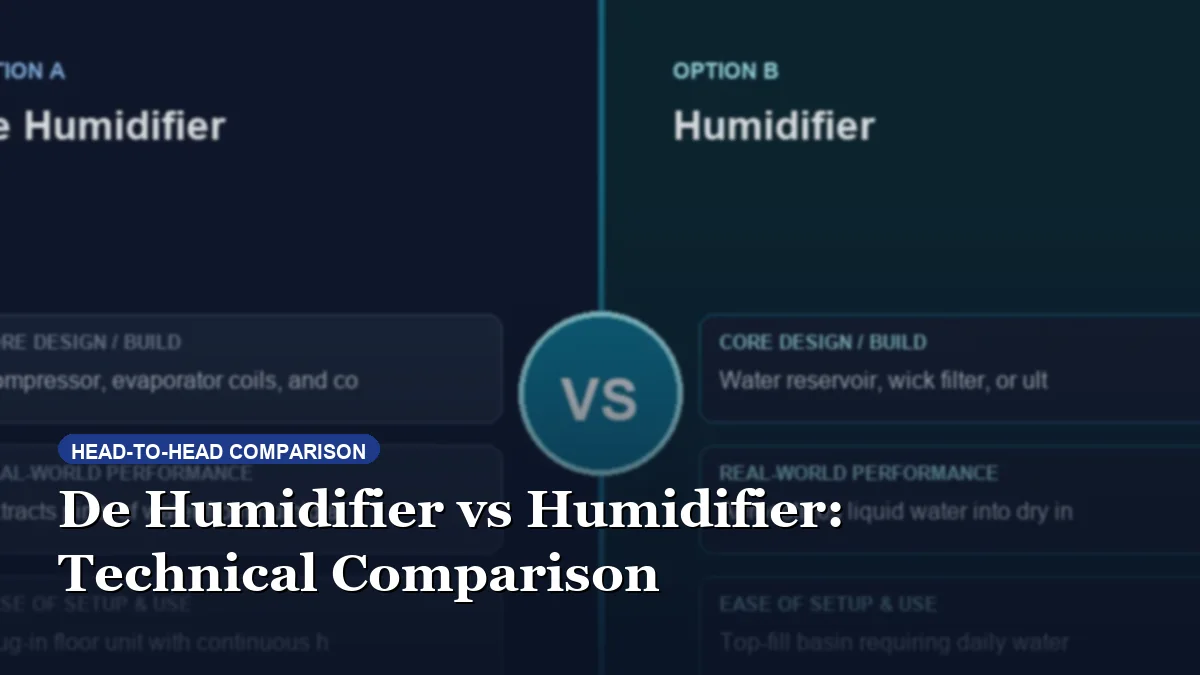
| Core Design / Build | Compressor, evaporator coils, and collection bucket. | Water reservoir, wick filter, or ultrasonic transducer. | Depends on goal |
| Real-World Performance | Extracts pints of water from humid ambient air. | Aerosolizes liquid water into dry indoor spaces. | Depends on goal |
| Ease of Setup & Use | Plug-in floor unit with continuous hose drainage options. | Top-fill basin requiring daily water refills. | Humidifier |
| Durability & Reliability | Heavy mechanical compressor built for long service cycles. | Simple electronic parts prone to mineral scaling. | De Humidifier |
| Efficiency / Operating Footprint | Consumes 300 to 700 watts running a compressor. | Draws 30 to 300 watts depending on heating elements. | Humidifier |
| Maintenance Requirements | Routine coil cleaning and bucket sterilization every week. | Daily rinsing and frequent antimicrobial filter replacements. | De Humidifier |
| Best Ideal Use Case | Musty crawlspaces, humid coastal homes, and flooded rooms. | Heated winter bedrooms and arid desert climates. | Depends on goal |
Core Thermodynamic Principles and Operational Differences
Managing indoor atmospheric moisture requires understanding fundamental thermodynamic engineering principles. Exploring our best dehumidifier selections helps you extract latent moisture efficiently from dense air streams.
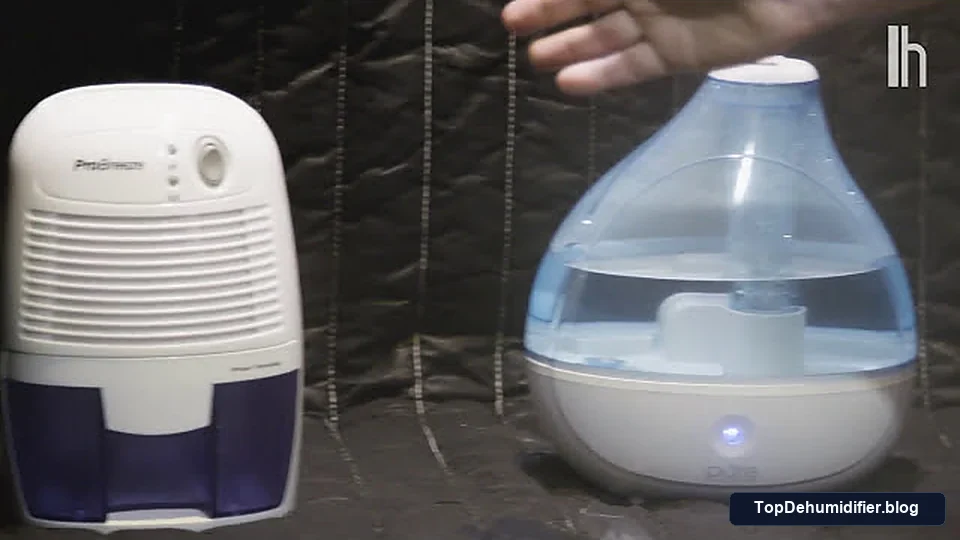
Conversely, a standard appliance introduces microscopic water droplets into dry air streams. Both systems heavily influence absolute humidity levels, directly altering indoor thermal comfort and relative humidity percentages.
Engineering standards require precision hygrometers to measure performance efficacy across diverse climate zones. Selecting the wrong unit accelerates mold growth or worsens dry skin conditions rapidly.
- Dehumidifiers condense airborne vapor into liquid waste.
- Humidifiers vaporize liquid water into breathable mist.
- Both systems regulate absolute indoor relative humidity.
- Thermal efficiency dictates overall energy consumption metrics.
Refrigeration Cycles in Moisture Extraction
Refrigerant-based extraction systems force humid air across sub-cooled evaporator coils. This sudden temperature drop forces moisture to condense and drip into a holding reservoir.
Technical operators evaluate energy factor ratings to determine operational cost efficiency. Proper compressor maintenance ensures long-term reliability in humid regional environments.
- Evaporator coils chill incoming ambient air currents.
- Condensate gravity drains into external collection vessels.
Evaporative and Ultrasonic Vaporization Mechanics
Vaporization units utilize ultrasonic metal diaphragms vibrating at high frequencies. This kinetic action shatters water molecules into a fine, cool mist dispersed by internal fans.
Wick-based systems draw water upward via capillary action before blowing air across saturated paper filters. Mineral deposits often accumulate rapidly on these internal evaporative surfaces.
- Ultrasonic transducers create microscopic water droplet aerosols.
- Wick filters trap hard water minerals before evaporation.
Regional Environmental Standards and Regional Designations
Geographic climate variations dictate specific equipment deployment strategies worldwide. Regional moisture profiles resemble localized internet domains reflecting specific environmental conditions and building codes.
Regulatory compliance frameworks establish strict testing parameters for electrical safety and energy output. Manufacturers align device specifications with regional weather patterns to maximize consumer protection.
Transparent engineering disclosures ensure buyers receive accurate performance data before installation. Public feedback mechanisms continuously shape modern climate control manufacturing standards globally.
- Local climate dictates required equipment capacity ratings.
- International standards govern electrical component safety compliance.
- Transparent testing verifies advertised moisture removal rates.
Evaluating Regional Humidity and Infrastructure Standards
Coastal zones require heavy-duty extraction to prevent structural wood rot and corrosion. Arid regions demand efficient vaporization to protect wooden furniture from cracking.
Government oversight agencies monitor energy consumption claims to protect consumer interests. Standardized testing protocols guarantee reliable performance benchmarks across all retail markets.
- Coastal buildings demand robust moisture extraction machinery.
- Dry inland homes require consistent vapor replenishment.
Transparency and Public Sector Climate Guidelines
Consumer safety agencies publish detailed reports regarding indoor air quality risks. Reviewing our winter indoor humidity guide helps manufacturers refine internal safety cutoffs and auto-shutoff features.
Government housing standards mandate proper ventilation and humidity control in multi-family dwellings. Adhering to these regulations prevents chronic respiratory issues among building occupants.
- Public safety reports guide modern appliance manufacturing.
- Housing codes require effective indoor climate regulation.
Performance Metrics, Capacity Ratings, and Extraction Rates
Measuring extraction capacity involves calculating pints of water removed per twenty-four hours. Manufacturers test units under strict temperature and humidity conditions to establish realistic baselines.
Output capacity for vaporizers is measured by gallons per day introduced into living spaces. Sizing calculations must account for total square footage and local ambient climate baselines.
Underpowered units run continuously without achieving target relative humidity thresholds, increasing wear. Oversized machinery cycles too quickly, failing to properly extract moisture from ambient air.
- Extraction is measured in pints per twenty-four hours.
- Vaporization capacity is rated in gallons per day.
- Square footage calculations prevent premature mechanical failure.
Interpreting Daily Pint Ratings and Square Footage
Matching pint capacity to room volume ensures optimal moisture control without wasting electricity. Consulting our best bedroom dehumidifier picks proves that a damp basement requires significantly higher capacity.
Technical specification sheets provide detailed charts mapping square footage against recommended extraction volumes. Following these guidelines extends compressor lifespan significantly.
- Basements require high-capacity multi-gallon extraction systems.
- Bedrooms need carefully calibrated low-wattage vaporizers.
Energy Footprint and Power Consumption Trade-Offs
Compressor-driven extractors consume substantial electrical power during extended operational cycles. Users must balance utility expenses against the cost of remediating mold damage.
Ultrasonic vaporizers operate with minimal electrical draw, making them cost-effective for daily winter use. Heated wick models consume more electricity due to internal water-warming elements.
- Compressors require heavy electrical loads during operation.
- Ultrasonic transducers offer highly efficient power usage.
Ergonomics, Physical Usability, and Maintenance Protocols
Daily usability depends heavily on physical design, weight distribution, and reservoir accessibility. Heavy extraction units require sturdy caster wheels and ergonomic handles for safe repositioning.
Vaporizers demand frequent basin cleaning to prevent harmful bacterial and mold proliferation. Maintenance routines directly impact indoor air quality and mechanical longevity across both systems.
Gravity drain setups eliminate the hassle of manually emptying heavy water collection buckets. Automated shutoff mechanisms prevent catastrophic overflows when reservoirs reach maximum capacity.
- Caster wheels simplify repositioning heavy floor units.
- Automated shutoffs prevent messy water reservoir overflows.
- Regular antimicrobial cleaning protects sensitive indoor air.
Reservoir Management and Continuous Drainage Options
Emptying collection buckets daily can become burdensome for users with severe dampness issues. Connecting a garden hose allows continuous gravity drainage into nearby floor drains.
Vaporizer tanks require frequent manual refilling with clean water to maintain consistent humidity. Neglecting water basin hygiene introduces airborne pathogens into living environments.
- Gravity hoses eliminate manual bucket emptying chores.
- Daily basin refills ensure uninterrupted vapor generation.
Filter Maintenance and Microbial Control Measures
Air filters on extraction units trap dust and pet dander before reaching coils. Routine vacuuming of these mesh screens maintains proper airflow and cooling efficiency.
Humidifier wicks require regular vinegar soaking to dissolve stubborn mineral scale buildup. Neglecting these maintenance tasks degrades overall performance and promotes bacterial growth.
- Mesh filters protect internal coils from airborne debris.
- Vinegar rinses eliminate hard water mineral deposits.
Safety Standards, Electrical Protection, and Risk Mitigation
Operating heavy electrical appliances near standing water demands strict adherence to safety certifications. Modern devices feature thermal overloads and grounded plugs to prevent shock hazards.
Automatic shutoff switches activate immediately when internal water levels reach maximum thresholds. These safety features protect flooring and electrical components from catastrophic water damage.
Placing climate control units on stable, level surfaces prevents accidental tipping during operation. Adhering to manufacturer clearance guidelines ensures proper ventilation and heat dissipation.
- Grounded electrical plugs prevent dangerous shock hazards.
- Thermal overload switches protect motors from overheating.
- Level surfaces ensure stable mechanical compressor operation.
Electrical Overload Prevention and Circuit Safety
High-wattage compressors should never share overloaded household extension cords or circuits. Dedicated wall outlets prevent circuit breaker trips and potential electrical fires.
Low-draw vaporizers present fewer electrical hazards but still require cautious placement. Keeping power cords away from walking paths prevents accidental tripping incidents.
- Dedicated circuits prevent dangerous electrical breaker trips.
- Proper cord placement avoids household tripping hazards.
Preventing Mold and Mineral Dust Contamination
Uncleaned vaporizers can disperse white mineral dust across delicate home electronics. Using distilled water eliminates particulate distribution and protects sensitive equipment.
Neglected extraction units can harbor mold spores within damp internal reservoirs. Regular sanitization ensures that exhausted air remains clean and safe for occupants.
- Distilled water prevents airborne white mineral dust.
- Reservoir sanitization stops harmful mold spore growth.
Selecting the Right Equipment for Your Specific Climate
Choosing between moisture removal and addition depends on regional climate realities. Consulting our best basement dehumidifiers helps homeowners monitor indoor hygrometers to control persistent dampness effectively.
Basements, crawlspaces, and laundry rooms almost universally require dedicated moisture extraction. Bedrooms during freezing winter months benefit immensely from gentle mist vaporization.
Investing in the appropriate climate control technology safeguards structural integrity and health. Accurate diagnosis of environmental conditions guarantees long-term indoor comfort and wellbeing.
- Monitor hygrometer readings before purchasing climate equipment.
- Match device selection directly to room environmental needs.
- Protect home structures from extreme humidity fluctuations.
Assessing Seasonal Humidity Fluctuations Indoors
Summer months often bring heavy humidity requiring aggressive mechanical condensation. Winter heating systems strip moisture from indoor air, necessitating vapor addition.
Understanding these seasonal swings allows homeowners to deploy appropriate equipment proactively. Maintaining balanced humidity prevents wood warping and respiratory discomfort.
- Summer air demands robust mechanical moisture extraction.
- Winter heating requires consistent indoor vapor addition.
Long-Term Cost and Durability Considerations
High-quality extraction units offer durable compressors designed for years of continuous service. Selecting reputable brands ensures access to replacement parts and technical support.
Simple vaporizer designs offer affordable entry points for seasonal indoor comfort needs. Proper cleaning routines maximize the lifespan of both equipment categories.
- Quality compressors ensure years of reliable operation.
- Regular upkeep extends the service life of appliances.
Frequently Asked Questions
Can I use a dehumidifier and humidifier in the same house?
Yes, different rooms experience vastly different climate conditions. A dehumidifier suits damp basements, while a humidifier helps dry bedrooms.
How often should I clean my water collection reservoir?
You should wash and sanitize water reservoirs at least once weekly. Regular cleaning prevents mold growth and harmful bacterial accumulation.
What is the ideal indoor relative humidity percentage?
Maintaining indoor humidity between thirty and fifty percent is optimal. This range prevents structural damage and discourages dust mite proliferation.
Do extraction units consume a lot of household electricity?
Compressor-based extraction models draw significant power during long cycles. Selecting Energy Star certified appliances reduces overall utility expenses.
Why is white dust settling around my vaporizing appliance?
Ultrasonic units aerosolize minerals found in untreated tap water. Using distilled water completely eliminates this annoying white dust accumulation.