Crawl Space vs Basement Dehumidifiers: Engineering Guide
Choosing the right moisture control system requires matching equipment engineering to your structural environment. Proper capacity prevents structural decay and mold growth.

Select a crawl space unit for low-profile, high-moisture subterranean environments, or choose a basement unit for larger living areas requiring continuous gravity drainage and mobility.
Compare all top models in our Best Dehumidifier: Top Picks for Healthy Indoor Air.
Side-by-Side Breakdown
| Criteria | Crawl Space Dehumidifier | Basement Dehumidifier | Edge |
|---|---|---|---|
| Core Design / Build | Low-profile, horizontal chassis with heavy-duty metal casing. | Upright, vertical configuration with integrated caster wheels. | Crawl Space |
| Real-World Performance | Optimized for extreme dampness in unconditioned earth footprints. | Balanced for semi-conditioned living spaces and larger volumes. | Basement |
| Ease of Setup & Use | Requires professional suspension or pad placement in tight areas. | Plug-and-play freestanding setup with accessible control panels. | Basement |
| Durability & Reliability | Built with corrosion-resistant coils for high-humidity soil contact. | Standard commercial-grade components for indoor residential spaces. | Crawl Space |
| Efficiency / Operating Footprint | High energy factor per pint removed in restricted airflow zones. | Larger electrical draw balanced by high daily moisture extraction. | Tie |
| Maintenance Requirements | Remote monitoring required due to difficult physical access locations. | Simple front-access filters and accessible internal reservoirs. | Basement |
| Best Ideal Use Case | Sealed vapor-barrier encapsulation environments under wooden subfloors. | Finished or unfinished full-height subterranean concrete foundation basements. | Tie |
Core Design and Engineering Differences
Mechanical engineers design crawl space units specifically for restricted height clearances. These machines use horizontal form factors to fit beneath floor joists safely.
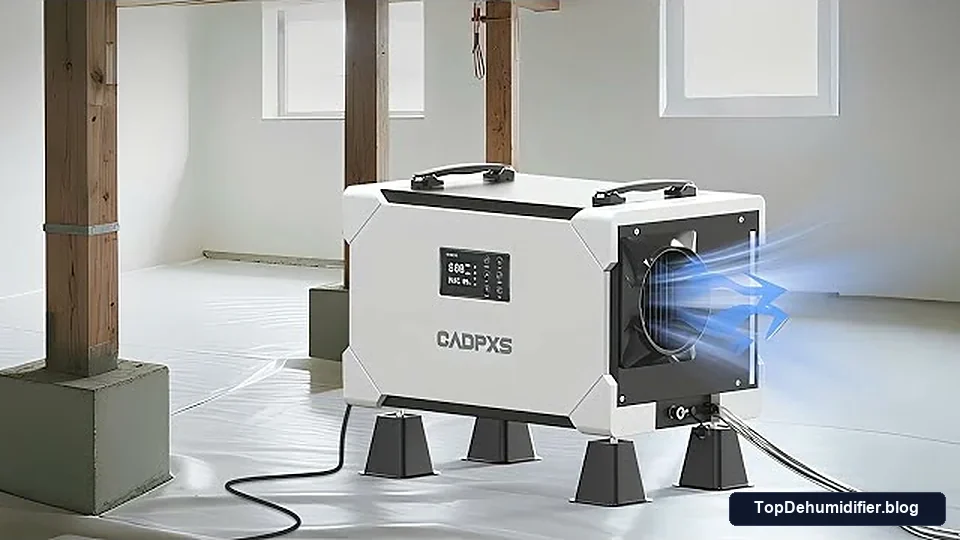
Basement models utilize a traditional upright cabinet structure. This vertical build accommodates larger refrigeration coils and higher airflow volumes.
Material selection differs significantly to handle extreme vapor pressures. When reviewing options in our best dehumidifier for crawl space guide, manufacturers use epoxy-coated coils to resist aggressive ground moisture corrosion.
Crawl space units utilize heavy-duty rotary compressors encased in corrosion-resistant galvanized steel, engineered specifically to withstand extreme sub-floor moisture, humidity spikes, and harsh environmental particulate challenges.
Basement models favor vertical configurations featuring large evaporator coils designed for conditioned living basements where ambient temperatures remain stable and overall air volumes are significantly larger than crawl spaces.
Internal components within crawl space variants feature conformal-coated circuit boards that prevent micro-shorting from aggressive condensation, whereas standard basement units rely on standard residential moisture-barrier protection schemas.
- Horizontal vs vertical chassis configurations
- Corrosion-resistant coil coatings for soil proximity
- Compact footprint designed for joist clearance
Chassis Geometry and Spatial Constraints
Spatial geometry dictates how air circulates across evaporator coils. Crawl space systems pull intake air horizontally to maximize surface contact in tight gaps.
Basement dehumidifiers draw air from the front or bottom, exhausting dry air upward to treat the entire vertical room volume effectively.
- Horizontal air intake vectors
- Upward exhaust stack clearance needs
Real-World Performance and Capacity
Subterranean moisture loads demand rigorous capacity calculations. Crawl spaces trap ground humidity continuously, requiring constant low-temperature extraction capabilities without freezing up.
Basements experience fluctuating thermal loads from HVAC ducts and living spaces above. Equipment must handle varying dew points while maintaining stable indoor relative humidity.
Selecting the correct capacity requires calculating structural square footage alongside vapor pressure differentials, ensuring your removal rate handles extreme moisture loads emitted directly from uncovered earth floors.
Basement machines process higher overall cubic volumes under moderate temperatures. Meanwhile, models featured in our best rated crawl space dehumidifier roundup prioritize low-temperature extraction efficiency down to fifty degrees Fahrenheit without freezing.
- Low-temperature defrost cycle efficiency
- Continuous vapor pressure management in soil
- Thermal load balancing in large rooms
Extraction Rates Under Stress
Actual pint extraction drops when ambient temperatures fall below sixty degrees. Specialized low-temperature engineering keeps extraction high in cold earth environments.
Basement models excel when ambient heat helps evaporate standing moisture from concrete slabs and masonry foundation walls.
- Low-temperature coil performance
- Concrete masonry drying dynamics
Space Constraints and Structural Layouts
Installing climate control equipment requires careful evaluation of physical space. Units recommended in our best crawl space dehumidifier analysis address severe ergonomic challenges involving dirt floors and low overhead clearance.
Basements offer full standing height, allowing simple positioning and routine user interaction. Technicians can easily walk around basement units for cleaning and inspection tasks.
Low-profile crawl space models feature horizontal orientations allowing placement between floor joists, minimizing vertical clearance issues where tight access hatches restrict standard appliance maneuvering completely.
Basements offer ample headroom for upright chassis designs, but technicians must still evaluate foundation layouts to ensure proper airflow clearance around intake and exhaust grilles for optimal operation.
- Low overhead clearance limitations
- Standing height accessibility advantages
- Vapor barrier integration requirements
Suspended Mounting vs Floor Placement
Crawl space equipment often hangs from floor joists using heavy-duty straps. This protects the unit from standing water and damp earth contact.
Basement dehumidifiers sit directly on concrete floors using vibration-isolation pads to prevent structural noise transmission.
- Joist suspension strap weight limits
- Concrete floor vibration dampening pads
Drainage Strategies and Gravity Flow
Water removal is the primary functional duty of any moisture control device. Crawl space setups rely heavily on internal condensate pumps because floor drains are rare.
Basement installations frequently utilize gravity drainage directly into floor sumps or laundry tubs, eliminating the need for motorized pump mechanisms.
Because crawl spaces rarely feature built-in floor drains, units require robust condensate pumps with high vertical lift capabilities to expel water safely outside the foundation perimeter.
Basement installations frequently leverage existing gravity drain lines, yet continuous monitoring remains vital to prevent hose blockages caused by mineral buildup or algae growth over extended seasonal cycles.
- Mandatory condensate pump integration
- Gravity drainage via floor sumps
- Vertical head pressure limits for tubing
Managing Vertical Lift Head Pressures
Pumping water out of a shallow foundation requires robust pump motors. Check valves prevent backflow down flexible vinyl tubing during off cycles.
Gravity lines need continuous downward slope angles to prevent clogs and biological growth inside discharge hoses.
- Motorized pump head pressure ratings
- Continuous drainage slope requirements
Electrical Safety and Code Compliance
Damp subterranean environments pose serious electrical shock hazards. National electrical codes mandate ground fault circuit interrupter protection for all below-grade outlets.
Crawl space dehumidifiers must feature sealed electrical enclosures to protect control boards from aggressive moisture and ambient dust particles.
National Electrical Code mandates GFCI protection for all damp sub-floor receptacles, ensuring automatic power interruption if moisture breaches the housing or extension cord connections.
Dedicated 115-volt circuits prevent dangerous voltage drops and overheating risks when running heavy-duty compressors continuously in damp environments alongside other auxiliary sump pump electrical loads.
- GFCI circuit protection mandates
- Sealed electronic control box housings
- Heavy-duty power cord insulation standards
Circuit Load and Amperage Demands
Running high-capacity compressors requires dedicated electrical circuits to prevent tripped breakers. Heavy motor draws demand proper wire gauge sizing across long runs.
Basement units plug into standard household receptacles safely when sharing light loads with other basement appliances.
- Dedicated circuit breaker requirements
- Proper extension cord safety limits
Maintenance Protocols and Filter Longevity
Regular upkeep ensures optimal machine lifespan and efficiency. Crawl space units require remote monitoring systems since physical access is difficult and unpleasant.
Basement machines allow quick visual inspections and rapid filter changes due to comfortable indoor access conditions and bright lighting.
Crawl space filters demand monthly inspections due to heavy dust, mold spores, and spider webs, while washable MERV 8 filters capture particulate matter effectively before it fouls coils.
Basement systems accumulate household lint and pet dander, requiring regular coil sanitization and condensate line flushing to maintain optimal energy efficiency throughout the heavy humid summer months.
- Remote humidistat monitoring setups
- Washable mesh air filter upkeep
- Coil sanitization and mold prevention
Filter Replacement and Coil Cleaning
Dust and mold spores quickly clog intake filters in sealed earth spaces. MERV-rated filters need monthly cleaning to maintain proper airflow volumes.
Basement filters collect household lint and pet dander, requiring bi-weekly checks in homes with active pets or forced-air heating systems.
- Monthly mesh filter washing routines
- Annual professional coil wash cycles
Financial Investment and Operating Costs
Upfront equipment costs reflect heavy-duty commercial engineering standards. Crawl space models command higher prices due to specialized corrosion-resistant components and pumps.
Basement units offer varied price tiers depending on daily capacity ratings and smart home connectivity features for modern consumers.
Commercial-grade systems detailed in our best dehumidifier for crawl space under house overview involve higher upfront material costs, but their superior durability reduces replacement frequency under aggressive sub-floor conditions.
Evaluating lifetime operational expenses requires factoring local utility rates against daily kilowatt-hour consumption, highlighting why ENERGY STAR certified compressor technology saves substantial money over time.
- Commercial-grade component manufacturing costs
- Energy factor efficiency ratings over time
- Long-term structural protection value yields
Energy Consumption and Efficiency Ratings
Continuous compressor operation impacts monthly utility bills significantly. Choosing high-efficiency models reduces power consumption while protecting home framing timbers.
Smart humidistats cycle compressors off when target humidity levels are met, preventing wasteful continuous runtime hours.
- Energy factor kilowatt-hour calculations
- Smart humidistat cycling optimization
Frequently Asked Questions
Can I use a regular basement dehumidifier inside an encapsulated crawl space?
Standard basement units lack the low-profile chassis required for tight joist clearances. Furthermore, they struggle with extreme soil vapor pressures and often burn out prematurely.
Why do crawl space dehumidifiers require built-in condensate pumps?
Most encapsulated earth foundations lack gravity floor drains for water removal. A motorized pump forces condensed moisture upward through vinyl tubing to the exterior.
What is the ideal relative humidity level for unfinished basements?
Maintaining indoor humidity between thirty and fifty percent prevents structural mold growth. This specific range also stops metal corrosion on stored tools.
How often should I clean the air filter on my subterranean dehumidifier?
Inspect and wash washable mesh filters every month during peak humid seasons. Dirty filters restrict critical airflow and reduce moisture extraction efficiency.
Do I need a professional HVAC technician to install a crawl space unit?
Professional installation ensures proper electrical GFCI safety and secure joist suspension. Experts also calibrate remote humidistats for optimal subfloor air circulation.