Cool Mist Humidifier vs Dehumidifier: Definitive Technical Guide
Understanding atmospheric moisture control is vital for indoor air quality. These two distinct systems solve completely opposite humidity challenges.


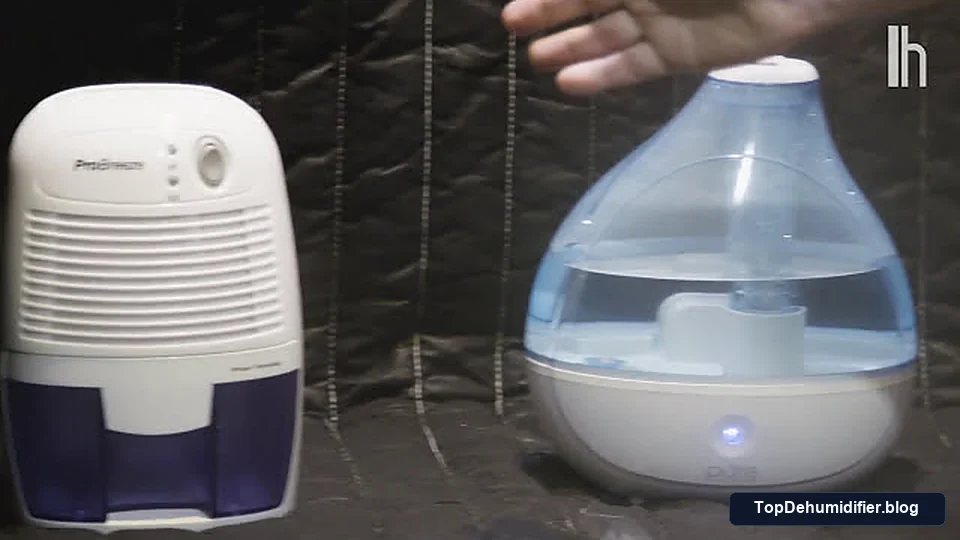
Choose cool mist humidifiers to elevate low relative humidity levels in dry winter air. Select dehumidifiers when excess moisture risks structural rot and mold proliferation.
Compare all top models in our Best Dehumidifier: Top Picks for Healthy Indoor Air.
Side-by-Side Breakdown
| Criteria | Cool Mist Humidifier | Dehumidifier | Edge |
|---|---|---|---|
| Core Design / Build | Utilizes an internal reservoir and ultrasonic atomizer or wick filter. | Employs a refrigeration compressor, evaporator coils, and collection bucket. | Split based on need |
| Real-World Performance | Adds moisture to air streams, raising relative humidity to comfortable bands. | Extracts liquid water from air, dropping relative humidity to safe targets. | Split based on need |
| Ease of Setup & Use | Plugs into standard outlets with simple manual tank refills required daily. | Requires placement with clearance for airflow and optional continuous drainage hoses. | Cool Mist Humidifier |
| Durability & Reliability | Subject to mineral scale buildup on transducers requiring routine descaling. | Mechanical compressors and coils provide long operational lifespans if cleaned. | Dehumidifier |
| Efficiency / Operating Footprint | Low energy draw utilizing piezoelectric or small fan motor systems. | Higher wattage draw due to refrigeration cycle and heavy compressor load. | Cool Mist Humidifier |
| Maintenance Requirements | Daily tank rinsing and weekly antimicrobial disinfection to prevent bacterial growth. | Bi-weekly filter vacuuming and periodic condensate bucket sanitization routines. | Dehumidifier |
| Best Ideal Use Case | Dry winter bedrooms requiring relief from nasal passage irritation and static. | Damp basements, crawlspaces, or coastal homes battling high relative humidity. | Split based on need |
Math Lessons: Calculating Volumetric Room Sizing
Proper environmental control requires precise calculations based on cubic footage. Mathematical formulas ensure your equipment matches room dimensions without causing over-saturation or dangerous dry air spikes.
When sizing a moisture management device, engineers evaluate airflow ratings. Air exchanges per hour dictate how effectively the unit processes total volume within enclosed residential spaces.
Failing to compute proper square footage leads to short cycling or continuous runtime. Accurate sizing protects mechanical motors and optimizes energy consumption across seasons.
Calculating volumetric room sizing requires measuring length, width, and ceiling height to find total cubic footage. This mathematical baseline ensures your dehumidifier capacity matches spatial moisture loads accurately.
Standard dehumidifier ratings rely on pint-per-day extraction metrics evaluated under AHAM conditions. Undersized units run continuously, failing to reduce relative humidity below the recommended mold-prevention threshold of fifty percent.
Consult our best dehumidifier choices when sizing units for your home. Proper moisture extraction prevents condensation on cold exterior walls, protecting building structures against decay and allergen proliferation.
- Cubic footage calculations determine baseline machine capacity requirements.
- Ceiling height variations drastically alter total room volume metrics.
- Under-sizing forces constant operation, accelerating component wear and tear.
Applying Volumetric Formulas
Multiply room length, width, and ceiling height to find total cubic volume. Capacity planning prevents overloading residential circuits while ensuring target humidity levels.
Compare your calculated volume against manufacturer output specifications before purchasing equipment. Proper alignment guarantees optimal performance in demanding environments.
- Measure total room dimensions accurately using a laser tool.
- Account for open floor plans linking multiple distinct living areas.
Building Rush: Structural Airflow and Dynamics
Review our best basement dehumidifier options to manage below-grade moisture effectively. Strategic placement prevents stagnant air pockets from forming near masonry walls or damp crawlspaces.
Humidifiers disperse fine vapor droplets into high-velocity discharge streams. Dehumidifiers pull ambient air across freezing evaporator coils to condense moisture out effectively.
Obstructions like furniture restrict intake grilles and exhaust paths. Maintaining clear perimeter clearance ensures maximum volumetric throughput during heavy operational cycles.
Structural airflow dynamics dictate how moisture travels through building materials via vapor diffusion and air leakage. Dehumidifiers interrupt this cycle by maintaining negative pressure and lowering indoor vapor pressure differentials.
Humidifiers inject moisture directly into the airstream, relying on HVAC blower fans for even distribution throughout the building envelope. Poor mixing leads to localized saturation hotspots near supply registers and ductwork elbows.
Enclosed crawlspaces and basements require strategic placement to prevent stagnant air pockets from trapping high humidity against masonry foundations. Cross-ventilation paired with mechanical extraction preserves structural framing integrity over time.
- Intake grilles require unrestricted clearance for proper volumetric airflow.
- Discharge vectors influence spatial distribution of treated air streams.
- Wall proximity can restrict convective currents and reduce unit efficiency.
Optimizing Placement Geometries
Position units centrally within living spaces to encourage balanced convective loops. Air circulation prevents localized humidity spikes that promote fungal growth.
Avoid placing humidifiers directly on carpeted flooring to prevent moisture absorption. Elevated surfaces protect underlying materials from accidental water damage.
- Keep units away from direct thermal heat sources and registers.
- Ensure stable footing to minimize resonant acoustic vibrations.
Financial Literacy: Power Draw and Operating Costs
Evaluating electrical consumption helps homeowners manage monthly utility budgets effectively. Wattage ratings vary dramatically between ultrasonic atomizers and heavy refrigeration compressors.
Cool mist models typically consume minimal electricity because they lack compressors. Dehumidifiers demand significantly higher power inputs to drive refrigeration cycles continuously.
Calculating daily runtime hours reveals true long-term utility impacts. Choosing energy-certified hardware reduces overall household electricity consumption during peak operational months.
Dehumidifiers utilize compressor-based refrigeration cycles, drawing significantly more wattage than ultrasonic or evaporative cool mist humidifiers. Calculating annual operating costs involves multiplying running wattage by local utility kilowatt-hour rates.
Running a high-capacity compressor unit continuously during peak summer months noticeably impacts monthly electricity bills. Energy Star certified models employ efficient variable-speed compressors to minimize unnecessary electrical power draw.
Cool mist humidifiers typically consume minimal electricity because they rely on piezoelectric transducers or simple wick evaporation. However, frequent filter replacements and demineralization cartridge costs add to long-term ownership expenses.
- Ultrasonic units draw minimal wattage for quiet operation.
- Compressor-based systems demand higher continuous starting currents.
- Energy Star certifications verify superior operational efficiency metrics.
Analyzing Energy Consumption Metrics
Review kilowatt-hour specifications listed on the manufacturer energy guide label. Power efficiency directly correlates with monthly operating expenditures in residential spaces.
Using humidistats prevents unnecessary runtime by shutting units off automatically. Smart automation protects household budgets from wasteful over-treatment.
- Check local utility rates to estimate monthly running costs.
- Utilize programmable timers to restrict operation during peak hours.
Safe by Design: Electrical and Water Safety
Combining electricity with standing water introduces inherent operational safety risks. Ground fault protection safeguards users against accidental shocks in damp residential zones.
Modern devices feature automatic shutoff switches triggered by full water reservoirs. These safety mechanisms prevent catastrophic overflows and electrical short circuits during operation.
Regularly inspect power cords for fraying, cracking, or thermal degradation. Damaged cables must be replaced immediately to eliminate potential fire hazards.
Combining high-voltage electrical circuits with large volumes of standing water introduces severe shock and slip hazards. Modern appliances incorporate automatic shutoff switches that trigger when collection buckets reach maximum capacity.
Dehumidifiers require dedicated GFCI outlets to prevent ground faults in damp environments like basements and laundry rooms. Proper grounding protocols protect users from catastrophic electrical shorts caused by internal condensation leaks.
Humidifiers demand strict electrical isolation due to the risk of water splashing onto internal control boards during refilling tasks. Manufacturers design sealed transformer housings to isolate low-voltage components from wet zones.
- Automatic shutoff floats prevent water overflow emergencies.
- GFCI outlets provide essential shock protection near wet areas.
- Cord inspections mitigate unexpected electrical fire hazards.
Mitigating Electrical and Slip Hazards
Route power cords safely away from high-traffic walking pathways. Cable management prevents accidental trips and protects insulation from physical crushing.
Wipe up spilled condensate immediately to prevent slips on hard flooring surfaces. Vigilant housekeeping ensures a safe indoor environment for occupants.
- Never use extension cords with high-draw compressor appliances.
- Keep water reservoirs tightly sealed during active operation cycles.
Maintenance Routines and Filter Upkeep
Consistent upkeep ensures hygienic operation and extends overall equipment lifespans. Sanitization schedules prevent mold spores from propagating inside internal water reservoirs.
Cool mist models demand daily water changes and weekly vinegar cleaning. Dehumidifiers require regular filter vacuuming and coil inspections to maintain airflow.
Consult our best bathroom dehumidifier guide for tips on managing high-moisture spaces. Establishing disciplined cleaning habits protects indoor air quality across damp residential zones.
Routine maintenance prevents microbial colonization inside stagnant water reservoirs and damp filtration media. Dehumidifiers require monthly air filter washing and coils cleaning to maintain optimal heat transfer efficiency.
Cool mist humidifiers demand aggressive daily cleaning schedules to prevent aerosolizing mineral dust and harmful bacteria into living spaces. Utilizing antimicrobial tank treatments inhibits biofilm growth between scheduled deep cleaning sessions.
Neglecting routine maintenance degrades appliance performance, forcing compressors and fans to work harder against airflow restrictions. Establishing a rigorous upkeep calendar extends equipment lifespan and ensures safe indoor air quality.
- Daily reservoir rinsing stops bacterial biofilm accumulation.
- Weekly descaling removes stubborn mineral deposits from transducers.
- Monthly filter cleaning preserves optimal volumetric airflow rates.
Deep Cleaning Procedures
Use mild vinegar solutions to dissolve mineral scale without harsh chemicals. Descaling routines restore ultrasonic atomizer efficiency and eliminate unpleasant stagnant odors.
Allow all internal components to dry completely before reassembling housing units. Proper storage prevents secondary microbial growth during seasonal downtime.
- Scrub basin corners gently using soft non-abrasive bristled brushes.
- Rinse thoroughly with clean water to eliminate chemical residues.
Acoustic Profiles and Sound Pressure Levels
Sound output directly impacts user comfort in bedrooms and offices. Decibel ratings determine whether appliances disturb sleep cycles or daily concentration.
Cool mist humidifiers operate quietly using silent piezoelectric transducers and small fans. Dehumidifiers generate noticeable hums from compressors and large blower wheels.
Placing rubber isolation pads underneath units dampens resonant floor vibrations. Acoustic mitigation transforms noisy mechanical equipment into peaceful background elements.
Sound pressure levels measured in decibels determine how intrusive climate control appliances are in bedrooms and offices. Dehumidifiers generate noticeable noise due to compressor vibration hum and high-velocity fan blade movement.
Explore our best bedroom dehumidifier list when quiet operation matters most for sleeping areas. Selecting units with rubber isolation feet minimizes structural vibration transfer through flooring surfaces.
Manufacturers publish decibel ratings to help users select appropriate equipment for noise-sensitive environments like nurseries or home studios. Evaluating acoustic performance metrics prevents unexpected noise disruption in quiet residential zones.
- Ultrasonic transducers produce nearly silent operation profiles.
- Compressor vibrations can resonate through hollow flooring structures.
- Rubber isolation mats absorb unwanted mechanical sound waves.
Managing Decibel Output Levels
Select low fan speeds when running equipment in sleeping quarters. Quiet operation promotes restful nights without sacrificing necessary environmental control.
Keep intake and exhaust grilles clean to prevent aerodynamic whistling noises. Smooth airflow paths reduce unnecessary mechanical strain and noise.
- Check manufacturer decibel specifications prior to purchase.
- Install sound-dampening pads beneath heavy compressor bases.
Frequently Asked Questions
Can a cool mist humidifier replace a dehumidifier?
No, because these two devices perform completely opposite environmental functions. Cool mist humidifiers add moisture while dehumidifiers extract liquid water from indoor air.
How often should I clean my cool mist humidifier?
You must rinse the water tank daily and disinfect weekly. Regular sanitization stops harmful bacteria and mineral scale from dispersing into room air.
What is the ideal relative humidity for indoor spaces?
Residential humidity should remain between thirty and fifty percent. Optimal moisture levels discourage mold growth while keeping human respiratory membranes comfortable.
Why is my dehumidifier running continuously without stopping?
Continuous operation usually indicates an undersized unit or excessive moisture infiltration. High humidity sources like leaky pipes or open windows often cause this issue.
Do dehumidifiers cool down the room temperature?
Dehumidifiers actually exhaust slightly warmer air due to compressor heat output. Exhaust warmth means they do not function as efficient home air conditioners.