Commercial vs Residential Dehumidifier: Concise Verdict
Understanding structural and performance differences ensures proper moisture control. Choosing the right equipment prevents costly property damage.

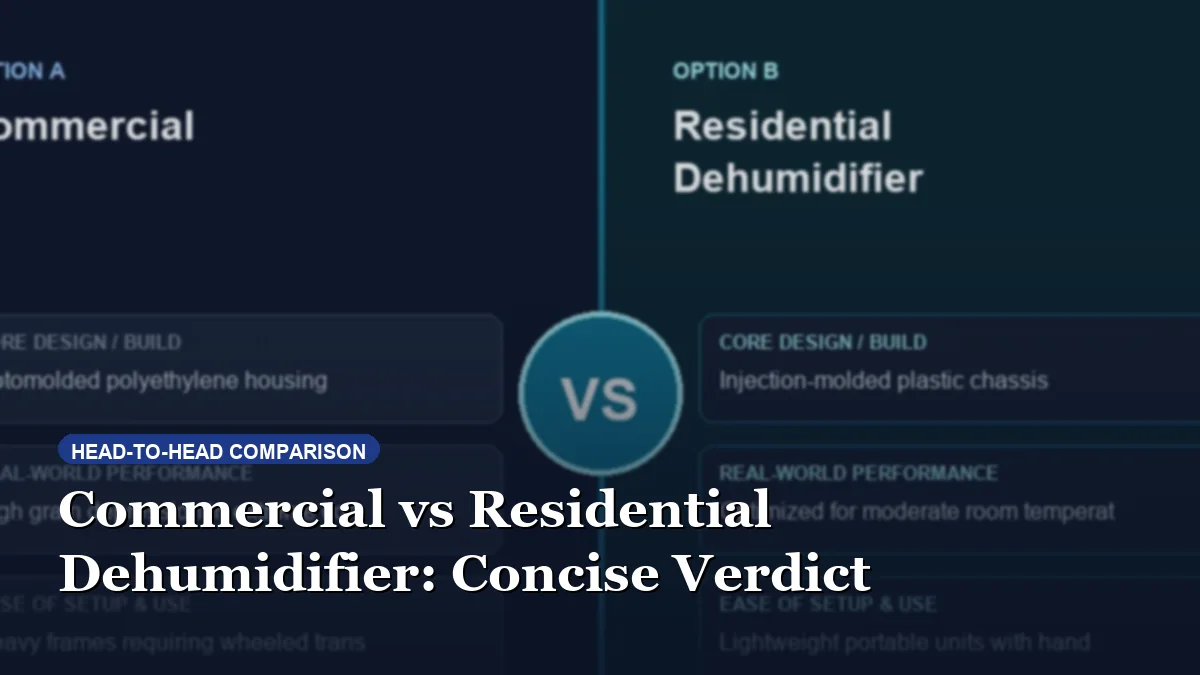
Pick commercial units for heavy-duty restoration and unconditioned spaces. Choose residential dehumidifiers for finished living areas requiring quiet daily comfort.
Compare all top models in our Best Dehumidifier: Top Picks for Healthy Indoor Air.
Side-by-Side Breakdown
| Criteria | Commercial | Residential Dehumidifier | Edge |
|---|---|---|---|
| Core Design / Build | Rotomolded polyethylene housing | Injection-molded plastic chassis | Commercial |
| Real-World Performance | High grain depression in extreme conditions | Optimized for moderate room temperatures | Commercial |
| Ease of Setup & Use | Heavy frames requiring wheeled transport | Lightweight portable units with handles | Residential Dehumidifier |
| Durability & Reliability | Built for continuous industrial abuse | Designed for standard household duty cycles | Commercial |
| Efficiency / Operating Footprint | Higher amperage draw on dedicated circuits | Standard 115V plug-in power efficiency | Residential Dehumidifier |
| Maintenance Requirements | Washable filters and rugged coil access | Routine bucket emptying and basic cleaning | Commercial |
| Best Ideal Use Case | Water damage restoration and job sites | Basements, bedrooms, and living spaces | Commercial |
Core Design and Structural Engineering
Engineering standards differ vastly between these moisture extraction categories. Commercial units utilize rugged rotomolded housings designed to withstand rough job site transportation and frequent impacts. Internal refrigeration components receive heavy-duty brazing to handle high vibration.
Conversely, residential models prioritize compact aesthetics and lightweight portability. Manufacturers employ injection-molded plastics to reduce overall weight, making it simple for homeowners to move units between rooms or store them inside closets during off-seasons.
When selecting heavy-duty extraction gear, our best commercial dehumidifier for basement selection highlights robust rotomolded polyethylene housings engineered to easily withstand harsh job-site abuse compared to standard residential plastic models.
Internal evaporator coils in commercial systems feature thick copper tubing and bonded aluminum fins designed for corrosive environments. Consumer versions use thinner aluminum coils optimized for lower daily runtime and moderate indoor conditions.
- Commercial builds feature rotomolded polyethylene shells.
- Residential units utilize lightweight injection-molded plastics.
- Industrial frames incorporate reinforced internal steel chassis.
- Commercial frames incorporate integrated stacking ribs and heavy-duty locking handles.
- Residential chassis rely on snap-fit joints and concealed caster wheel assemblies.
Chassis Materials and Portability
Heavy-duty transport features define professional machines. Large semi-pneumatic wheels and collapsible handles assist technicians in navigating stairs and rough terrain easily.
Household appliances feature recessed casters or small handles optimized entirely for smooth indoor flooring surfaces.
- Commercial models use semi-pneumatic wheels.
- Residential units rely on smooth floor casters.
Real-World Performance and Capacity
Extraction capacity separates standard household gear from professional equipment. High grain depression allows commercial machines to pull moisture efficiently from severely saturated air masses.
Residential variants maintain comfortable relative humidity levels within climate-controlled environments. They struggle significantly when ambient temperatures drop below standard indoor comfort ranges.
Industrial dehumidifiers extract moisture continuously at 33 degrees Fahrenheit. Conversely, review options in our best residential basement dehumidifier guide for units that lose efficiency when temperatures drop below sixty degrees.
Rated removal capacities for commercial gear reflect severe AHAM conditions of 80 degrees and 60% relative humidity. Home appliances measure capacity under milder standards, resulting in overstated performance during heavy structural drying tasks.
- Commercial systems extract massive pints per day.
- Residential units target moderate humidity ranges.
- Professional units handle low-temperature environments effectively.
- Commercial units maintain high airflow rates exceeding three hundred cubic feet per minute.
- Home units use smaller blowers optimized for quiet living room operation.
Low Temperature Operation
Advanced defrost mechanisms enable commercial units to run continuously in unheated basements or crawlspaces without freezing up internal condenser coils.
Standard home appliances lack aggressive defrost cycles, leading to frost accumulation and sudden operational shutdowns during cold weather.
- Hot-gas bypass enables continuous cold weather running.
- Standard units suffer from frequent coil icing.
Maintenance, Efficiency, and Longevity
Operational longevity heavily favors industrial builds. As noted in our Alorair Storm LGR Extreme review, commercial compressors feature superior thermal overload protection and heavy-duty wiring designed for continuous runtime.
Household variants run on intermittent duty cycles. Running a standard home appliance continuously in a damp warehouse will quickly burn out its smaller compressor motor.
Maintenance schedules for commercial equipment demand annual coil cleanings and rigorous filter inspections due to heavy dust loads. Residential models require simple bi-weekly mesh filter rinses and occasional bucket sanitization routines.
Energy efficiency ratios vary widely because commercial compressors draw higher starting amperage to deliver relentless moisture extraction. Standard home units emphasize lower wattage consumption to comply with strict energy star guidelines.
- Industrial units use robust thermal overload relays.
- Residential appliances are rated for intermittent duty.
- Professional coils resist corrosive moisture environments.
- Commercial refrigeration circuits feature accessible service ports for refrigerant recharge.
- Residential units are hermetically sealed, treating compressor failures as unrepairable failures.
Filter Systems and Coil Care
Washable MERV filters protect commercial internal components from job site dust and drywall debris. Quick-release latches allow technicians to inspect coils in seconds.
Home models use thin mesh filters that capture basic household lint but require frequent washing to maintain proper airflow.
- Commercial units feature washable MERV filters.
- Residential variants use simple nylon mesh screens.
Electrical Requirements and Safety Standards
Electrical draw dictates where equipment can safely operate. Commercial dehumidifiers often demand dedicated circuits due to higher amp draws required by powerful blowers and large compressors.
Residential models plug easily into standard household outlets without tripping breakers. This makes them universally compatible with standard residential wiring configurations.
Job-site extractors frequently demand dedicated 15-amp circuits with robust grounding to prevent electrical faults in wet environments. Consumer variants plug easily into standard household outlets without risking localized breaker trips.
Commercial designs adhere to stringent OSHA safety standards regarding cord durability and impact-resistant electrical enclosures. Residential devices comply primarily with basic UL guidelines for indoor consumer electronics and unattended operation.
- Industrial units may require dedicated electrical circuits.
- Home models plug into standard 115V wall outlets.
- Commercial power cords feature heavy-duty insulated jackets.
- Commercial power cords feature heavy-duty rubber jacketing resistant to oil and cuts.
- Residential cords utilize thinner vinyl insulation suitable for controlled indoor floors.
Circuit Safety and Cord Management
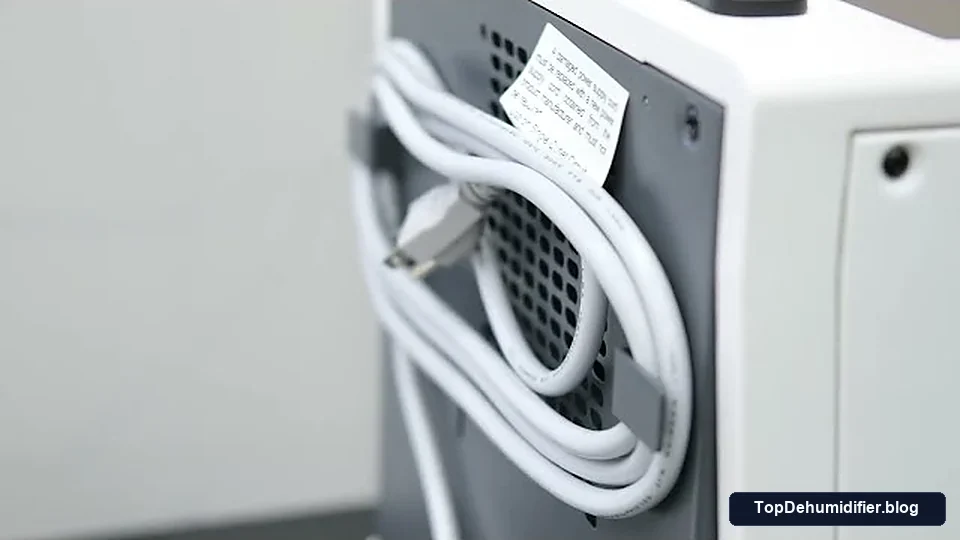
Professional units include long, heavy-gauge power cords with integrated wrap cleats. This prevents cord damage during active transport across rugged job sites.
Consumer machines feature shorter cords suited for placement near standard wall sockets in finished living spaces.
- Industrial cords feature heavy-gauge copper wiring.
- Consumer units use standard length power cables.
Noise Levels and Ergonomic Factors
Acoustic output remains a major consideration for indoor placement. Residential dehumidifiers prioritize quiet operation so they do not disturb everyday household activities or sleep schedules.
Commercial alternatives prioritize raw airflow velocity over quietness. Their powerful centrifugal or axial fans generate substantial decibel levels that prove disruptive inside living areas.
High-velocity commercial blowers generate significant acoustic output, often exceeding sixty-five decibels during continuous operation. Residential units prioritize quiet centrifugal fan designs to maintain peaceful living spaces and bedrooms.
Ergonomic features on job-site models include telescoping handles and rugged semi-pneumatic wheels for effortless loading into transport vehicles. Home appliances rely on recessed handholds and small plastic casters.
- Commercial fans produce high operational decibel levels.
- Residential units are engineered for quiet bedroom use.
- Professional machines use high-static pressure blowers.
- Commercial control panels feature digital hour meters for accurate job tracking.
- Residential displays use simple LED indicator lights and soft-touch buttons.
User Interface and Controls
Simple digital hour meters and humidistats on commercial units track runtime accurately for billing and maintenance intervals. They omit complex smart features.
Consumer appliances feature Wi-Fi connectivity, app controls, and sleek digital displays tailored for user-friendly home monitoring.
- Commercial panels feature hour meters for runtime tracking.
- Residential displays offer smart app connectivity.
Determining the Right Fit for Your Application
Matching the correct category prevents wasted investment. Water damage restoration projects and unconditioned commercial warehouses require choices from our best commercial dehumidifier for water damage roundup to ensure professional-grade extraction power.
Finished basements, bedrooms, and main living areas achieve ideal humidity control perfectly through reliable residential appliances without excess noise or utility costs.
Selecting the correct machine requires calculating square footage and evaluating specific moisture load sources like active leaks or damp crawlspaces. Over-specifying a commercial unit in small bedrooms wastes electrical resources.
Severe water damage restoration projects demand heavy-duty commercial deployment to prevent structural rot and mold proliferation. General residential upkeep thrives under standard consumer units managing seasonal humidity swings.
- Choose commercial gear for active disaster restoration.
- Select residential units for finished living spaces.
- Evaluate total square footage and climate conditions.
- Assess whether continuous gravity drainage or built-in condensate pumps are required.
- Verify local ambient temperature ranges before choosing a refrigerant or desiccant type.
Cost Versus Value Analysis
Upfront expenses for professional units reflect their superior durability and high-capacity components. They deliver long-term reliability in harsh conditions.
Household units offer affordable moisture control for standard residential spaces but lack the rugged construction needed for industrial applications.
- Commercial units offer long-term industrial durability.
- Residential models provide affordable home comfort.
Frequently Asked Questions
Can I use a commercial dehumidifier inside my finished basement?
Yes, you can operate professional units below grade, but their loud fan noise and high power draw may prove disruptive in living spaces.
Why do commercial units cost significantly more than home models?
Professional extractors utilize heavy-duty rotomolded housings and industrial-grade compressors built to withstand continuous daily abuse on demanding restoration job sites.
Do residential dehumidifiers work effectively in unheated winter crawlspaces?
Standard home models struggle and freeze up quickly because they lack advanced hot-gas defrost systems required for reliable low-temperature operation.
How often should filters be cleaned on a commercial dehumidifier?
Inspect and wash the MERV air filters every two weeks during heavy extraction cycles to maintain optimal airflow and prevent coil damage.
Do commercial dehumidifiers require a dedicated drain hose connection?
Most professional units feature internal condensate pumps with long drainage hoses to expel water vertically or horizontally over extended distances.