Charcoal Moisture Absorber vs Mini Electric Dehumidifier
Choosing between passive chemical absorption and active Peltier condensation defines small-space humidity control. Understanding technical limits ensures dry, protected environments without wasting resources.

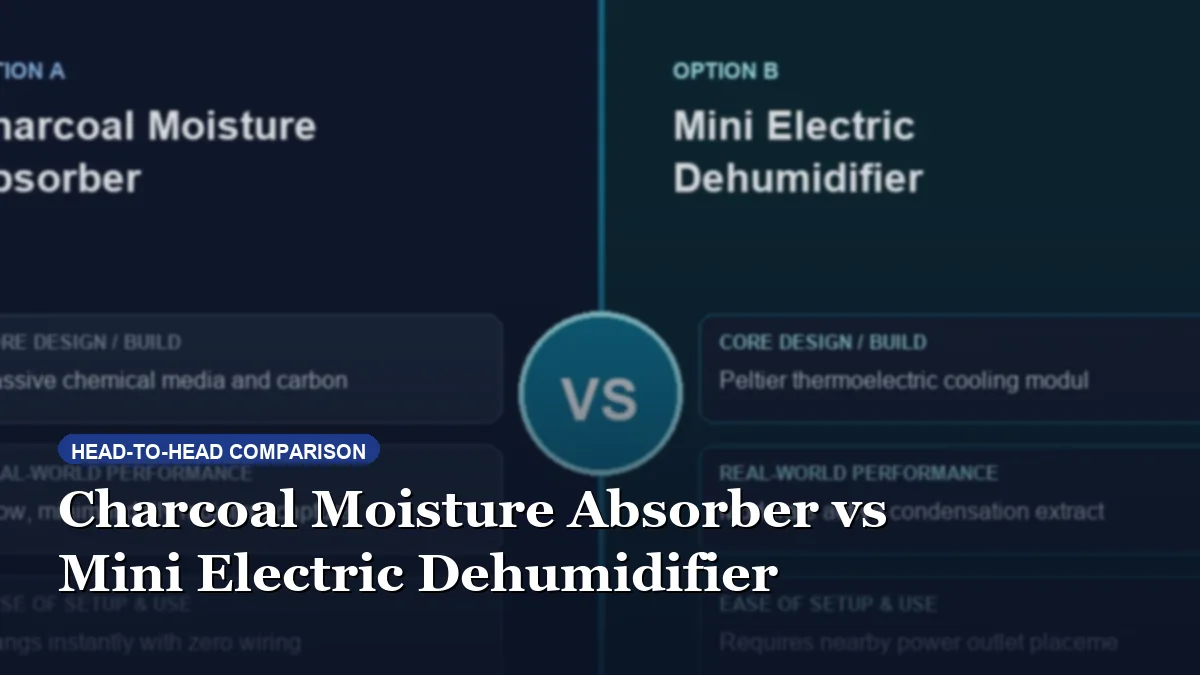
Choose charcoal absorbers for silent, unpowered closets or gun safes. Select mini electric units for small bathrooms requiring active condensation extraction.
Compare all top models in our Best Dehumidifier: Top Picks for Healthy Indoor Air.
Side-by-Side Breakdown
| Criteria | Charcoal Moisture Absorber | Mini Electric Dehumidifier | Edge |
|---|---|---|---|
| Core Design / Build | Passive chemical media and carbon | Peltier thermoelectric cooling module | Side B |
| Real-World Performance | Slow, minimal daily moisture capture | Moderate active condensation extraction | Side B |
| Ease of Setup & Use | Hangs instantly with zero wiring | Requires nearby power outlet placement | Side A |
| Durability & Reliability | No electronic parts to fail | Solid-state electronics and small fans | Side A |
| Efficiency / Operating Footprint | Zero electricity consumption | Continuous low-wattage power draw | Side A |
| Maintenance Requirements | Dispose entirely when fully saturated | Regularly empty tanks and clean filters | Side A |
| Best Ideal Use Case | Enclosed unpowered closets and safes | Small damp rooms with wall power | Split |
Core Design and Engineering Differences
Charcoal absorbers rely on passive chemical reactions using calcium chloride and activated carbon pellets. This setup requires zero electricity, pulling moisture directly through permeable membranes into a lower collection basin.
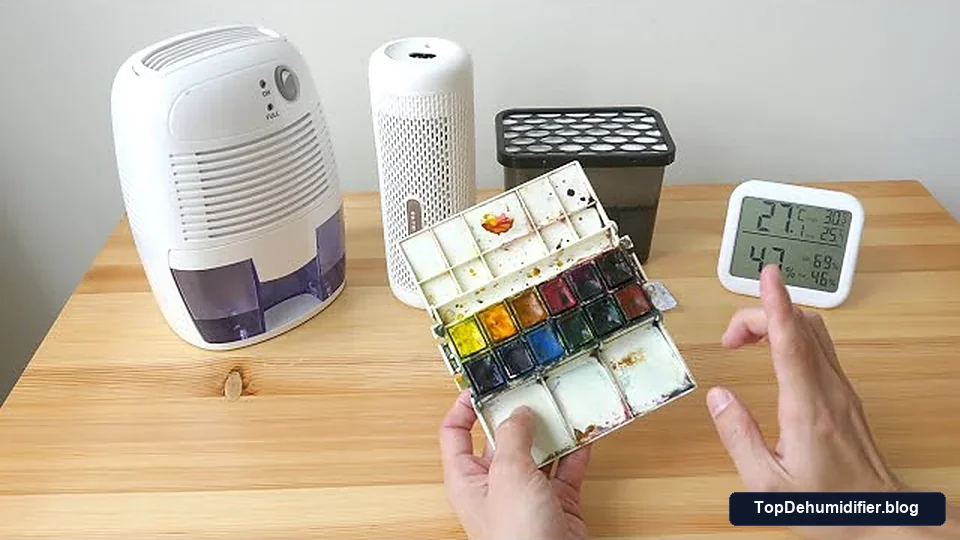
Mini electric dehumidifiers utilize Peltier thermoelectric modules powered by wall adapters. Fans draw humid air across cold heat sinks, condensing water vapor into a removable internal tank for manual disposal.
Charcoal moisture absorbers rely on passive chemical adsorption, utilizing porous activated carbon beds to trap ambient humidity. Many travelers prefer using the best moisture absorber for rv models to protect tight camper spaces.
Mini electric dehumidifiers incorporate active Peltier thermoelectric modules that use semiconductor physics to cool a localized heat sink, condensing airborne humidity into liquid water before draining it directly into an integrated collection reservoir.
- Chemical packs use disposable media.
- Peltier units employ solid-state heat pumps.
- Passive designs feature zero moving parts.
- Active units require continuous fan operation.
Structural Build Mechanics
Enclosure integrity dictates overall safety standards in cramped spaces. Charcoal units feature sealed plastic housings, whereas electric models integrate circuit boards, brushless fans, and power supply units.
Material durability varies significantly between these two distinct technologies. Passive plastic bins resist corrosive salt buildup temporarily, but electric units demand careful cleaning to prevent dust accumulation inside vents.
- Sealed plastic housings prevent spills.
- Internal circuit boards manage fans.
- Dust buildup requires routine cleaning.
Real-World Performance Comparison
Measuring actual moisture extraction rates reveals stark operational limitations. Passive carbon and salt packs remove minimal daily humidity, functioning best inside strictly sealed compartments like gym lockers or storage totes.
Thermoelectric mini units extract significantly more water daily under ideal conditions. For an alternative compact solution, read our eva-dry e-333 renewable mini dehumidifier review covering silent, unpowered silica gel technology.
Chemical absorbers extract moisture slowly, often removing less than one ounce per day depending on ambient relative humidity levels and initial placement within completely sealed, confined spaces like gun safes or small storage boxes.
Small thermoelectric units typically pull between eight to twelve ounces of water daily from moderately damp rooms, making them significantly faster for mitigating localized condensation on cold exterior walls or inside residential bathroom vanities.
- Passive packs work slowly in storage.
- Electric units extract more liquid daily.
- Cold air degrades thermoelectric performance.
Ambient Temperature Impact
Thermal dynamics heavily influence Peltier condensation efficiency. When room temperatures drop below sixty degrees Fahrenheit, the cold side of the module risks freezing, halting water collection entirely.
Chemical absorbers remain completely immune to ambient temperature fluctuations. Salt dissolution occurs regardless of cold weather, though reaction speeds slow down marginally during winter storage periods.
- Cold temperatures risk ice buildup.
- Chemical reactions resist thermal drops.
Maintenance, Efficiency and Longevity
Upkeep demands differ radically between disposable chemical media and reusable electric systems. Charcoal absorbers require zero maintenance until saturation, followed by immediate disposal and replacement of the entire unit.
Electric mini dehumidifiers demand regular filter cleaning and tank emptying. Neglecting these tasks reduces airflow, eventually burning out the small internal fan motor and ruining the solid-state cooling assembly.
Charcoal units require zero electrical upkeep but demand frequent inspection because exhausted calcium chloride or carbon media must be physically discarded and replaced once the solid pellets completely dissolve into liquid brine solution.
Electric dehumidifiers need periodic cleaning of dust filters and routine reservoir emptying, but their core solid-state assemblies offer extended operational lifespans exceeding five years if properly protected against electrical surges and dust accumulation.
- Disposable units require total replacement.
- Electric models need regular tank emptying.
- Neglected fans burn out prematurely.
Long-Term Operating Costs
Ongoing expenses dictate long-term value for budget-conscious homeowners. Purchasing replacement chemical baskets repeatedly can eventually exceed the modest electricity costs associated with running a continuous low-wattage Peltier device.
Solid-state electronics introduce potential points of failure over years of continuous operation. Passive chemical devices possess no electronic components, rendering them immune to sudden electrical surges or internal shorts.
- Replacement packs accumulate costs over time.
- Electricity bills remain very low.
- Simple physics eliminate electrical failures.
Energy Footprint and Power Consumption
Power draw separates active appliances from completely inert household solutions. Charcoal moisture absorbers consume zero electrical wattage, making them the ultimate eco-friendly choice for off-grid or remote storage locations.
Mini electric dehumidifiers typically draw between twenty and fifty watts continuously. While this represents a minor impact on monthly utility bills, it still requires an uninterrupted wall outlet connection.
Charcoal moisture absorbers operate with a zero-watt footprint, drawing no electricity whatsoever from residential power grids, making them completely silent and entirely immune to seasonal utility rate fluctuations or unexpected power outages.
Mini thermoelectric appliances typically consume roughly thirty to fifty watts continuously, running up modest monthly electricity bills while generating faint fan noise and discharging minor heat from their rear exhaust grille assemblies.
- Passive devices use zero electricity.
- Electric models require wall outlets.
- Low wattage limits utility cost impacts.
Grid Independence and Safety
Placing appliances in tight spaces introduces specific electrical safety considerations. Unattended electronic devices running continuously in enclosed wardrobes warrant proper ventilation to prevent overheating risks.
Passive chemical absorbers eliminate all fire hazards associated with faulty wiring or failing power adapters. They function safely inside closed gun safes, boat cabins, and vintage vehicle interiors indefinitely.
- Enclosed electronics require proper ventilation.
- Passive systems eliminate electrical fire risks.
Setup Ergonomics and Placement Flexibility
Spatial constraints dictate where you can successfully deploy each humidity control device. Charcoal absorbers fit into extremely tight gaps, hanging effortlessly from closet rods or resting on narrow shelves.
Peltier dehumidifiers require stable, level surfaces and adequate clearance around air intake vents. Their bulkier dimensions and power cord requirements limit placement strictly to accessible floor or tabletop areas.
Chemical containers offer exceptional placement flexibility because they require no floor space clearance near wall outlets, allowing direct positioning inside cramped drawers, tight instrument cases, or dark storage lockers without extension cords.
Electric dehumidifiers demand proximity to standard electrical outlets and require dedicated vertical clearance zones around exhaust vents to maintain proper airflow dynamics and prevent internal thermal overload during continuous daily operation cycles.
- Charcoal packs hang in tight gaps.
- Electric units need flat, open surfaces.
- Power cords restrict ideal positioning.
Noise and Vibration Factors
Acoustic output remains a critical comfort metric for bedrooms and home offices. Charcoal absorbers operate in absolute silence, whereas electric mini units emit a faint, persistent fan humming noise.
Sensitive sleepers often find small thermoelectric cooling fans disruptive during quiet nighttime hours. Passive chemical systems produce zero decibels, ensuring completely undisturbed rest in residential environments.
- Passive absorbers operate in silence.
- Electric fans emit steady hums.
Micro-Climate Suitability and Limitations
Evaluating target spaces prevents disappointing results when managing stubborn indoor dampness. Small enclosed wardrobes benefit immensely from slow-acting charcoal packs that gently regulate trapped residual moisture levels.
Small bathrooms with persistent shower steam overwhelm passive chemical absorbers instantly. For superior performance, consult our detailed pro breeze mini dehumidifier review before deploying active mechanical extraction in damp areas.
Charcoal systems perform exceptionally well inside completely sealed micro-environments where the total air volume remains strictly limited and moisture infiltration is effectively prevented by airtight rubber gaskets or heavy duty container lids.
Peltier units struggle in unheated basements because their condensing surfaces easily drop below freezing, leading to frost accumulation on heat sinks that halts moisture removal entirely until ambient temperatures rise significantly.
- Wardrobes favor slow chemical packs.
- Bathrooms require active electric extraction.
- Steam quickly overwhelms passive media.
Humidity Thresholds and Capacity
Understanding maximum absorption thresholds prevents mold growth in challenging areas. Chemical media dissolves completely once saturated, whereas electric tanks simply shut off automatically when reaching maximum liquid capacity.
Overflow risks represent a distinct operational drawback for active water collection tanks. Users must empty reservoirs promptly to prevent stagnant water pooling and subsequent bacterial growth inside the housing.
- Chemical media dissolves upon saturation.
- Electric units feature automatic shutoff.
- Reservoirs require prompt regular emptying.
Which Option Fits Your Setup
Selecting the correct technology depends entirely on your specific spatial requirements and power availability. Assess your target area dimensions, ambient temperature ranges, and tolerance for routine physical maintenance tasks.
Prioritize passive chemical units for unpowered closets, vehicles, and secure storage containers. Invest in active electric models for small habitable rooms experiencing regular humidity spikes from daily human activity.
Choose passive charcoal absorbers if you need completely silent, unpowered humidity control inside small enclosed compartments where running electrical cords poses a safety hazard or outlets are completely unavailable for use.
Opt for a mini electric dehumidifier when addressing persistent condensation in small rooms experiencing moderate humidity spikes. For mobile applications, check out the best electric dehumidifier for rv selections to manage tight spaces.
- Assess space dimensions and power access.
- Match technology to humidity severity.
- Consider ongoing maintenance preferences.
Final Decision Framework
Balance upfront convenience against long-term operational effectiveness before purchasing equipment. Review your environment's unique micro-climate challenges to ensure optimal moisture mitigation without unnecessary resource waste.
Combining both approaches across different home zones often yields the best results. Utilize passive absorbers in tight storage spaces while deploying mini electric units in active living areas.
- Evaluate long-term operational effectiveness.
- Combine methods for diverse home zones.
Frequently Asked Questions
Can a charcoal moisture absorber replace a standard room dehumidifier?
No, they only manage small, sealed spaces. Passive packs lack the capacity for entire rooms.
Do mini electric dehumidifiers work effectively in cold basements?
Their efficiency drops significantly below sixty degrees. Thermoelectric units struggle with low ambient temperatures.
How often do you need to replace charcoal absorption packs?
Replacement timing depends strictly on local humidity levels. Saturated media typically requires changing every few months.
Are mini electric dehumidifiers safe to run continuously unattended?
Yes, provided they feature automatic shutoff mechanisms. Quality appliances include built-in overflow protection sensors.
Which option is more cost-effective over a five-year period?
Electric models incur minor ongoing electrical expenses. Replacement packs can sometimes cost more over time.