Alorair vs Aprilaire: Technical Dehumidifier Face-Off
Compare Alorair's rugged commercial engineering against Aprilaire's whole-home residential sophistication. This technical guide evaluates build quality, moisture removal efficiency, and structural reliability.

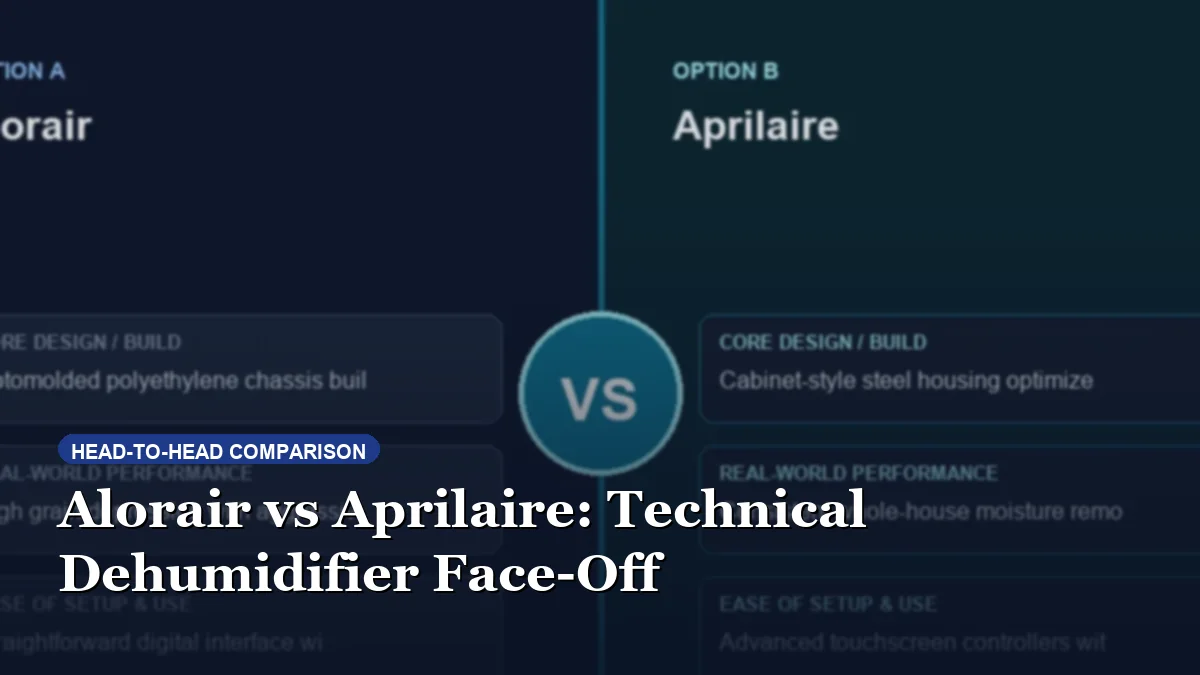
Choose Alorair for heavy-duty crawlspace extraction and rugged rotomolded durability. Select Aprilaire for seamless whole-home HVAC integration and advanced digital humidity management controls.
Compare all top models in our Best Dehumidifier: Top Picks for Healthy Indoor Air.
Side-by-Side Breakdown
| Criteria | Alorair | Aprilaire | Edge |
|---|---|---|---|
| Core Design / Build | Rotomolded polyethylene chassis built for harsh crawlspaces. | Cabinet-style steel housing optimized for mechanical rooms. | Alorair |
| Real-World Performance | High grain depression with aggressive low-temperature operation. | Consistent whole-house moisture removal with precise calibration. | Split |
| Ease of Setup & Use | Straightforward digital interface with optional remote monitoring. | Advanced touchscreen controllers with intuitive menu layouts. | Aprilaire |
| Durability & Reliability | Commercial-grade internal components withstand corrosive environments. | Corrosion-resistant coils paired with robust internal drainage. | Alorair |
| Efficiency / Operating Footprint | Optimized for continuous high-volume extraction cycles. | Energy-efficient operation meeting strict residential standards. | Aprilaire |
| Maintenance Requirements | Frequent filter checks with accessible internal condensate pumps. | Simplified annual media replacement and easy coil access. | Aprilaire |
| Best Ideal Use Case | Unconditioned crawlspaces, job sites, and heavy flood restoration. | Whole-home basements integrated directly with central HVAC ductwork. | Split |
Core Engineering and Structural Chassis Design
Evaluating structural design reveals distinct engineering priorities between these two manufacturers. Alorair relies heavily on rotomolded polyethylene shells to resist impacts and moisture damage in severe environments.
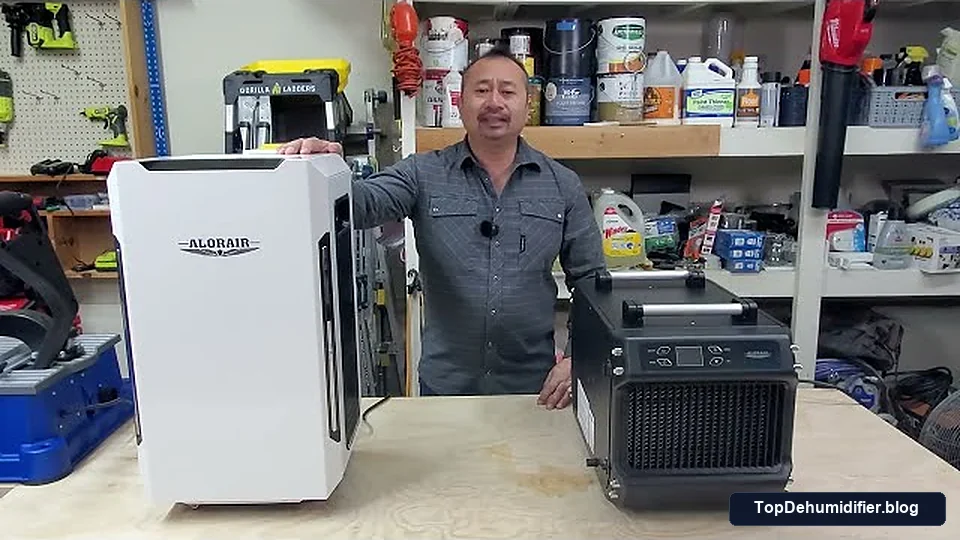
Conversely, Aprilaire utilizes powder-coated steel cabinetry tailored for clean utility rooms and conditioned basements. This fundamental difference dictates where each machine excels within real residential infrastructure.
As detailed in our AlorAir SentinelHDi65 review, these units rely heavily on rotational-molded polyethylene chassis designed to withstand harsh restoration environments while effectively resisting chemical corrosion.
Conversely, Aprilaire structures favor heavy-gauge prepainted galvanized steel cabinets optimized for permanent residential crawlspaces, prioritizing acoustic dampening and seamless integration with existing HVAC duct networks.
- Alorair uses dent-resistant rotomolded housings.
- Aprilaire opts for coated steel sheet metal.
- Chassis weight varies significantly between models.
Material Science in Humid Spaces
Crawlspaces demand materials that withstand standing water and acidic soil gasses. Alorair addresses this by eliminating exposed metal brackets inside the primary wet zone.
Aprilaire focuses on quiet operation and vibration dampening using dense internal insulation panels within its steel frame.
- Composite plastics prevent rust formation.
- Acoustic lining reduces mechanical noise output.
Moisture Extraction and Environmental Adaptation
Our Alorair SentinelHDi90 review highlights how these systems maintain high extraction rates and stable refrigerant flow rates even when ambient basement temperatures plummet significantly.
Aprilaire systems prioritize stable, continuous moisture removal matched to typical residential cooling loads. Their internal sensors react smoothly to fluctuating household occupancy and weather patterns.
Low-temperature performance depends entirely on efficient defrost cycles. AlorAir integrates a rapid automatic gas bypass system that prevents evaporator coil freeze-ups in unconditioned spaces below fifty degrees.
Aprilaire tackles low-grain extraction using precise refrigerant monitoring and balanced thermal expansion valves, maintaining high moisture removal rates across demanding residential basements without wasting electrical current.
- Low-temperature defrost cycles protect internal coils.
- Precision sensors track ambient dew point changes.
- Refrigerant charges are optimized for specific climates.
Handling Extreme Sub-Floor Conditions
Unconditioned subterranean spaces test the limits of thermal exchange components. Alorair incorporates advanced hot-gas bypass systems to prevent destructive frost accumulation on cold evaporator fins.
Aprilaire relies on software-driven cycle timing to manage frost buildup safely during prolonged spring storms.
- Hot gas defrost speeds up recovery times.
- Software algorithms prevent compressor short-cycling.
Control Interfaces and Automation Integration
Modern humidity control requires reliable digital thermostats and remote monitoring capabilities. Alorair provides clear onboard digital displays alongside optional remote sensors for tight spaces.
Aprilaire leads in home automation by integrating natively with whole-home HVAC controllers and sophisticated multi-zone wall thermostats.
As noted in our Alorair Storm LGR Extreme review, these units feature detachable digital controllers with long-distance communication cables allowing technicians to monitor relative humidity remotely.
Aprilaire units focus on home automation compatibility, offering hardwired terminals for external humidistat integration and seamless communication with standard multi-stage heating and cooling thermostats found in homes.
- Onboard digital humidistats offer simple calibration.
- External wall controls simplify remote adjustments.
- HVAC integration permits centralized system monitoring.
Smart Home Connectivity Standards
Homeowners increasingly demand smartphone visibility over basement environmental conditions. Aprilaire features dedicated app connectivity for seamless remote management.
Alorair keeps its interface utilitarian, prioritizing physical durability and fail-safe manual programming over wireless networking complexities.
- Wi-Fi thermostats enable remote alerts.
- Hardwired control lines ensure maximum reliability.
Filtration Media and Indoor Air Quality
Dehumidifiers double as air scrubbers when paired with high-efficiency filtration media. Alorair includes washable mesh filters designed to trap large airborne debris before it reaches the coils.
As evaluated in our Aprilaire E080 review, these robust appliances incorporate high-MERV pleated filters that actively capture microscopic mold spores and dust mites circulating through household ductwork.
Indoor air quality standards dictate proper particulate capture. AlorAir typically employs standard MERV-8 filters to protect internal refrigeration coils from dust during heavy-duty structural drying operations.
Conversely, Aprilaire emphasizes whole-home health by accepting upgraded MERV-13 filtration media, effectively capturing microscopic allergens, mold spores, and airborne particulate matter before circulating air through living spaces.
- Washable pre-filters reduce ongoing maintenance costs.
- High-efficiency media traps microscopic allergens.
- Regular filter changes maintain optimal airflow.
Protecting Internal Coils From Debris
Dust accumulation on evaporator fins drastically reduces thermal transfer efficiency over time. Both brands emphasize accessible filter bays to encourage routine homeowner maintenance.
Keeping coils clean ensures the compressor operates within safe thermal parameters throughout its multi-year lifespan.
- Clean coils maximize energy efficiency.
- Accessible service doors simplify filter replacement.
Installation Flexibility and Ducting Layouts
Physical placement constraints often dictate which equipment type a contractor selects. Alorair designs compact footprints suited for tight crawlspace entry points and low clearance zones.
Aprilaire units are engineered for flexible supply and return duct connections, allowing seamless integration into existing central forced-air networks.
Jobsite versatility demands multiple discharge configurations. AlorAir models include optional collar kits for lay-flat ducting attachment, directing dry air precisely into wall cavities or subfloor voids.
Residential installations require rigid duct connectivity. Aprilaire provides secure intake and exhaust collar flanges designed for standard rigid ductwork, ensuring balanced static pressure across whole-house distribution systems.
- Compact chassis fit through narrow access hatches.
- Collar attachments allow multi-room duct routing.
- Gravity drainage requires careful elevation planning.
Condensate Management Solutions
Removing extracted water efficiently prevents secondary structural flooding incidents. Alorair typically includes integrated condensate pumps with generous vertical lift capabilities.
Aprilaire offers flexible gravity drainage options alongside reliable auxiliary pump kits for complex basement configurations.
- Internal pumps manage high vertical lifts.
- Safety float switches prevent overflow disasters.
Power Consumption and Operating Efficiency
Electrical efficiency remains a critical metric for continuous-run moisture control appliances. Alorair compressors balance high power draw with maximum water extraction throughput.
Aprilaire focuses on energy-star certified performance that minimizes utility bill impacts during humid summer months.
Energy efficiency remains vital for continuous operation. Aprilaire dehumidifiers utilize high-efficiency compressors and optimized refrigerant charges to achieve superior Energy Factor ratings per kilowatt-hour consumed.
AlorAir systems focus strictly on high-volume water extraction speed over baseline wattage, deploying heavy-duty motors that maximize daily moisture removal totals during emergency flood restoration work.
- Amperage draws reflect heavy-duty compressor capacities.
- Energy Star ratings validate efficient power usage.
- Proper sizing prevents wasteful electrical consumption.
Optimizing Duty Cycles for Longevity
Continuous running wears out mechanical parts faster than intermittent cycling. Both manufacturers build robust electrical relays designed to handle thousands of startup sequences.
Properly matched capacity ensures the unit reaches target humidity levels without running constantly.
- Heavy-duty relays resist electrical pitting.
- Smart sensors reduce unnecessary compressor wear.
Maintenance Protocols and Long-Term Serviceability
Routine upkeep preserves performance efficiency and extends equipment lifespan significantly. Alorair simplifies internal component access through removable side panels and modular assemblies.
Aprilaire provides comprehensive service manuals and readily available replacement parts for long-term HVAC maintenance.
Routine maintenance preserves long-term functionality. AlorAir units feature easily accessible internal components and quick-release condensate pumps that simplify emergency field repairs and annual cleaning procedures.
Aprilaire equipment emphasizes straightforward filter replacement access and durable internal drainage paths designed for unattended multi-season operation, minimizing required service visits in residential crawlspaces.
- Modular internal components speed up technician repairs.
- Clear diagnostic error codes simplify troubleshooting.
- Annual professional inspections ensure warranty compliance.
Troubleshooting Common Operational Faults
Understanding error indicators helps users resolve minor issues before calling technicians. Alorair displays clear digital codes for sensor failures and drainage errors.
Aprilaire controllers similarly alert homeowners to airflow restrictions and low refrigerant warnings.
- Digital error codes pinpoint sensor failures.
- Routine checks prevent catastrophic compressor damage.
Frequently Asked Questions
Which brand is better for unconditioned crawlspaces?
Alorair excels in harsh crawlspaces due to its rugged rotomolded build and corrosion-resistant commercial components. These units handle damp, unconditioned sub-floor environments exceptionally well.
Can Aprilaire integrate with my existing HVAC system?
Yes, Aprilaire is specifically designed for seamless whole-home integration with central ductwork and advanced digital thermostats. This allows centralized humidity control across multiple zones.
Do both brands include built-in condensate pumps?
Alorair frequently integrates heavy-duty internal pumps with high lift capacities. Aprilaire models often provide flexible gravity drainage alongside optional auxiliary pump kits.
How often should filters be replaced or cleaned?
Filters should be inspected monthly and cleaned or replaced every three to six months. Maintaining clean filters ensures optimal airflow efficiency and protects internal coils.
Which dehumidifier offers better energy efficiency?
Aprilaire generally prioritizes Energy Star certification for residential whole-home applications. Alorair focuses primarily on maximum extraction volume under extreme environmental conditions.