Alorair vs Aprilaire Crawl Space Dehumidifier: Technical Verdict
Comparing Alorair and Aprilaire crawl space dehumidifiers highlights major design, control, and performance differences for residential moisture management.

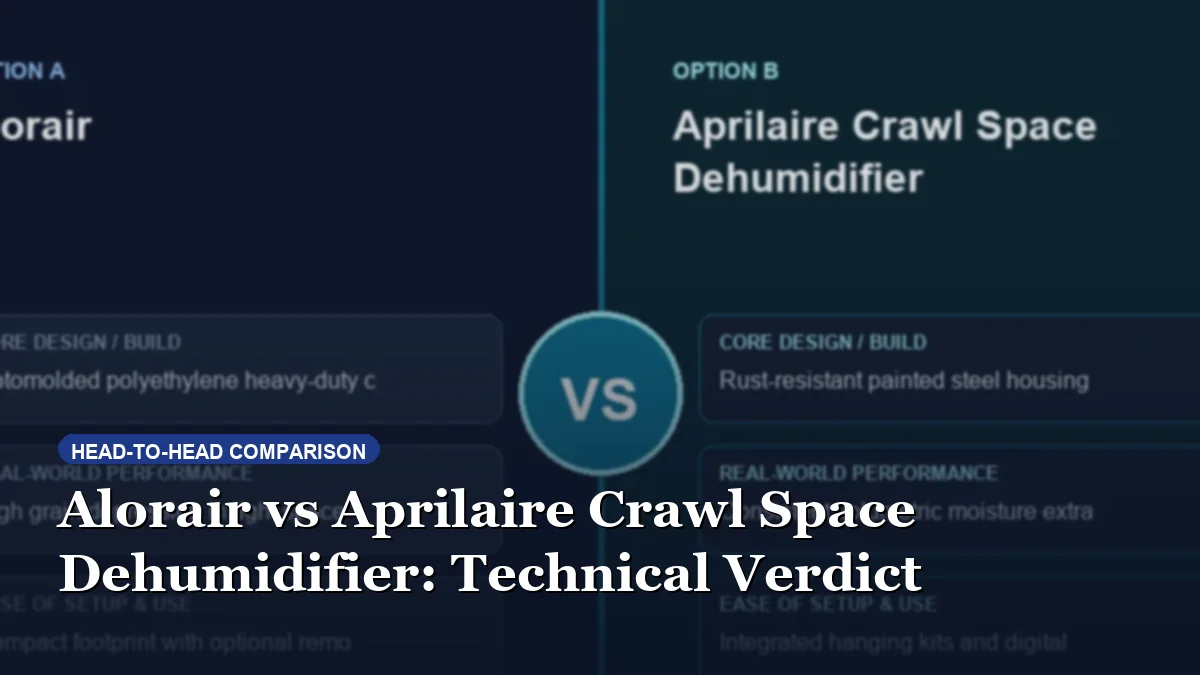
Choose Alorair for rugged commercial-grade builds and high static pressure, or select Aprilaire for advanced residential automation and precise humidity control.
Compare all top models in our Best Dehumidifier: Top Picks for Healthy Indoor Air.
Side-by-Side Breakdown
| Criteria | Alorair | Aprilaire Crawl Space Dehumidifier | Edge |
|---|---|---|---|
| Core Design / Build | Rotomolded polyethylene heavy-duty chassis | Rust-resistant painted steel housing | Alorair |
| Real-World Performance | High grain depression in tight spaces | Consistent volumetric moisture extraction | Aprilaire |
| Ease of Setup & Use | Compact footprint with optional remote mounting | Integrated hanging kits and digital display | Aprilaire |
| Durability & Reliability | Epoxy-coated coils for corrosion resistance | Commercial-grade internal components and sensors | Tie |
| Efficiency / Operating Footprint | Optimized energy factor per pint removed | Energy Star compliant low amp draw | Aprilaire |
| Maintenance Requirements | Washable MERV-8 filters and quick drain | Easy-access slide-out filtration panels | Alorair |
| Best Ideal Use Case | Severe subterranean moisture and damp subfloors | Whole-home integration and automated monitoring | Split |
Core Engineering and Mechanical Design Philosophy
Evaluating crawl space dehumidification systems requires examining how manufacturers engineer their chassis for subterranean environments. Subterranean environments demand robust protection against standing water, ambient dirt, and high relative humidity levels.
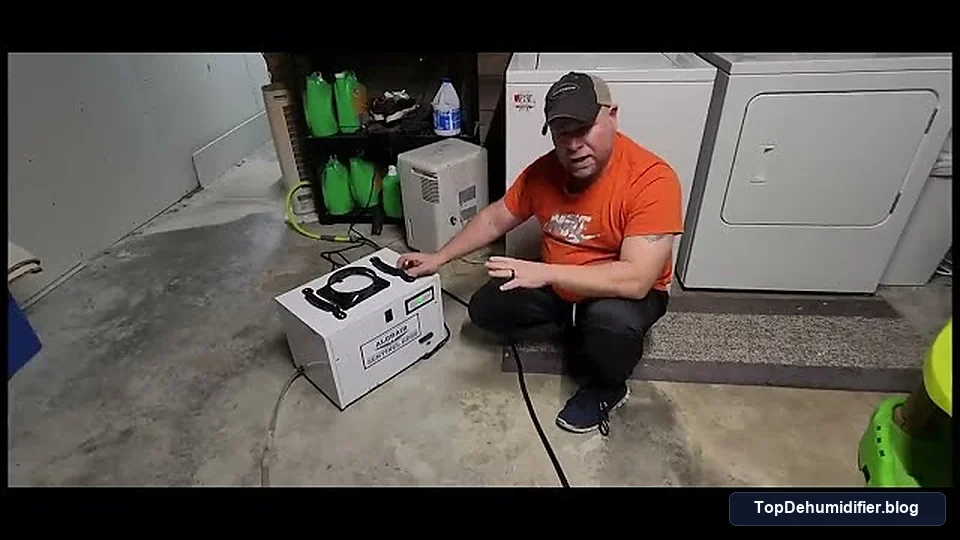
Alorair builds its units using rotomolded polyethylene shells designed to withstand physical impacts and chemical corrosion. This heavy-duty approach mirrors portable restoration equipment used in structural drying and flood mitigation scenarios.
Aprilaire opts for heavy-gauge steel cabinets finished with powder coating to prevent rust formation. Their design emphasizes clean residential integration and quiet mechanical operation within confined foundation perimeters.
Exploring options like our Alorair SentinelHDi90 crawl space dehumidifier review reveals robust rotomolded polyethylene chassis designed to withstand harsh crawl space environments while protecting internal coils.
Conversely, Aprilaire engineering focuses on commercial-grade steel cabinets with baked-on epoxy powder coating. This provides exceptional structural rigidity while maintaining a compact footprint suited for tight joist layouts found in residential foundations.
Both manufacturers incorporate heavy-duty compressors mounted on rubber isolation feet. These dampeners successfully minimize structural vibration transfer, reducing operational noise and preventing premature wear on copper tubing connections throughout long duty cycles.
- Rotomolded polyethylene resists denting and moisture degradation.
- Powder-coated steel provides rigid structural integrity.
- Internal frame layouts prioritize airflow optimization.
Chassis Materials and Corrosion Resistance
Corrosion represents the primary enemy of any mechanical appliance operating below ground level. Both brands incorporate protective coatings onto their internal refrigeration coils to prevent premature refrigerant leaks.
Alorair utilizes an epoxy-coated coil design that guards against acidic soil gases. Aprilaire applies similar protective treatments to ensure long operational lifespans in damp crawl spaces.
- Epoxy coil coatings extend lifespan in aggressive soils.
- Sealed electronic compartments protect control boards from moisture.
Moisture Extraction Capacity and Real-World Performance
Nominal pint capacities listed on paper often differ significantly from actual water removal rates underground. Crawl spaces present unique thermodynamic challenges due to fluctuating ground temperatures and constant vapor drive.
Alorair units excel at maintaining high grain depression under low-temperature conditions. This capability ensures continuous moisture removal even when ambient subfloor temperatures drop below standard testing thresholds.
Aprilaire systems focus on delivering steady volumetric extraction across standard residential operating ranges. Their internal compressors balance refrigerant pressures to maximize daily water removal efficiency.
AlorAir systems are rated using AHAM conditions, typically extracting high daily moisture volumes. Their oversized evaporator coils maximize thermal exchange surface area, enabling efficient water removal even in severe sub-floor humidity.
Aprilaire models deliver precise dehumidification capacity backed by rigorous testing standards. Their internal systems excel at maintaining low dew points, preventing wood rot and mold proliferation across vulnerable floor joists.
Real-world performance heavily depends on incoming airflow and static pressure. Restricted duct runs can degrade extraction efficiency, making proper duct sizing critical for achieving rated pint capacities in confined crawl spaces.
- Alorair prioritizes low-temperature extraction performance.
- Aprilaire optimizes volumetric output for average conditions.
- Both units require proper sizing relative to square footage.
Airflow Dynamics and Static Pressure
Moving conditioned air through complex crawl space layouts requires powerful internal blowers. High static pressure capabilities allow operators to attach ductwork for multi-zone moisture distribution.
As detailed in our Aprilaire E080 crawl space dehumidifier review, these systems provide balanced airflow designed for open-bay configurations while minimizing mechanical noise during continuous operation.
- Ducting flexibility improves air circulation in corners.
- Blower speed settings adapt to varying floor obstacles.
Chassis Ergonomics and Crawl Space Installation
Installing heavy equipment through small crawl space access doors tests the patience of any technician. Weight distribution, handle placement, and overall unit geometry dictate how easily a system positions.
Alorair incorporates recessed handles and balanced weight distribution into its compact rectangular housing. This makes sliding the unit over gravel or soil much simpler during initial positioning.
Aprilaire features low-profile designs specifically engineered for tight vertical clearances found beneath older homes. Integrated hanging brackets allow elevated installation to keep equipment clear of potential puddles.
Maneuvering equipment through narrow crawl space access doors requires thoughtful ergonomic design. AlorAir integrates recessed folding handles and balanced weight distribution to ease transportation across uneven dirt sub-floors.
Aprilaire units feature stackable profiles and integrated hanging kits, simplifying suspended installations. This flexibility allows technicians to mount the appliance clear of potential standing water, protecting vital electrical components.
Condensate management remains a critical installation factor for both brands. Utilizing gravity drainage or reliable internal condensate pumps ensures continuous water removal without requiring manual tank emptying in remote locations.
- Recessed handles simplify transport through small access doors.
- Low-profile heights fit beneath floor joists easily.
- Optional hanging kits protect against standing water.
Drainage Configuration and Gravity Routing
Managing condensate removal reliably prevents secondary water damage inside enclosed foundations. Gravity drainage works well if the exit point sits lower than the unit drain port.
Alorair includes continuous gravity drainage ports alongside optional internal condensate pumps. Aprilaire similarly offers flexible hose routing options to accommodate various floor slopes.
- Gravity drain ports require downward slope positioning.
- Condensate pumps lift water vertically when needed.
Control Systems, Automation, and Remote Monitoring
Modern crawl space dehumidifiers rely heavily on digital control boards rather than basic mechanical dials. Precise sensor readings ensure the system activates only when relative humidity exceeds safe thresholds.
Aprilaire leads in residential automation by offering sophisticated digital controllers with wi-fi connectivity. Homeowners can monitor subfloor conditions remotely via dedicated smartphone applications without entering the crawl space.
Alorair provides straightforward digital interfaces with optional remote control boxes. Their systems focus on reliable onboard humidistats designed to withstand dusty, humid operating environments reliably.
Modern crawl space dehumidification demands reliable automated control systems. AlorAir features intuitive digital display panels with memory starting, allowing the unit to resume previous settings automatically after power interruptions.
Aprilaire systems offer advanced digital humidistats with multi-stage programming capabilities. These controllers integrate smoothly with HVAC systems and provide accurate relative humidity readings via external wall sensors.
Remote monitoring accessories enhance operational oversight without requiring physical entry. Technicians and homeowners can track operating hours, current humidity levels, and fault codes using dedicated Wi-Fi modules.
- Wi-fi integration enables remote monitoring and alerts.
- Onboard humidistats offer set-and-forget simplicity.
- Digital displays show accurate inlet and outlet readings.
Humidistat Accuracy and Calibration
Accurate relative humidity sensing prevents mold growth while avoiding unnecessary energy consumption. Both manufacturers utilize electronic sensors mounted directly in the incoming airstream for precision.
Calibration stability ensures the unit does not drift out of specification over years of continuous operation. Users can adjust target humidity setpoints easily via the primary control panels.
- Incoming airstream sensors measure true ambient conditions.
- Adjustable deadbands prevent rapid compressor cycling.
Energy Efficiency and Electrical Load Profiles
Running a heavy appliance continuously throughout the humid summer months impacts residential utility bills significantly. Evaluating energy efficiency ratios helps identify which machine consumes fewer watts per pint extracted.
Aprilaire designs its refrigeration circuits to meet strict Energy Star guidelines for power consumption. Their optimized compressors reduce electrical draw while maintaining high moisture removal rates.
Alorair balances high-output commercial performance with efficient electronic management. While total wattage may run slightly higher due to powerful blowers, the overall energy factor remains competitive.
Energy consumption is a vital operational metric for continuous-duty crawl space appliances. AlorAir utilizes high-efficiency rotary compressors designed to maximize energy factor ratings while minimizing electrical draw.
Aprilaire balances high moisture removal rates with stringent electrical efficiency standards. Their integrated transformer designs manage internal voltage spikes safely, protecting sensitive control boards from power surges.
Operating on standard 115-volt circuits, both brands require dedicated breakers to prevent tripping. Proper wire sizing and secure grounding remain essential for safe, long-term electrical performance in damp environments.
- Energy Star compliance lowers long-term operational costs.
- Optimized compressors reduce peak electrical load spikes.
- Low amp draws prevent circuit breaker trips.
Defrost Cycles and Cold Weather Operation
Low subfloor temperatures can cause frost to accumulate on evaporator coils, halting moisture removal entirely. Automated defrost mechanisms restore normal operating conditions quickly without manual intervention.
Alorair utilizes an automatic hot gas defrost system that melts ice rapidly in chilly environments. Aprilaire employs cycle-based defrost controls to maintain efficiency during shoulder seasons.
- Hot gas defrost ensures continuous operation in cold spaces.
- Automated cycles protect compressors from liquid slugging.
Filtration, Maintenance, and Long-Term Durability
Crawl spaces contain high concentrations of dust, mold spores, and airborne debris that clog internal coils quickly. Regular filter maintenance is essential to preserve airflow and prevent compressor burnout.
Alorair equips its machines with washable MERV-8 filters that capture large particulate matter effectively. Cleaning these filters requires simple rinsing with water and routine air drying.
Aprilaire utilizes accessible slide-out filtration panels designed for fast replacement during seasonal checkups. Their filtration media protects internal refrigeration components from accumulating stubborn dirt layers.
Protecting internal coils from particulate accumulation requires reliable filtration media. AlorAir includes washable MERV-8 filters that trap dust and mold spores, preventing debris buildup on delicate aluminum fins.
Aprilaire incorporates MERV-13 filtration options, capturing microscopic allergens alongside standard dust particles. Regular filter replacement maintains optimal airflow, preventing compressor overheating and extending total equipment lifespan.
Long-term durability ultimately depends on routine preventative maintenance schedules. Periodic coil cleaning and condensate line flushing prevent bio-slime accumulation, ensuring reliable operation across multi-year service intervals.
- Washable MERV-8 filters reduce ongoing consumable expenses.
- Slide-out access panels simplify routine filter swaps.
- Coil protection minimizes severe dust accumulation.
Expected Lifespan and Warranty Coverage
Choosing options from our best dehumidifier for crawl space guide represents a significant commitment to home structural health backed by robust warranty terms covering critical components.
Both brands back their primary refrigeration systems with multi-year warranties. Proper installation and adherence to routine cleaning schedules remain vital for maximizing equipment lifespan.
- Multi-year warranty coverage protects major internal parts.
- Routine maintenance validates manufacturer performance guarantees.
Direct Comparison and Final Selection Guide
Choosing between these two reputable brands depends heavily on your specific installation environment and automation preferences. Every foundation exhibits unique moisture profiles requiring careful equipment matching.
Select Alorair if your crawl space experiences severe dampness, tight spatial constraints, or requires heavy-duty ducting runs. Their rotomolded chassis and powerful blowers handle harsh subterranean extremes exceptionally well.
Choose Aprilaire if you prioritize seamless smart home integration, precise digital controls, and certified energy efficiency. Their refined residential build quality fits standard encapsulated foundations perfectly.
Choosing between these brands depends heavily on specific structural constraints and budget parameters. AlorAir excels in raw extraction value and rugged rotomolded durability for challenging sub-floor spaces.
Aprilaire provides superior integration with whole-home HVAC controls and refined steel construction. This makes it an ideal option for homeowners prioritizing precise humidity management and sleek aesthetic finishes.
Evaluating options inside our best rated crawl space dehumidifier roundup will guide your final purchasing decision, guaranteeing a dry, healthy foundation environment for decades.
- Alorair suits heavy-duty commercial-style applications.
- Aprilaire excels in smart home automation and efficiency.
- Proper sizing ensures optimal moisture control outcomes.
Making Your Final Purchasing Decision
Review your subfloor layout, local humidity levels, and electrical access points before finalizing your selection. Consulting with a local waterproofing professional can also confirm your exact pint capacity requirements.
Investing in the correct unit protects floor joists, insulation, and indoor air quality for decades. Take time to evaluate every technical specification carefully prior to installation.
- Assess local climate and subfloor moisture levels.
- Verify electrical circuit capacity before setup.
Frequently Asked Questions
Which brand offers better low-temperature performance?
Alorair units typically excel in chilly subfloors due to their hot gas defrost systems. This technology prevents coil freezing during shoulder seasons.
Can I monitor my crawl space dehumidifier remotely?
Aprilaire models offer advanced wi-fi connectivity for smartphone monitoring. Alorair relies more on hardwired digital controls and optional remotes.
Do I need a condensate pump for these units?
Gravity drainage works if your exit point sits lower than the machine. A condensate pump is necessary when lifting water vertically.
How often should I clean the air filters?
Inspect your filters every few months to ensure proper airflow. Washable filters require simple rinsing and complete drying before reinstallation.
Which dehumidifier is easier to install in tight spaces?
Alorair features a compact rotomolded chassis with recessed handles for easy positioning. Aprilaire provides low-profile designs with optional hanging brackets.