50 Pint vs 70 Pint Dehumidifier: Technical Comparison
Choosing between these moisture extraction units requires evaluating room volume, structural humidity levels, and daily electrical draw.

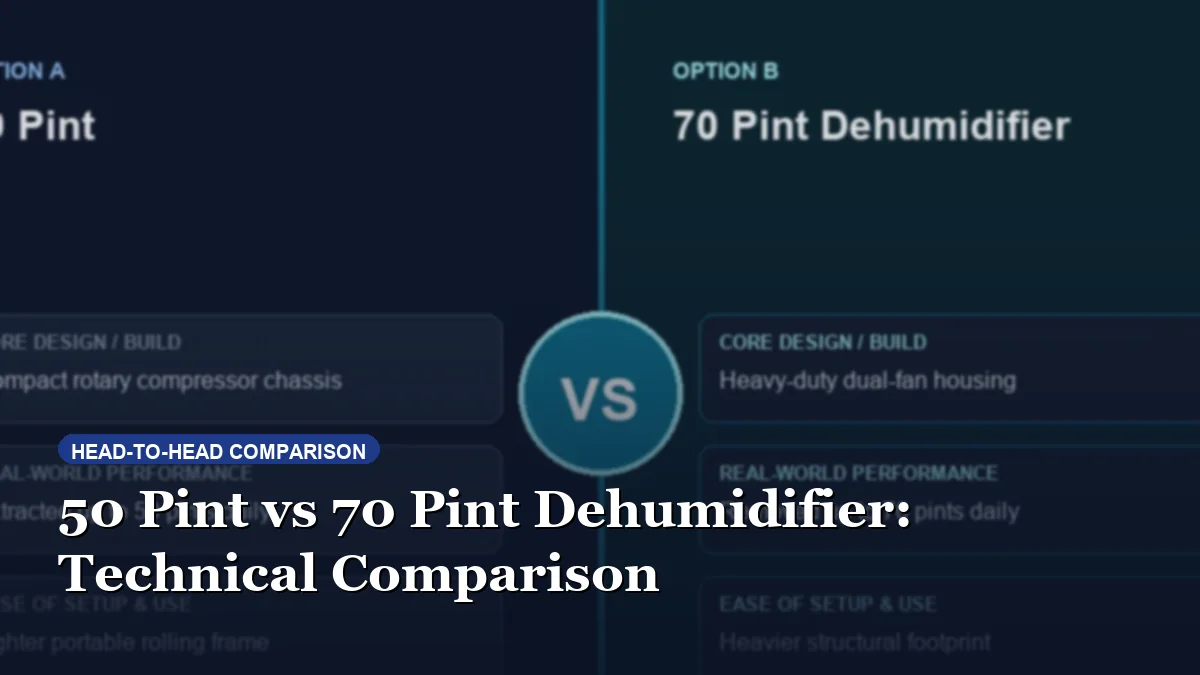
Select the 50 pint model for moderate basements, while the 70 pint unit suits large damp crawlspaces.
Compare all top models in our Best Dehumidifier: Top Picks for Healthy Indoor Air.
Side-by-Side Breakdown
| Criteria | 50 Pint | 70 Pint Dehumidifier | Edge |
|---|---|---|---|
| Core Design / Build | Compact rotary compressor chassis | Heavy-duty dual-fan housing | Side B |
| Real-World Performance | Extracted up to 50 pints daily | Removed up to 70 pints daily | Side B |
| Ease of Setup & Use | Lighter portable rolling frame | Heavier structural footprint | Side A |
| Durability & Reliability | Standard residential thermal overload | Commercial-grade copper condenser coils | Side B |
| Efficiency / Operating Footprint | Lower continuous amperage draw | Higher wattage consumption profile | Side A |
| Maintenance Requirements | Bi-weekly mesh filter rinsing | Monthly antibacterial tank sanitization | Side A |
| Best Ideal Use Case | Standard 2500 sq ft basements | Severe moisture commercial zones | Side B |
Evaluating Typical Uses and Moisture Loads
Residential moisture control demands precise sizing based on exact square footage and local ambient relative humidity levels. Undersized units run continuously without achieving target dryness metrics across your living spaces.
A standard fifty pint capacity machine comfortably handles medium basements experiencing occasional dampness. Heavy infiltration scenarios require robust extraction capacities to prevent structural mold colonization and wood rot.
Analyzing typical uses ensures you match equipment capability directly to environmental severity. Overloading a smaller appliance accelerates mechanical wear on internal rotary compressors and fan motors over time.
Selecting between a 50-pint and a 70-pint unit requires calculating total square footage alongside baseline relative humidity levels in your specific residential or commercial environment to prevent compressor overload.
Basements exceeding 1,500 square feet with active moisture seepage generally demand the higher extraction capacity of a 70-pint model to maintain target humidity below the mold threshold.
Crawlspaces and sealed utility rooms featuring moderate dampness can operate efficiently with models from our best 50 pint dehumidifier guide without consuming excessive electrical current during continuous daily duty cycles.
- Basement square footage calculations
- Ambient relative humidity thresholds
- Continuous versus intermittent duty cycles
Residential Application Scenarios
Homeowners often miscalculate total moisture loads by ignoring subterranean water seepage through concrete walls. Proper equipment selection relies on accurate dew point measurements and continuous airflow assessments.
Selecting appropriate extraction power prevents persistent musty odors and protects stored belongings from moisture damage. Energy efficiency standards favor units running at optimal load capacities.
- Subterranean wall seepage factors
- Dew point measurement techniques
Filter Cartridge Dimensions and Housing Specs
Internal filter cartridge dimensions dictate maintenance frequency and overall particulate capture efficiency during operation. Clean washable mesh screens maintain unobstructed airflow across aluminum evaporator coil fins.
Larger seventy pint chassis designs incorporate expanded surface area filters to handle higher volumetric CFM ratings, similar to those analyzed in our midea cube 50 pint dehumidifier review.
Replacing or washing filtration media regularly ensures optimal heat transfer and prevents dust accumulation on delicate copper tubing structures.
Washable mesh filters on 50-pint units typically measure roughly twelve by eight inches, requiring bi-weekly cleaning to prevent airflow restrictions across the evaporator coils.
Heavy-duty 70-pint chassis designs incorporate larger frame dimensions and reinforced ABS plastic housings to withstand continuous vibration from high-torque rotary compressors operating under heavy loads.
Access panels must seal tightly against internal static pressure drops, preventing untreated ambient air from bypassing the primary filtration media and accumulating dust on cold refrigerant tubing.
- Washable mesh screen construction
- Volumetric CFM rating alignment
- Evaporator coil fin protection
Airflow Mechanics and Filtration
Maintaining proper clearance around intake grilles maximizes moisture removal rates in enclosed environments. Restricted airflow reduces condensing efficiency and increases compressor operating temperatures.
Technical equipment editors recommend monthly inspections of filter integrity to catch tearing or degradation early. Proper airflow design directly influences long-term mechanical reliability.
- Intake grille clearance rules
- Monthly filter integrity checks
Heavy-Duty Component Types and Engineering
Industrial-grade units utilize robust internal components comparable to heavy-duty mechanical assemblies found in specialized equipment. Heavy compressor mountings minimize vibration and reduce operational noise pollution.
Comparing structural build quality reveals significant differences in sheet metal gauge thickness and compressor insulation. High-capacity units feature reinforced chassis designs built for continuous commercial operation.
Understanding internal component durability helps technicians estimate total operational lifespans under aggressive environmental conditions.
Rotary compressors utilized in units featured within our best 70 pint dehumidifier for basement guide feature heavier copper winding gauges and enhanced thermal overload relays designed for extended run times.
Evaporator and condenser coils in high-capacity commercial units use hydrophilic aluminum fins to accelerate condensate drainage toward the collection pan, minimizing standing water retention.
Electronic control boards on modern cooling units integrate microprocessor monitoring to safely track defrost cycles, ambient temperatures, and compressor health indicators without premature failure.
- Heavy compressor mounting brackets
- Sheet metal gauge thickness
- Continuous commercial operation standards
Compressor and Coil Engineering
Rotary compressors in larger units feature enhanced thermal overload protection circuits to prevent burnout. Copper tubing thickness directly impacts resistance to refrigerant pressure spikes.
Quality manufacturing standards ensure hermetic sealing of refrigerant lines throughout years of heavy continuous cycling in damp environments.
- Thermal overload protection circuits
- Hermetic refrigerant line sealing
Drainage Connection Fittings and Management
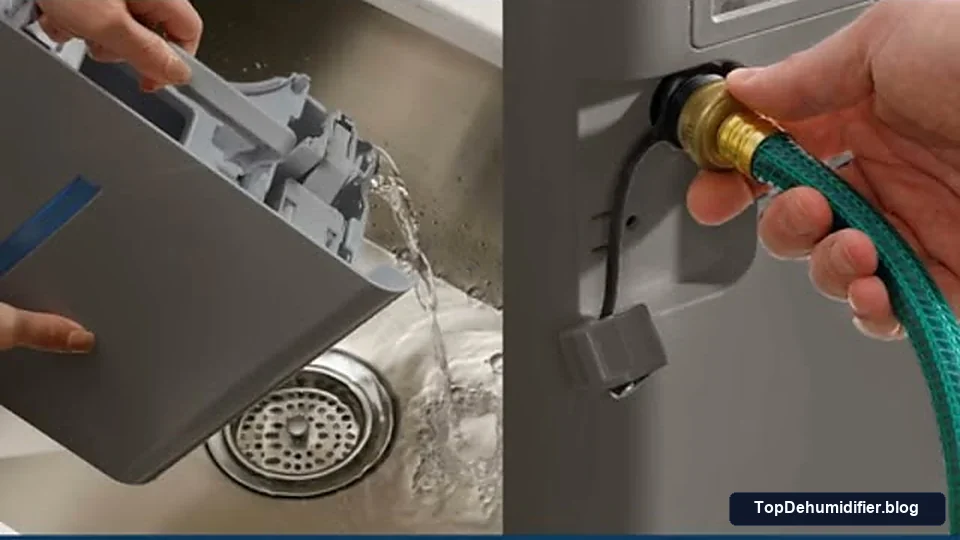
Gravity drainage setups require reliable hose fittings to prevent accidental basement flooding during extended unattended operation. Threaded brass connectors offer superior leak prevention compared to standard plastic alternatives.
Internal condensate pumps provide vital elevation lift for routing discharge lines through overhead joists or utility sinks. Proper hose routing avoids kinks that restrict continuous water evacuation.
Evaluating drainage configurations ensures safe, hands-off operation during peak humidity seasons without manual bucket emptying chores.
Gravity drain ports located on standard models accept standard garden hose fittings, allowing uninterrupted continuous drainage without relying on frequent manual bucket emptying routines.
Integrated condensate pumps found on select heavy-duty models utilize internal check valves to push extracted moisture vertically up to fifteen feet through flexible vinyl tubing.
Proper hose routing prevents dangerous kinks and air locks that can cause internal overflows, protecting flooring materials and subfloor joists from sustained water damage hazards.
- Threaded brass hose connectors
- Internal condensate pump lift
- Kink-free hose routing standards
Continuous Drainage Configurations
Gravity-fed drainage works efficiently when units sit elevated above floor drain openings. Installing secure hose clamps prevents accidental detachment from vibration during compressor cycles.
Pump-equipped models manage vertical water lifts effectively when floor drains are distant or elevated.
- Gravity-fed drainage mechanics
- Secure hose clamp installation
Efficiency Compliance and Regulatory Issues
Modern energy regulations mandate strict efficiency thresholds for residential and commercial moisture extraction appliances. Energy Star certification guarantees lower electrical consumption during prolonged operational cycles.
Compliance with current Department of Energy test procedures ensures accurate reporting of integrated energy factor metrics. Navigating these regulatory standards helps consumers identify genuinely efficient appliances.
Lower power consumption translates directly to reduced utility expenditures over years of seasonal basement operation.
Modern energy standards require all certified units to meet strict Energy Star ratings that dictate maximum integrated energy factor thresholds for moisture removal efficiency.
Refrigerant phase-outs mandate the use of environmentally safer compounds like R-32 or R-410A, which operate at specific pressures requiring specialized charging and recovery procedures.
Electrical safety certifications issued by recognized agencies like UL or ETL ensure that high-draw appliances meet rigorous thermal and current protection limits under fault conditions.
- Energy Star certification standards
- Department of Energy test protocols
- Integrated energy factor metrics
Energy Star and Power Metrics
Advanced humidistat controls cycle compressors intelligently to avoid unnecessary electricity consumption in stable environments. Precise sensors monitor ambient moisture levels to optimize run times.
Reviewing electrical specifications prevents circuit overloads when operating high-capacity units alongside other heavy appliances.
- Intelligent humidistat cycling
- Electrical specification reviews
High-Capacity Performance Equivalents
Comparing moisture removal rates requires standardized testing conditions at specific temperature and relative humidity baselines. Seventy pint units deliver unmatched extraction power for severely water-damaged structures.
Fifty pint appliances offer balanced efficiency for average homes requiring moderate humidity suppression without excessive power draw. Selecting the correct capacity prevents short-cycling and inadequate drying results.
Performance data empowers buyers to choose equipment that matches their specific environmental remediation demands.
Comparing unit extraction rates requires fully understanding that AHAM test conditions measure performance at strict temperature and relative humidity parameters unlike typical basement environments.
Real-world operating efficiency drops significantly in cooler spaces, though options featured in our best 50 pint dehumidifier for basement roundup provide adequate extraction margins for subterranean foundations.
Evaluating overall mechanical longevity involves thoroughly assessing compressor duty cycles, sealed-system refrigerant lines, and structural chassis rigidity against everyday high-volume moisture load demands over time.
- Standardized testing conditions
- Severe water damage remediation
- Balanced residential efficiency profiles
Extraction Rate Benchmarks
Laboratory benchmarks demonstrate how temperature fluctuations alter daily water removal volumes significantly. Real-world performance often varies based on local climate characteristics and room insulation.
Technical editors emphasize reviewing AHAM rating standards rather than relying solely on raw marketing claims.
- Temperature fluctuation impacts
- AHAM rating standard compliance
Frequently Asked Questions
What is the primary operational difference between these two capacities?
The seventy pint unit handles severe subterranean moisture loads, whereas the fifty pint model suits moderate residential spaces.
How does continuous drainage setup affect everyday maintenance requirements?
Proper gravity hose installation eliminates manual bucket emptying entirely, ensuring unattended reliable operation throughout humid summer months.
Are higher capacity units significantly more expensive to run electrically?
Larger compressors consume more wattage, but Energy Star certification helps mitigate excessive utility cost increases during continuous operation.
Why is regular filter cleaning crucial for dehumidifier longevity?
Washable mesh filters prevent dust buildup on coils, ensuring optimal thermal exchange efficiency and preventing motor burnout.
When should an internal condensate pump be utilized?
Internal pumps are necessary when drainage locations sit higher than the unit base, providing reliable vertical water lift capabilities.