20 Pint vs 35 Pint Dehumidifier: Technical Matchup
Choosing the right capacity prevents moisture damage and energy waste. Evaluate square footage and ambient humidity carefully before purchasing.

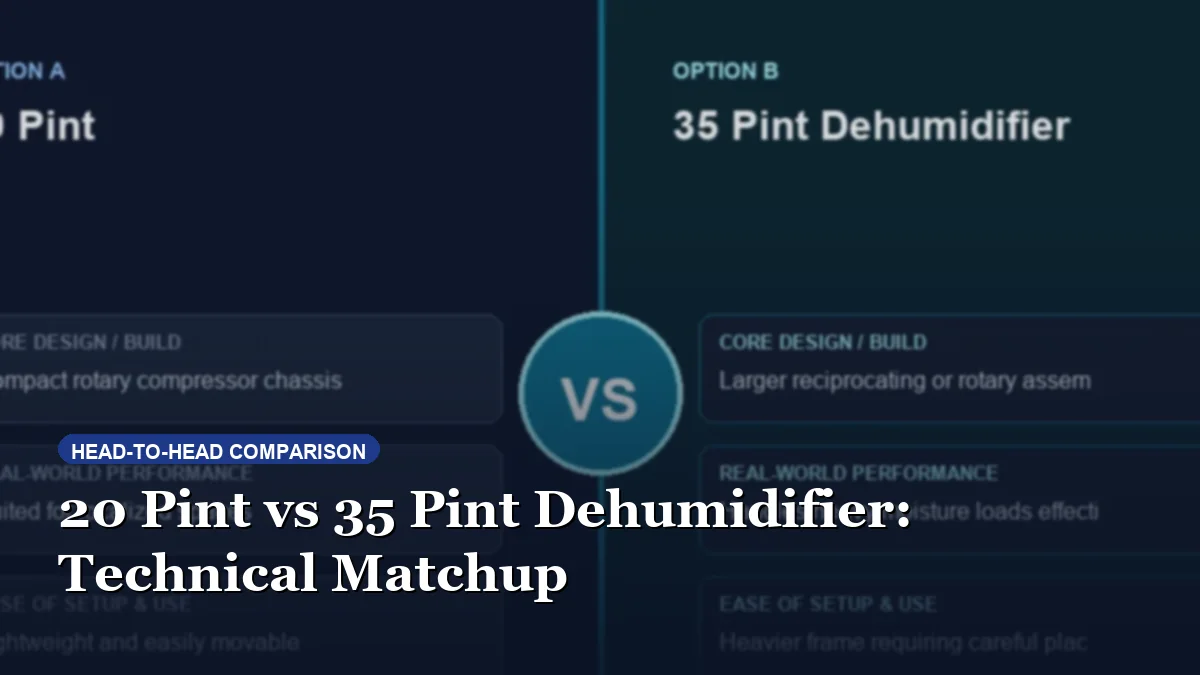
Pick the 20 pint model for small bedrooms and tight closets. Choose the 35 pint unit for damp basements and larger open living areas.
Compare all top models in our Best Dehumidifier: Top Picks for Healthy Indoor Air.
Side-by-Side Breakdown
| Criteria | 20 Pint | 35 Pint Dehumidifier | Edge |
|---|---|---|---|
| Core Design / Build | Compact rotary compressor chassis | Larger reciprocating or rotary assembly | 35 Pint Dehumidifier |
| Real-World Performance | Suited for localized spaces | Handles heavy moisture loads effectively | 35 Pint Dehumidifier |
| Ease of Setup & Use | Lightweight and easily movable | Heavier frame requiring careful placement | 20 Pint |
| Durability & Reliability | Standard residential grade components | Reinforced coils for continuous cycles | 35 Pint Dehumidifier |
| Efficiency / Operating Footprint | Lower absolute energy draw | Higher wattage but better moisture per watt | 35 Pint Dehumidifier |
| Maintenance Requirements | Frequent bucket emptying needed | Larger reservoir or continuous gravity drain | 35 Pint Dehumidifier |
| Best Ideal Use Case | Small bedrooms and crawlspaces | Full basements and humid main floors | 35 Pint Dehumidifier |
Core Engineering and Capacity Metrics
Understanding compressor mechanics helps clarify how these units process humid air. A 20 pint unit typically utilizes a smaller refrigerant circuit designed for mild conditions.
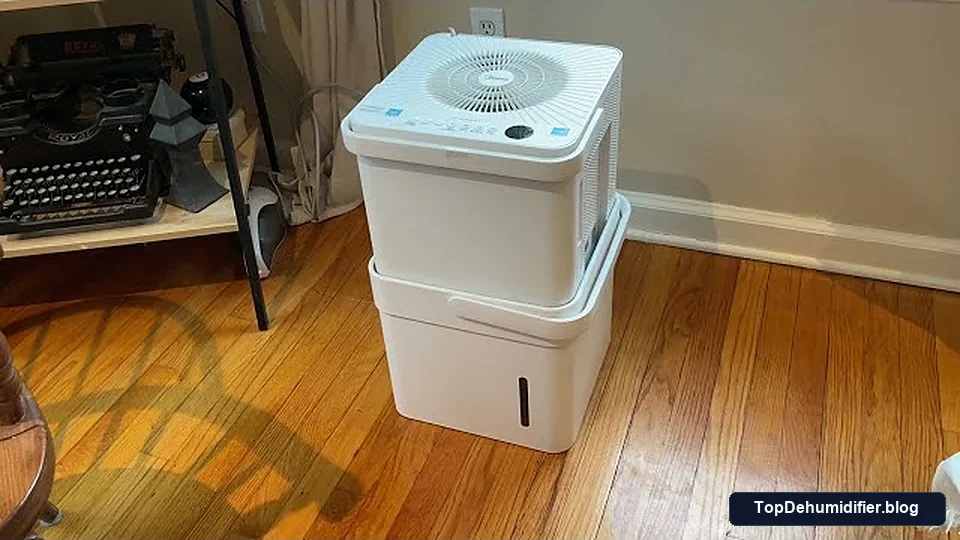
Conversely, the 35 pint system incorporates larger condenser coils and stronger fan motors. For massive spaces, you might also compare options inside our best 50 pint dehumidifier guide for maximum latent heat removal.
Selecting the right unit requires analyzing compressor displacement and refrigeration cycle designs. A 20-pint model utilizes smaller rotary compressors, whereas 35-pint variants integrate higher-capacity coils for maximum latent heat removal.
The AHAM rating standard measures extraction at 65 degrees Fahrenheit and sixty percent relative humidity. Comparing these baseline figures ensures you understand true performance differences before deployment in damp residential basements.
- Refrigerant charge volume differs substantially between units
- Airflow ratings range from 120 CFM up to 180 CFM
- Condenser surface area dictates total latent heat removal
Compressor Displacement and Cycling
Smaller compressors run longer cycles in damp spaces. This can lead to premature wear if the machine is undersized for your specific room dimensions.
Larger motors cycle on and off less frequently, maintaining stable humidity levels without straining internal mechanical parts or electrical relays.
- Reduced cycling extends overall compressor lifespan
- Thermal overload protection prevents motor burnout
Coil Design and Heat Exchange
Aluminum fin and copper tube configurations maximize moisture condensation rates. Efficient heat exchange directly influences the Energy Star rating of the device.
Poor coil design results in frost accumulation and reduced daily water removal efficiency under heavy residential use.
- Hydrophilic coatings improve condensate runoff speed
- Coil spacing prevents premature ice bridging
Real-World Moisture Extraction Mechanics
Laboratory ratings often differ from basement realities. Ambient temperature and relative humidity percentage heavily dictate how much water these machines actually pull daily.
A 20 pint model excels in controlled environments where moisture levels remain moderately stable. For advanced technical analysis on high-capacity units, read our Midea Cube 50 pint review for details.
Environmental conditions heavily influence actual water removal rates across different capacities. Ambient temperatures dropping below 60 degrees Fahrenheit significantly reduce the operational efficiency of standard refrigerant-based dehumidifier coils.
Heat transfer efficiency dictates how rapidly humid air condenses upon passing through the evaporator fins. Larger 35-pint systems maintain wider surface areas to process greater volume without sacrificing evaporator frost control.
- Actual extraction drops sharply below sixty degrees Fahrenheit
- Relative humidity sensors calibrate differently across brands
- Water density remains constant at roughly eight pounds per gallon
Handling Extreme Humidity
Basements with damp masonry require robust extraction capabilities. The 35 pint capacity handles persistent seepage and porous wall evaporation far better.
Underpowered units will run continuously without lowering the room humidity below the critical mold growth threshold of sixty percent.
- Continuous operation stresses weak electronic control boards
- Porous materials retain moisture despite surface drying
Airflow Distribution Dynamics
Top-discharge configurations promote better air circulation across large rooms. Front-intake designs require adequate clearance from walls to function properly.
Optimizing placement ensures dry air reaches distant corners where stagnant moisture typically accumulates first.
- Maintain twelve inches of clearance around intake grilles
- Directional louvers help target high-humidity zones
Electrical Efficiency and Power Consumption
Energy consumption remains a primary concern for homeowners running appliances continuously. Modern units utilize efficient rotary compressors to minimize electricity waste.
Comparing wattage requirements reveals that larger units draw more power upfront but remove more moisture per kilowatt-hour.
Power draw scales directly with compressor size and fan motor wattage requirements. While 20-pint units consume modest power, you can review our 70 pint basement dehumidifier picks to evaluate extreme energy consumption levels.
Energy Star certifications help verify long-term operational costs for both capacity tiers. Calculating your local kilowatt-hour rates against daily run times provides an accurate projection of monthly utility budget impacts.
- Standard household circuits easily handle both capacity classes
- Energy Star certifications verify lower operational electrical draws
- Automatic shutoff features prevent unnecessary power usage
Voltage and Amperage Demands
Operating on standard 115-volt circuits, both units plug into regular outlets. However, the higher amperage draw of a 35 pint unit demands a dedicated line.
Sharing a heavily loaded circuit with other appliances can trip breakers during peak compressor startup phases.
- Check circuit breaker ratings before installation
- Avoid using standard unrated extension cords
Standby Power and Controls
Digital hygrometers and electronic control panels consume minimal standby power. This keeps the unit ready to activate whenever ambient humidity rises.
Mechanical humidistats use zero standby power but offer less precise humidity control compared to digital sensors.
- Digital displays provide accurate real-time readings
- Memory functions retain settings after power outages
Physical Dimensions and Ergonomic Footprint
Size and weight dictate where you can conveniently position these appliances. A compact 20 pint appliance easily fits into narrow crawlspaces and small utility closets.
Larger chassis designs require permanent floor space and careful consideration regarding household traffic patterns and doorway clearances.
Spatial planning involves evaluating both floor space and vertical clearance limits. A compact 20-pint chassis easily tucks into tight crawlspaces, whereas heavier 35-pint chassis require dedicated floor room for stability.
Integrated caster wheels and recessed carrying handles dictate overall unit portability and user safety. Moving a filled water bucket on a larger machine demands better ergonomic lifting posture to prevent strain.
- Casters improve mobility across smooth basement floors
- Recessed handles assist with lifting up stairwells
- Overall unit height impacts gravity drainage options
Weight Distribution and Transport
Lifting a heavy appliance requires proper lifting techniques to avoid injury. The 35 pint unit weighs considerably more due to its larger compressor assembly.
Sturdy caster wheels eliminate the need for heavy lifting when rolling the unit between different rooms on the same floor level.
- Locking casters prevent unintended rolling during operation
- Balanced weight distribution minimizes vibration noise
Storage Considerations
Off-season storage requires dry, clean environments to protect internal electronic components. Compact units easily slide onto standard garage shelving units.
Always drain and dry the internal reservoir completely before placing any dehumidifier into long-term storage. If you need heavy-duty drying performance, check out our basement 50 pint dehumidifier guide for proper sizing.
- Cover units to prevent dust accumulation on coils
- Store upright to prevent compressor oil leakage
Maintenance Routines and Drainage Options
Consistent upkeep prevents mold growth inside the collection bucket. Regular cleaning routines ensure your dehumidifier operates at peak technical efficiency year-round.
Gravity drainage kits eliminate manual bucket emptying entirely, making them essential for unattended basement installations.
Routine filter cleaning preserves airflow velocity and protects internal electrical components from dust buildup. Neglecting the mesh air filter drastically reduces daily moisture extraction performance and strains the fan motor.
Continuous gravity drainage requires positioning the unit above a functional floor drain. Alternatively, integrating an external condensate pump allows water to travel vertically across greater distances without manual intervention.
- Wash air filters every two weeks with warm water
- Sanitize collection buckets monthly using vinegar solutions
- Inspect internal hoses for mineral buildup or kinks
Gravity Drainage vs Pumps
Standard gravity drainage requires an elevated platform so water flows downward. Built-in condensate pumps push water upward through vinyl tubing to a nearby sink.
Selecting the correct drainage method saves countless hours of manual labor and prevents potential basement flood disasters.
- Check pump impellers periodically for obstruction
- Secure drain hose connections with metal clamps
Filter Maintenance Protocols
Dirty mesh filters restrict airflow and force the compressor to work harder. Clean filters maintain proper airflow velocity across cold condenser coils.
Allow washable filters to dry completely before reinserting them into the appliance housing to prevent moisture damage.
- Vacuum loose dust before washing filters
- Replace torn or degraded mesh screens immediately
Acoustic Profiles and Operating Noise
Operating noise levels dictate where you can comfortably place these machines. Smaller fans generally produce less ambient sound during standard living room operation.
Larger compressors generate a low-frequency hum that can prove distracting if placed directly inside bedrooms or home offices.
Mechanical vibration from the compressor generates most of the operational sound output. Sound ratings measured in decibels help buyers compare acoustic footprints before installing units in finished living areas.
Higher fan speeds on larger 35-pint models push more air volume, creating noticeable ambient hums. Selecting lower fan settings during nighttime hours minimizes acoustic disruption in bedrooms and home offices.
- Decibel ratings typically range from 50 to 60 dB
- Vibration dampening feet reduce floor resonance
- Enclosed spaces amplify operating mechanical sounds
Fan Speed Adjustments
Low fan speed settings reduce overall noise output significantly during nighttime hours. High fan speeds maximize moisture removal in severely damp areas.
Balancing noise tolerance with required extraction rates ensures comfortable living conditions without sacrificing humidity control.
- Dual-speed motors offer flexible acoustic performance
- Balanced fan blades prevent annoying rattling sounds
Vibration Isolation
Rubber mounting pads absorb compressor vibrations effectively. Placing the appliance on thick carpet further dampens structure-borne noise transmission.
Check that the unit rests completely level to prevent uneven mechanical stress and excessive chassis vibration.
- Use spirit levels during initial room placement
- Tighten exterior housing screws if rattling occurs
Determining the Optimal Sizing Strategy
Calculating room square footage is only the first step in sizing. Climate zone, ceiling height, and room usage heavily influence your final selection.
Undersized units run constantly without solving chronic humidity problems, while oversized units cycle too rapidly to properly extract ambient moisture.
Square footage alone does not determine the ideal capacity for your specific moisture problem. Assessing room dampness levels and ceiling height dimensions ensures you select a unit matching actual environmental loads.
Undersized appliances run continuously without achieving target humidity setpoints, increasing component wear. Conversely, properly sized systems balance duty cycles to maximize compressor lifespan and maintain consistent indoor comfort levels.
- Factor in open floor plans and adjoining hallways
- Account for high-moisture areas like indoor bathrooms
- Consult manufacturer sizing charts for exact guidance
Assessing Room Conditions
Damp basements require higher capacity ratings regardless of square footage. Wet crawlspaces and poorly ventilated laundry rooms demand aggressive moisture control.
Mildly humid upstairs bedrooms require minimal intervention, making smaller capacity units the ideal choice for those specific spaces.
- Measure baseline humidity with a digital hygrometer
- Identify primary moisture sources before buying
Future-Proofing Your Investment
Investing in a slightly larger capacity unit provides a safety margin for seasonal weather changes. This prevents needing a second machine later.
Properly maintained equipment delivers reliable performance and protects your home structural integrity for many years.
- Consider local climate humidity trends
- Prioritize build quality over initial purchase savings
Frequently Asked Questions
Which size dehumidifier works best for a standard bedroom?
A 20 pint model provides adequate moisture control for standard bedrooms and home offices. It easily manages localized humidity without taking up excessive floor space.
Can I use a 20 pint dehumidifier in a damp basement?
Standard 20 pint units usually struggle with severe basement moisture. A 35 pint system is strongly recommended for damp subterranean spaces.
How often should I empty the water collection bucket?
Emptying frequency depends on ambient humidity and appliance capacity. High humidity conditions require emptying the reservoir at least once or twice daily.
Do these dehumidifiers require special electrical outlets?
Both capacity classes operate on standard household 115-volt circuits. Always plug appliances directly into wall outlets rather than using extension cords.
What maintenance keeps the dehumidifier running efficiently?
Wash the air intake filter every two weeks with warm water. Regularly sanitize the collection bucket to prevent mold growth and maintain performance.